 EN
EN


Commercial landscaping operations face constant pressure to complete more jobs efficiently while maintaining quality standards and protecting crew health. Equipment choices directly impact productivity, labor costs, and service delivery speed. A multi-function garden cart with wheels and seat represents a strategic investment that addresses multiple operational bottlenecks simultaneously, transforming how landscape crews transport materials, access tools, and manage fatigue during extended service calls. Unlike single-purpose equipment that sits idle between specific tasks, a well-designed garden cart with wheels and seat serves as a mobile workstation that adapts to diverse commercial landscaping scenarios throughout the workday.
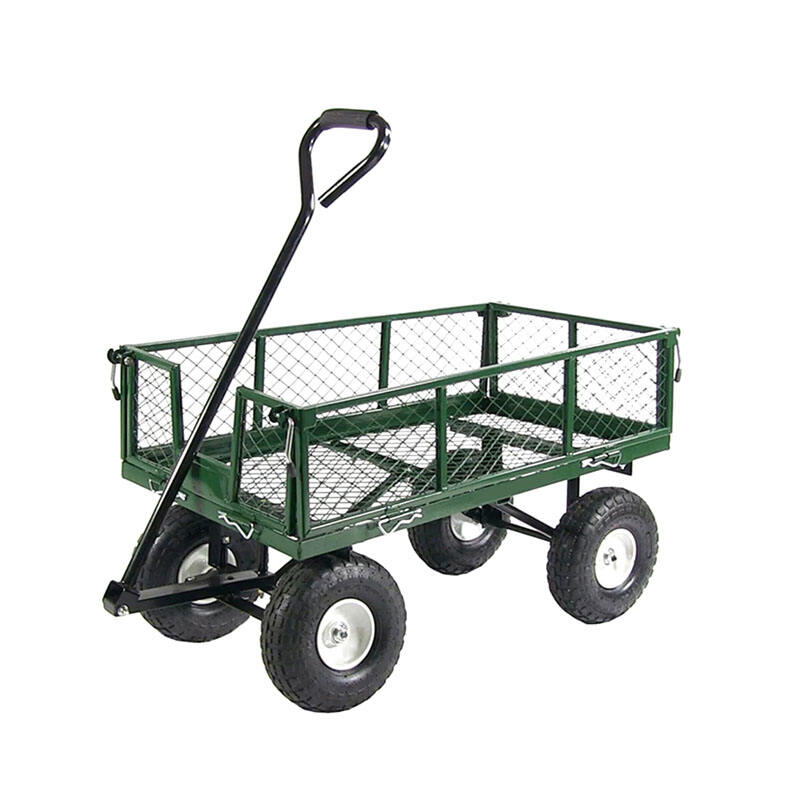
The integration of seating, hauling capacity, and maneuverability within a single platform creates compounding efficiency gains that traditional wheelbarrows and standing carts cannot match. Commercial landscaping teams routinely move between pruning, mulching, debris removal, and maintenance tasks that require different material loads and worker positioning. A garden cart with wheels and seat eliminates the need to switch between separate equipment pieces, reduces physical strain that leads to mid-afternoon productivity drops, and enables workers to remain mobile while resting between high-exertion activities. This operational flexibility translates directly into faster project completion times and improved crew morale across residential, commercial property, and municipal contract work.
Operational Efficiency Gains from Integrated Mobility Solutions
Reducing Equipment Switching Time Between Task Types
Commercial landscaping crews typically manage five to eight distinct service activities during a single property visit, each traditionally requiring different transport equipment. A garden cart with wheels and seat consolidates material hauling, tool transport, and worker mobility into one platform, eliminating the time-consuming process of returning to the truck for different equipment. Field studies in commercial landscape operations show that equipment switching accounts for approximately twelve to eighteen minutes per property visit when crews use separate wheelbarrows, tool caddies, and seating solutions. By maintaining a continuous work position with immediate access to tools and materials, crews using a multi-function garden cart with wheels and seat complete standard maintenance routes seventeen to twenty-three percent faster than teams relying on traditional equipment combinations.
The seated position during transport phases allows workers to maintain visual awareness of property features, identify additional service needs, and plan subsequent task sequences while moving between work zones. This cognitive multitasking during transit periods improves overall workflow coordination and reduces the mental fatigue associated with constantly walking back and forth across large properties. Landscape supervisors report that crews using garden carts with wheels and seat demonstrate better task sequencing decisions and fewer missed service items during property walkthroughs, directly contributing to higher client satisfaction scores and reduced callback rates.
Enhancing Material Capacity Without Compromising Maneuverability
Traditional commercial landscaping equipment forces crews to choose between high-capacity transport that requires significant physical effort and lightweight tools that necessitate multiple trips. A properly engineered garden cart with wheels and seat bridges this gap by distributing load weight across four stable contact points while maintaining single-operator control through ergonomic handle positioning and responsive steering geometry. The wheel configuration allows navigation through standard residential gates, along narrow property access paths, and across moderately uneven terrain that would stop conventional two-wheel carts or require excessive force to push loaded wheelbarrows.
The seated design fundamentally changes load management strategy by enabling workers to use body weight and leverage rather than pure muscle force for maneuvering. When transporting mulch, soil amendments, or pruning debris, operators can shift their position on the garden cart with wheels and seat to optimize weight distribution for uphill sections, tight turns, or threshold crossings. This dynamic load balancing extends the practical working range of each crew member, allowing smaller teams to handle material volumes that would traditionally require additional personnel. Commercial operations serving properties with significant elevation changes or extended walking distances between service areas realize the most dramatic productivity improvements from this enhanced maneuverability.
Minimizing Fatigue-Related Productivity Decline
Landscape crew performance typically drops twenty-eight to thirty-five percent during the final two hours of standard eight-hour shifts, primarily due to cumulative lower body fatigue from constant standing, walking, and pushing heavy loads. A garden cart with wheels and seat directly addresses this productivity decline by providing legitimate rest opportunities without stopping work completely. Operators can transition between standing work positions and seated transport phases naturally throughout the day, preventing the muscle fatigue accumulation that leads to slower movement, reduced lifting capacity, and increased injury risk during afternoon hours.
The physiological benefits extend beyond simple rest periods. Medical research on occupational ergonomics confirms that alternating between standing and seated positions throughout the workday reduces lower back strain, improves circulation, and maintains cognitive alertness more effectively than sustained standing or walking. Commercial landscaping companies implementing garden cart with wheels and seat equipment report measurable reductions in workers' compensation claims related to back injuries and lower extremity strain, with some operations documenting thirty to forty percent decreases in lost-time incidents over twelve-month periods. These safety improvements translate directly into lower insurance premiums, reduced temporary staffing costs, and improved crew retention rates in an industry characterized by high turnover.
Strategic Application Scenarios in Commercial Landscape Operations
High-Volume Mulching and Soil Amendment Distribution
Spring and fall mulching services represent peak revenue opportunities for commercial landscaping operations, but traditional material distribution methods create significant labor bottlenecks. A garden cart with wheels and seat transforms mulching efficiency by allowing workers to load substantial material volumes at central staging areas and then distribute precisely along bed lines without constant trips back to bulk piles. The seated position enables operators to control material placement while moving, essentially creating a mobile dispensing system that maintains consistent application rates and reduces overuse in early bed sections.
For commercial properties requiring soil amendment applications before seasonal planting rotations, the garden cart with wheels and seat provides the capacity to transport bagged or bulk amendments alongside necessary application tools. This integrated transport capability eliminates the common scenario where workers discover they need additional materials or different tools mid-task, requiring unproductive walks back to the service vehicle. Landscape contractors serving corporate campuses, retail centers, and institutional properties report that mulching and amendment projects completed with garden carts with wheels and seat require fifteen to twenty-two percent fewer labor hours compared to identical projects using wheelbarrow-based workflows.
Pruning Debris Management Across Extended Properties
Large commercial properties and residential communities generate substantial pruning debris during seasonal maintenance windows, creating logistics challenges for material collection and site cleanup. The generous hauling volume of a garden cart with wheels and seat accommodates multiple pruning station loads, reducing the frequency of trips to disposal areas or collection trucks. Workers can position the cart adjacent to shrub beds or tree work zones, fill the capacity during active pruning, then efficiently transport debris to staging areas while seated, preserving energy for subsequent pruning work rather than exhausting themselves through repeated heavy lifting and pushing.
The debris containment design prevents material spillage during transport across customer properties, maintaining professional appearance standards and eliminating time spent cleaning up scattered clippings along transport paths. Commercial landscape operations serving homeowner associations and property management companies particularly value this clean operation characteristic, as it directly impacts resident satisfaction and contract renewal rates. The ability to manage debris efficiently also expands the practical service range per day, allowing crews to complete additional properties within standard shift timeframes and improving overall revenue per labor hour invested.
Irrigation System Maintenance and Repair Workflows
Irrigation service calls require technicians to transport diagnostic tools, replacement components, and repair materials across properties while repeatedly transitioning between inspection points. A garden cart with wheels and seat serves as a mobile tool chest and parts inventory that follows technicians through the service route, eliminating the productivity drain of walking back to the truck for each component needed. The seated transport capability becomes particularly valuable on large commercial properties where irrigation zones may be separated by hundreds of feet, allowing technicians to rest between repair stations while maintaining forward progress through the service ticket.
The stable platform design accommodates organization systems for small parts, specialized tools, and testing equipment that would be impractical to carry manually or transport in traditional wheelbarrows. Irrigation specialists can arrange frequently needed components in accessible positions on the garden cart with wheels and seat, creating a customized mobile workstation that reduces part retrieval time and minimizes the risk of leaving tools behind at work locations. This organized approach to irrigation service improves first-time fix rates and reduces the costly callbacks that occur when technicians discover they lack necessary components mid-repair.
Equipment Selection Criteria for Commercial Durability Requirements
Frame Construction and Weight Capacity Specifications
Commercial landscaping environments subject equipment to continuous heavy use, exposure to moisture and soil chemistry, and frequent impacts from loading operations and terrain obstacles. The frame construction of a garden cart with wheels and seat must withstand these conditions through material selection and structural engineering that prioritizes longevity over initial cost savings. Powder-coated steel frames provide superior corrosion resistance compared to painted finishes, particularly in regions with high humidity or coastal salt exposure that accelerates metal deterioration. Reinforced corner joints and cross-bracing prevent frame flex under asymmetric loads, a common failure point in economy garden carts with wheels and seat designs when crews load heavy materials on one side.
Weight capacity ratings should account for actual field loading patterns rather than theoretical maximums. Commercial landscape crews frequently overload equipment when under time pressure, so a garden cart with wheels and seat rated for three hundred fifty pounds should realistically handle occasional loads approaching four hundred pounds without structural damage or handling compromise. The rated capacity should apply to dynamic loading conditions including movement across uneven ground, not just static weight on level surfaces. Verify that capacity specifications account for both material weight in the cargo area and operator weight on the seat simultaneously, as some manufacturers rate these elements separately in ways that misrepresent real-world performance.
Wheel Design Impact on Terrain Adaptability
The wheel system determines whether a garden cart with wheels and seat functions effectively across the diverse surface conditions encountered in commercial landscaping or becomes limited to paved areas and manicured lawns. Pneumatic tires provide superior cushioning and traction compared to solid plastic or foam-filled alternatives, absorbing impacts from roots, rocks, and threshold transitions that would otherwise transmit jarring forces to the frame and cargo. The tire width and tread pattern affect weight distribution and soil compaction, critical factors when working on established lawns or recently irrigated landscape beds where tire damage can create visible tracks and client complaints.
Wheel diameter significantly influences obstacle-clearing ability and rolling resistance across soft surfaces. Larger diameter wheels on a garden cart with wheels and seat roll over standard landscape edging, small branches, and irrigation components more easily than compact wheels, reducing the physical effort required to maintain momentum through work zones. However, larger wheels also raise the cargo bed height, potentially making loading more difficult for some workers. Commercial operations should evaluate wheel specifications based on their predominant terrain types, with operations serving properties featuring extensive hardscape and paved areas prioritizing smooth-rolling characteristics, while crews working primarily on natural terrain and turf areas benefiting from aggressive tread patterns and larger contact patches.
Seat Ergonomics and Position Adjustability
The seat component transforms a standard garden cart into a garden cart with wheels and seat, but seat design quality varies dramatically across available models and directly impacts worker acceptance and sustained use. Contoured seats with drainage perforations prevent water accumulation and provide better weight distribution compared to flat seat designs, reducing pressure points during extended sitting periods. The seat material should resist UV degradation, remain comfortable across seasonal temperature extremes, and clean easily after soil and plant material contact that inevitably occurs during commercial landscaping operations.
Adjustable seat positioning allows accommodation of different operator heights and preferences, improving ergonomic fit across diverse crew members. Some garden cart with wheels and seat designs incorporate swiveling seats that enable operators to face different directions when loading materials or accessing tools without repositioning the entire cart. This rotational capability proves particularly valuable during debris collection workflows where workers load material from multiple angles. The seat mounting system should provide tool-free adjustment while maintaining rigid positioning during transport and work activities, as loose or unstable seats create safety concerns and reduce operator confidence in the equipment.
Integration Strategies Within Existing Commercial Landscape Operations
Crew Training and Adoption Protocols
Introducing a garden cart with wheels and seat into established commercial landscaping workflows requires structured training that demonstrates specific efficiency gains rather than simply presenting the equipment as a general improvement. Effective adoption programs identify two or three specific task sequences where the cart provides obvious advantages, then train crews on optimized workflows that exploit these benefits. For example, demonstrating how to stage a morning's worth of pruning tools and debris bags on the cart, complete the entire pruning route, then transport all debris to the disposal area in a single trip creates immediate buy-in by showing concrete time savings compared to traditional methods.
Resistance to new equipment typically stems from concerns about learning curves disrupting established productivity patterns. Address this by pairing the garden cart with wheels and seat introduction with less time-pressured work periods such as seasonal transition weeks or training days, allowing crews to experiment with loading configurations and transport techniques without deadline pressure. Encourage crew input on optimal organization systems and loading patterns, as workers who contribute to workflow development demonstrate higher sustained adoption rates than those simply directed to use new equipment. Document the successful practices that emerge during initial adoption phases and incorporate these insights into standard operating procedures for new hires.
Fleet Sizing and Equipment Allocation Models
Determining appropriate garden cart with wheels and seat quantities for commercial landscaping operations requires analysis of crew structure, service mix, and property characteristics rather than simple one-per-crew allocation. Operations running three-person crews typically achieve optimal efficiency with two carts per crew, allowing simultaneous work in different property zones while maintaining equipment availability when one cart reaches capacity and requires unloading. Single-operator maintenance routes benefit from dedicated cart assignment, creating accountability for equipment condition and enabling operators to develop customized organization systems that maximize personal efficiency.
Service type influences optimal allocation ratios. Crews primarily performing mowing and edging services may use a garden cart with wheels and seat only during trimming and cleanup phases, suggesting shared equipment pools across multiple crews make economic sense. Conversely, full-service maintenance operations and installation crews benefit from dedicated cart assignments that remain with teams throughout diverse task sequences. Consider phased implementation that begins with one or two carts deployed to crews handling the most suitable service types, then expands based on documented efficiency improvements and crew feedback rather than committing to full fleet replacement before validating field performance in your specific operational context.
Maintenance Requirements and Lifecycle Management
Commercial garden carts with wheels and seat require proactive maintenance protocols that prevent small issues from escalating into equipment failures during peak service periods. Weekly inspection routines should verify tire pressure, check for frame cracks or corrosion initiation, confirm seat mounting integrity, and lubricate wheel bearings and pivot points. Tire pressure maintenance proves particularly critical, as underinflated tires dramatically increase rolling resistance and accelerate tread wear, while overinflation reduces traction and increases impact damage risk. Establish baseline pressure specifications for your specific cart model and terrain conditions, then train crews to perform quick pressure checks as part of morning equipment preparation.
Seasonal deep maintenance intervals should address wear patterns specific to commercial landscape environments. Spring preparation includes thorough frame cleaning to remove accumulated soil and organic matter that traps moisture against metal surfaces, inspection and replacement of worn tire treads before wet season conditions, and verification that all fasteners remain tight after winter freeze-thaw cycles. Fall preparation focuses on protecting the garden cart with wheels and seat from winter storage conditions through corrosion prevention treatments, tire pressure adjustment to prevent flat-spotting during storage, and seat material conditioning to prevent cracking from cold exposure. Document maintenance activities and equipment condition assessments to identify recurring issues that may indicate design limitations or usage patterns requiring modification.
FAQ
What weight capacity should commercial landscaping operations prioritize when selecting a garden cart with wheels and seat?
Commercial applications typically require minimum weight capacities of three hundred to four hundred pounds to accommodate realistic field loading scenarios including bulk materials, debris loads, and simultaneous operator weight. Prioritize models with reinforced frame construction and quality wheel bearings that maintain performance under maximum rated loads rather than accepting higher capacity ratings from lighter-duty designs that may fail prematurely under continuous heavy use conditions common in professional landscaping environments.
How does a garden cart with wheels and seat compare to traditional wheelbarrows for debris removal efficiency?
Garden carts with wheels and seat typically provide two to three times the volumetric capacity of standard contractor wheelbarrows while requiring significantly less physical effort to maneuver when loaded due to four-wheel stability and seated operator positioning. The efficiency advantage becomes most pronounced across properties requiring extended transport distances or multiple elevation changes, where the seated rest capability prevents fatigue accumulation that slows wheelbarrow operators during afternoon work periods. However, wheelbarrows maintain advantages in extremely confined spaces and steep terrain where maneuverability and tipping capability prove more valuable than capacity.
Can a garden cart with wheels and seat navigate standard residential gates and narrow property access points?
Most commercial-grade garden carts with wheels and seat feature overall widths between thirty-two and thirty-six inches, allowing passage through standard residential gate openings of thirty-six to forty-eight inches with adequate clearance. Verify specific dimensional specifications against your typical property access requirements, particularly if you serve older residential areas with narrow side yards or properties with custom fencing that may feature non-standard gate widths. Some premium models incorporate folding or removable side panels that temporarily reduce width for passage through restricted openings while maintaining full capacity during normal operations.
What return on investment timeline should commercial landscaping operations expect when implementing garden carts with wheels and seat?
Commercial operations typically realize return on investment within four to eight months through combined labor efficiency gains, reduced workers' compensation costs, and expanded service capacity per crew. The payback timeline accelerates for operations serving large commercial properties or routes with significant walking distances between service areas, where time savings compound across multiple daily properties. Calculate ROI based on your specific labor rates, crew productivity metrics, and service mix rather than relying on generic industry estimates, as operational context significantly influences actual efficiency gains and financial returns from equipment investments.
Table of Contents
- Operational Efficiency Gains from Integrated Mobility Solutions
- Strategic Application Scenarios in Commercial Landscape Operations
- Equipment Selection Criteria for Commercial Durability Requirements
- Integration Strategies Within Existing Commercial Landscape Operations
-
FAQ
- What weight capacity should commercial landscaping operations prioritize when selecting a garden cart with wheels and seat?
- How does a garden cart with wheels and seat compare to traditional wheelbarrows for debris removal efficiency?
- Can a garden cart with wheels and seat navigate standard residential gates and narrow property access points?
- What return on investment timeline should commercial landscaping operations expect when implementing garden carts with wheels and seat?

