 EN
EN

Workshop productivity hinges on choosing the right work surface, yet many facility managers and tradespeople struggle to determine when upgrading from standard benches becomes a strategic necessity. A metal working table for workshop environments represents a significant investment decision that requires careful consideration of load capacity, operational durability, and task-specific demands. Understanding the precise conditions under which these specialized surfaces outperform conventional alternatives enables informed capital allocation and prevents costly workflow interruptions caused by inadequate equipment.
The transition point between adequate and inadequate work surfaces becomes critical when operations involve heavy fabrication, precision assembly, or continuous high-intensity use. Standard benches often suffice for light-duty applications and intermittent tasks, but their limitations become apparent when subjected to the mechanical stresses inherent in professional metalworking environments. Recognizing these threshold conditions prevents equipment failure, maintains quality standards, and protects both personnel safety and production schedules. This analysis examines the specific operational scenarios, load conditions, and work requirements that justify the superior performance characteristics of purpose-built metal work surfaces.
Critical Load Conditions That Demand Specialized Work Surfaces
Static Load Requirements in Heavy Fabrication Environments
Standard workshop benches typically support static loads between 200 to 500 pounds, a capacity that proves inadequate when working with sheet metal stock, casting assemblies, or multiple heavy components simultaneously. A metal working table for workshop applications designed for industrial use routinely handles static loads exceeding 1,000 pounds without structural deformation or stability compromise. This capacity difference becomes critical when fabricating large enclosures, positioning heavy machinery components for modification, or staging multiple workpieces during batch processing operations.
The structural engineering behind industrial-grade metal work surfaces incorporates reinforced frame geometries, cross-bracing systems, and load distribution mechanisms absent in standard bench construction. When working with steel plate exceeding quarter-inch thickness or assembling frameworks from structural angle iron, the concentrated weight creates point-load stresses that standard benches cannot safely accommodate. Professional metalworking operations require work surfaces that maintain dimensional stability under these concentrated forces, preventing the deflection that compromises measurement accuracy and joint alignment during welding or fastening procedures.
Dynamic Force Management During Active Fabrication
The dynamic forces generated during hammering, pressing, cutting, and grinding operations create impact loads and vibration patterns that standard benches fail to absorb effectively. A properly engineered metal working table for workshop use incorporates mass and structural rigidity that dampens these dynamic forces, preventing the oscillation and movement that degrades precision and creates safety hazards. When performing operations such as chisel work, pneumatic riveting, or angle grinding on heavy stock, the energy absorption characteristics of the work surface directly influence both result quality and operator fatigue.
Standard wooden or light-duty benches transmit vibration directly to the workspace, causing workpiece movement and requiring constant repositioning that reduces productivity. Industrial metal work surfaces with substantial frame members and reinforced construction provide the inertial mass necessary to maintain workpiece stability during aggressive material removal or forming operations. This performance advantage becomes particularly evident when working with unsecured components or performing operations that generate significant lateral forces, such as filing large surfaces or operating portable band saws.
Sustained Operational Intensity and Duty Cycle Considerations
Workshop environments characterized by continuous operation throughout extended shifts place cumulative stress on work surfaces that standard benches cannot withstand without progressive degradation. A metal working table for workshop settings designed for professional use incorporates materials and construction methods that resist fatigue failure, maintaining structural integrity through thousands of work cycles. When operations run multiple shifts or involve repetitive heavy-duty tasks, the durability differential between standard and specialized work surfaces directly impacts maintenance costs and equipment replacement intervals.
The operational intensity threshold where standard benches become inadequate typically emerges around 20 to 30 hours of weekly heavy use. Beyond this duty cycle, conventional work surfaces exhibit loosening joints, surface wear, and structural weakening that progressively compromise both functionality and safety. Professional metalworking operations requiring consistent daily use benefit from work surfaces engineered for continuous duty, eliminating the downtime and expense associated with premature bench replacement or emergency repairs during critical production periods.
Task-Specific Performance Requirements in Metal Fabrication
Precision Work and Dimensional Stability Demands
Metalworking operations requiring tolerance control within thousandths of an inch demand work surfaces that maintain absolute flatness and dimensional stability throughout temperature variations and mechanical stress. Standard benches constructed from wood or composite materials exhibit expansion, contraction, and warping that introduces measurement errors incompatible with precision fabrication requirements. A metal working table for workshop applications provides the dimensional stability necessary for layout work, precision assembly, and inspection procedures where surface flatness directly influences final component accuracy.
The thermal expansion coefficient of steel provides predictable dimensional behavior across the temperature ranges encountered in workshop environments, unlike wood surfaces that respond unpredictably to humidity changes. When performing layout operations using precision measuring tools, establishing datum references for machining operations, or assembling components with tight clearance requirements, the work surface itself becomes part of the measurement system. Any dimensional instability in the reference plane propagates directly into the workpiece, creating cumulative errors that may only become apparent during final assembly or functional testing.
Welding Operations and Heat Management
Standard workshop benches present significant fire hazards and structural vulnerabilities when exposed to welding operations, spatter, and thermal cycling from hot workpieces. Wooden surfaces ignite when exposed to welding spatter, while synthetic materials release toxic fumes and suffer irreversible damage from heat exposure. A metal working table for workshop welding applications provides inherent fire resistance and thermal mass that safely absorbs and dissipates heat without structural degradation or safety concerns.
Professional fabrication shops performing regular welding work require surfaces that tolerate direct contact with hot metal, resist spatter damage, and provide electrical grounding for welding circuits. The thermal conductivity of metal work surfaces prevents the localized heat buildup that damages standard benches, while the non-combustible construction eliminates fire risk during extended welding sessions. When welding operations constitute a regular portion of workshop activities rather than occasional tasks, the safety and durability advantages of purpose-built metal work surfaces become non-negotiable requirements rather than optional upgrades.
Chemical Resistance and Contamination Control
Metalworking processes frequently involve cutting fluids, penetrating oils, solvents, and chemical treatments that rapidly degrade standard bench surfaces constructed from porous or reactive materials. Wood absorbs liquids and harbors contamination that transfers to workpieces, while painted surfaces chip and peel under chemical exposure. A metal working table for workshop environments with proper surface treatment provides chemical resistance that maintains cleanliness standards and prevents cross-contamination between different materials or finishing stages.
Operations involving precision cleaning, surface preparation for coating, or assembly of components with stringent contamination specifications require work surfaces that can be thoroughly cleaned and decontaminated. Sealed metal surfaces resist absorption of oils and chemicals, enabling effective cleaning protocols that restore the work surface to contamination-free status between different tasks. This characteristic becomes essential in workshops handling both ferrous and non-ferrous materials, where cross-contamination from embedded particles or residual chemicals can cause galvanic corrosion or finishing defects in subsequent operations.
Operational Environment Factors That Determine Upgrade Necessity
Space Utilization Efficiency and Workflow Integration
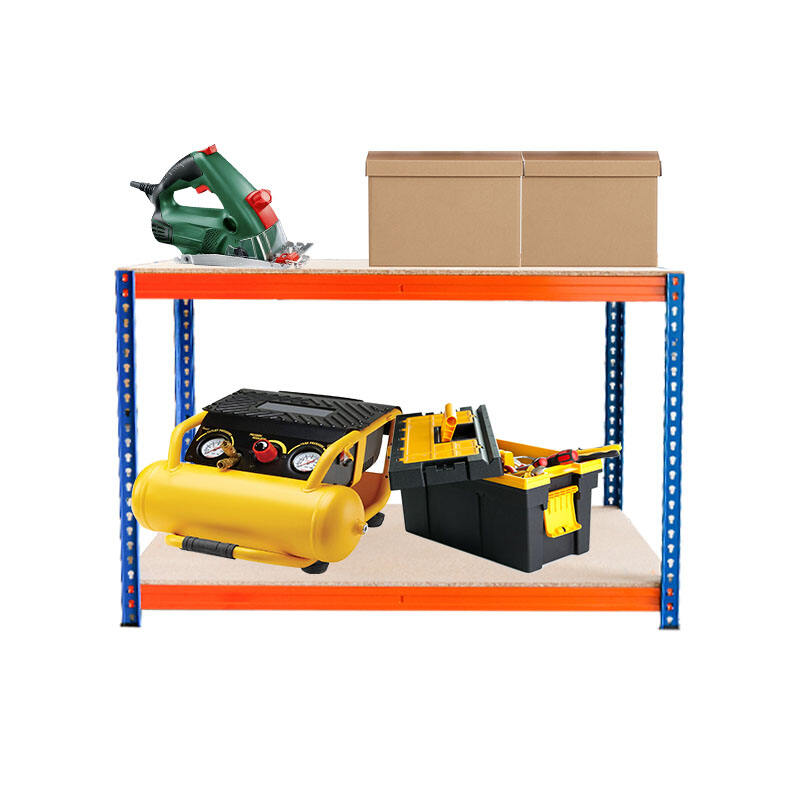
Workshops constrained by limited floor space require work surfaces that maximize functional capacity within minimal footprint, often incorporating integrated storage, tool mounting provisions, and multi-level work areas. Standard benches typically offer only horizontal surface area without vertical integration or organizational features. A metal working table for workshop layouts designed for industrial efficiency incorporates shelving systems, tool boards, and accessory mounting points that consolidate multiple functional elements into a single footprint.
The vertical integration capability of industrial metal work surfaces enables storage of tools, materials, and work-in-progress items within immediate reach of the primary work surface, reducing motion waste and improving task completion time. When workshop floor space commands premium value or when operations require rapid transitions between different tasks, the organizational efficiency of integrated work surface systems provides productivity gains that justify higher initial investment. This advantage becomes particularly significant in small job shops, maintenance facilities, and custom fabrication operations where diverse tasks occur at the same station throughout the workday.
Multi-User Environments and Standardization Benefits
Facilities employing multiple technicians or operating training programs benefit from work surface standardization that ensures consistent capability across all stations and eliminates variability in equipment performance. Heterogeneous collections of standard benches create operational inefficiencies as workers adapt to different height settings, capacity limitations, and accessory availability at each station. A metal working table for workshop standardization initiatives provides uniform capability that enables flexible work assignment and reduces the learning curve when personnel rotate between stations.
The modular nature of industrial metal work surface systems facilitates expansion and reconfiguration as operational needs evolve, maintaining consistency while accommodating growth. When training new personnel or implementing standardized work procedures, having identical work surface characteristics at all stations eliminates equipment variability as a confounding factor in skill development and quality control. This consistency becomes particularly valuable in contract manufacturing environments or facilities pursuing quality management system certification where process standardization directly supports compliance and capability demonstration.
Maintenance Accessibility and Long-Term Total Cost Analysis
Standard benches often prove economical at initial purchase but generate hidden costs through frequent repairs, surface replacement, and premature total replacement that accumulates over operational lifespan. A metal working table for workshop applications engineered for industrial duty typically provides service life measured in decades rather than years, with minimal maintenance requirements beyond periodic cleaning and inspection. When calculating true equipment cost, the total cost of ownership calculation must include replacement frequency, repair labor, and operational disruption from equipment failure.
The maintenance advantage of industrial metal work surfaces stems from durable construction that resists the wear mechanisms that degrade standard benches, including joint loosening, surface damage, and structural fatigue. Components subject to wear, such as casters or adjustable feet, typically feature replaceable designs that extend overall service life without requiring complete equipment replacement. For operations planning equipment budgets over multi-year horizons, the superior durability and lower maintenance burden of purpose-built metal work surfaces often results in lower annualized cost despite higher initial purchase price.
Performance Verification and Implementation Considerations
Capacity Specification and Load Testing Requirements
Determining appropriate capacity specifications requires systematic analysis of actual operational loads including tools, workpieces, and accessories that accumulate on the work surface during typical tasks. A metal working table for workshop selection should be specified with safety margin exceeding maximum anticipated load by at least 25 percent to accommodate unexpected conditions and prevent operation at capacity limits. Professional equipment includes rated capacity specifications verified through testing, unlike standard benches that may lack documented load ratings or structural validation.
Verification of capacity claims through independent testing or engineering documentation protects against equipment failure and liability exposure from inadequate specification. When operations involve liability-sensitive work or safety-critical components, documented capacity ratings provide essential traceability for quality systems and regulatory compliance. The specification process should include analysis of both distributed loads across the entire surface and concentrated point loads at specific locations where heavy components or equipment may be positioned during operations.
Ergonomic Integration and Operator Interface Design
Work surface height significantly influences operator comfort, precision capability, and fatigue during extended task performance, with optimal height varying based on task type and operator anthropometry. A metal working table for workshop ergonomics should provide height adjustability or be specified at dimensions appropriate for the primary operators and predominant task types. Standard bench heights frequently prove suboptimal for metalworking tasks, forcing operators into awkward postures that increase error rates and accelerate fatigue accumulation.
The ergonomic advantage of properly specified work surface height manifests in improved precision during hand tool operations, reduced physical strain during extended standing work, and enhanced visibility for inspection and measurement tasks. When operations involve detailed hand work, precision assembly, or tasks requiring sustained visual attention, optimizing work surface height relative to operator eye level and elbow position directly influences both quality outcomes and operator well-being. Facilities committed to injury prevention and productivity optimization should prioritize ergonomic specification of work surface dimensions as integral to equipment selection rather than accepting standard dimensions by default.
Integration with Existing Shop Systems and Workflows
Successful implementation of upgraded work surfaces requires consideration of compatibility with existing tool systems, material handling equipment, and established workflow patterns. A metal working table for workshop integration should complement rather than disrupt proven operational procedures, providing enhanced capability while maintaining familiar working methods. Dimensional compatibility with existing shelving systems, clearance for material handling equipment, and electrical service access all influence implementation success and user acceptance.
The transition strategy from standard benches to industrial work surfaces benefits from phased implementation that allows operational validation and procedure refinement before complete facility conversion. Starting with the most demanding work station or highest-intensity operation provides immediate performance improvement in the area of greatest need while generating user feedback that informs subsequent installations. This staged approach minimizes disruption, validates specification decisions, and builds organizational experience with new equipment capabilities before committing to facility-wide deployment.
FAQ
What weight capacity difference actually matters in daily metalworking operations?
The practical significance of capacity differences becomes evident when standard benches rated at 300 to 500 pounds prove inadequate for simultaneously positioning multiple heavy components, large sheet metal pieces, or casting assemblies common in fabrication work. Industrial metal working tables rated at 1,000 pounds or more accommodate the realistic load scenarios encountered in professional shops without requiring constant load management or workpiece repositioning. This capacity margin prevents structural failure, maintains dimensional stability under load, and eliminates productivity loss from working around capacity limitations.
How do vibration dampening characteristics affect precision metalworking results?
Vibration transmission during grinding, filing, or hammering operations causes workpiece movement that degrades dimensional accuracy and surface finish quality, particularly when working with unsecured components or performing finish operations. Metal working tables engineered with substantial mass and rigid construction absorb dynamic forces that standard benches transmit through the structure, maintaining workpiece stability during aggressive operations. This vibration control becomes critical for achieving tolerance requirements tighter than 0.010 inches or maintaining consistent surface finish during hand operations on precision components.
At what point does workshop utilization justify upgrading from standard benches?
The economic justification for upgrading typically materializes when operations exceed 20 hours per week of intensive metalworking activity, when tasks regularly involve workpiece weights exceeding 100 pounds, or when precision requirements demand dimensional stability beyond standard bench capabilities. Additional upgrade triggers include recurring safety concerns from bench instability, frequent surface damage from welding or chemical exposure, or operational delays caused by inadequate work surface capacity. Facilities experiencing any combination of these conditions achieve rapid return on investment through improved productivity, reduced equipment replacement frequency, and enhanced quality consistency.
Can standard benches be reinforced to match industrial table performance?
While reinforcement modifications can improve standard bench capacity incrementally, fundamental limitations in material properties, joint design, and structural geometry prevent achieving the performance characteristics of purpose-built industrial work surfaces. Wooden benches remain vulnerable to moisture absorption, dimensional instability, and fire hazards regardless of reinforcement, while light-duty metal benches lack the mass and rigidity necessary for effective vibration dampening. Reinforcement efforts typically prove more costly and less effective than initial procurement of appropriate industrial equipment, while still leaving significant performance gaps in thermal resistance, chemical tolerance, and long-term durability.
Table of Contents
- Critical Load Conditions That Demand Specialized Work Surfaces
- Task-Specific Performance Requirements in Metal Fabrication
- Operational Environment Factors That Determine Upgrade Necessity
- Performance Verification and Implementation Considerations
-
FAQ
- What weight capacity difference actually matters in daily metalworking operations?
- How do vibration dampening characteristics affect precision metalworking results?
- At what point does workshop utilization justify upgrading from standard benches?
- Can standard benches be reinforced to match industrial table performance?

