 EN
EN

Choosing the right material handling equipment can significantly impact workplace efficiency, employee safety, and operational costs. While vertical hand trucks have long been the default choice for moving boxes and stacked items, many businesses and facility managers overlook a crucial alternative that often outperforms traditional upright models in specific scenarios. Understanding when a flatbed hand cart delivers superior performance compared to a vertical hand truck requires examining load characteristics, workspace constraints, handling frequency, and the physical demands placed on operators throughout daily operations.
The decision between these two equipment types should never be made arbitrarily or based solely on initial purchase price. Each design serves distinct purposes, and selecting the wrong tool for your specific application can lead to damaged goods, workplace injuries, reduced productivity, and unnecessary replacement costs. This comprehensive analysis examines the precise conditions under which a flatbed hand cart becomes the superior choice, helping procurement managers, warehouse supervisors, and facility operators make informed decisions that align with their operational realities and material handling requirements.
Load Characteristics That Favor Flatbed Hand Carts
Oversized and Irregularly Shaped Items
When handling items that extend beyond standard box dimensions, a flatbed hand cart provides a stable platform that accommodates oversized loads without the risk of tipping or imbalance. Vertical hand trucks rely on a narrow base and require loads to be stackable and reasonably uniform in shape. However, many industrial and commercial environments regularly handle equipment, furniture components, large machinery parts, or oddly configured packages that simply cannot be secured properly on an upright dolly. The horizontal platform of a flatbed hand cart allows operators to position these irregular items centrally, distributing weight evenly across the entire deck surface.
Manufacturing facilities frequently transport custom fabricated parts, raw material bundles, or assembled components that lack the uniform geometry necessary for vertical stacking. Retail operations move display fixtures, promotional materials, and seasonal merchandise with dimensions that defy conventional boxing. In these scenarios, attempting to use a vertical hand truck often results in load instability, requiring excessive strapping or creating dangerous situations where items protrude awkwardly. A flatbed hand cart eliminates these concerns by providing an open platform where irregular shapes can be secured using standard straps or bungee cords without fighting against the equipment's inherent design limitations.
Multiple Small Items Requiring Simultaneous Transport
Distribution centers, maintenance departments, and institutional facilities often need to move numerous smaller items together rather than making multiple trips with individually stacked loads. While a vertical hand truck excels at moving a single stack of boxes, it becomes inefficient when the task involves transporting diverse items that cannot be neatly stacked. A flatbed hand cart provides the surface area necessary to consolidate multiple boxes, tools, parts bins, or equipment pieces in a single trip, dramatically improving labor efficiency and reducing the time spent on repetitive transport tasks.
Janitorial staff moving cleaning supplies, maintenance technicians carrying repair parts, or office managers distributing supplies across departments benefit from the ability to load everything needed for a task onto one platform. The flatbed hand cart configuration prevents items from needing to be stacked precariously or secured with excessive wrapping. This operational advantage becomes particularly valuable in environments where trip frequency directly impacts productivity, such as fulfillment operations during peak seasons or facility maintenance during limited operational windows. The time savings from consolidating loads often justifies the equipment choice even when individual items could theoretically be moved on a vertical hand truck.
Flat Packaged Goods and Sheet Materials
Industries dealing with flat packaged furniture, sheet metal, plywood, drywall, glass panels, or similar horizontally oriented materials find that a flatbed hand cart maintains the natural orientation of these products during transport. Vertical hand trucks force flat materials into an awkward upright position that increases the risk of bending, warping, or breakage, particularly with flexible or fragile sheet goods. The horizontal platform of a flatbed design supports these materials in their stable resting position, minimizing stress on the product and reducing handling damage.
Construction sites, cabinet shops, sign manufacturers, and building supply operations routinely handle materials that are specifically designed to remain flat during storage and transport. Attempting to move these items vertically not only risks product damage but also makes securing the load significantly more difficult. A flatbed hand cart allows operators to slide sheet materials onto the platform, add protective padding if necessary, and secure the load with minimal effort while maintaining product integrity throughout the transport process. This capability directly translates to reduced product loss and fewer customer complaints related to damaged goods upon delivery.
Workspace and Operational Environment Considerations
Loading and Unloading Accessibility
The physical process of loading items onto equipment significantly impacts operational efficiency and worker safety. Vertical hand trucks require operators to either lift items onto the loading plate or tip the unit to slide items underneath, movements that demand specific physical capabilities and create potential strain points. In contrast, a flatbed hand cart sits at a convenient waist height, allowing operators to slide, roll, or place items onto the platform with minimal lifting. This ergonomic advantage becomes critically important in operations with high handling frequencies or when dealing with moderately heavy items that approach safe lifting limits.
Warehouse environments with pallet racking, retail stockrooms with shelf-height staging areas, and loading docks where items are transferred from tables or conveyors all benefit from the accessible loading height of a flatbed hand cart. The ability to push or slide items horizontally onto the cart rather than lifting them vertically reduces the cumulative physical strain on workers throughout a shift. This ergonomic improvement contributes to lower injury rates, reduced worker fatigue, and improved long-term employee retention in physically demanding positions. Organizations focused on workplace safety and injury prevention should consider these loading characteristics when evaluating equipment options.
Maneuvering in Confined Spaces
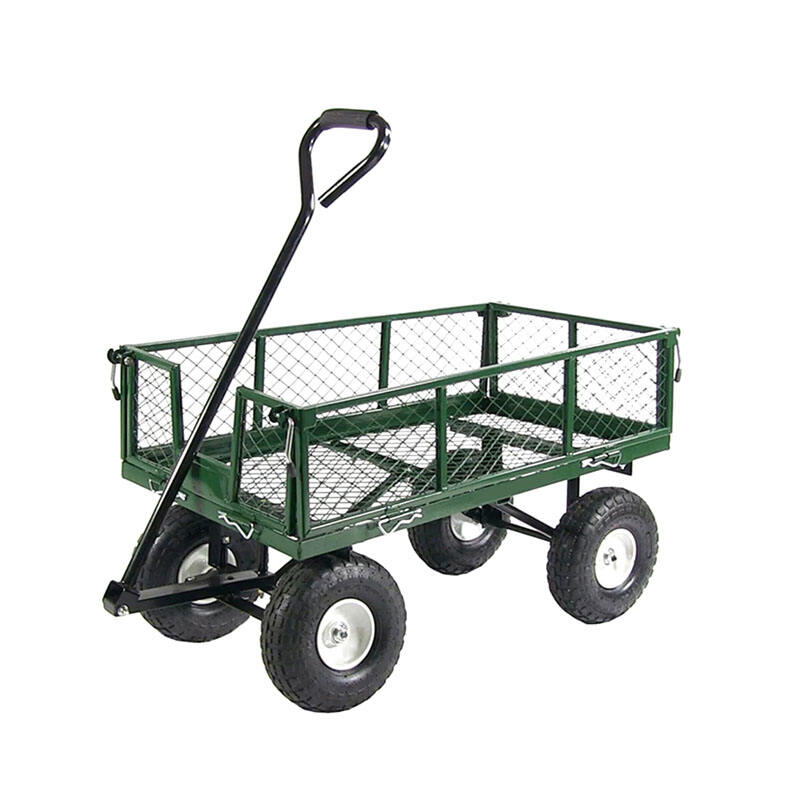
While conventional wisdom might suggest that the smaller footprint of a vertical hand truck makes it better for tight spaces, the reality depends on the specific spatial constraints and turning requirements. A flatbed hand cart with four swivel casters provides exceptional maneuverability in environments where operators need to navigate around equipment, through doorways, or in confined aisles with frequent direction changes. The ability to pivot the cart nearly in place without needing to tip or reposition the load offers significant advantages in crowded warehouse aisles, retail backrooms, or industrial facilities with dense equipment layouts.
Facilities with narrow corridors, frequent ninety-degree turns, or workspace configurations requiring precise positioning benefit from the superior steering control that a quality flatbed hand cart provides. The low center of gravity and four-wheel design distributes weight evenly, allowing operators to make controlled movements without the load shifting or creating momentum that must be counteracted. This control advantage becomes particularly valuable when transporting fragile items, expensive equipment, or hazardous materials where sudden movements or jerky handling could result in significant damage or safety incidents. The maneuverability factor should be evaluated based on actual workspace layout rather than assumptions about equipment size.
Surface Conditions and Outdoor Use
Operational environments with uneven flooring, outdoor pathways, gravel surfaces, or transitional areas between different surface types present challenges that vertical hand trucks struggle to overcome. The two-wheel design of an upright dolly concentrates weight on a small contact area, making it prone to sinking into soft surfaces, catching on floor irregularities, or becoming unstable on inclines. A flatbed hand cart equipped with appropriately sized wheels distributes load weight across four contact points, providing stability and mobility across varied terrain conditions that would stop or destabilize a vertical hand truck.
Landscaping operations, construction sites, facility maintenance tasks spanning indoor and outdoor areas, and agricultural applications routinely encounter surface conditions where a flatbed hand cart maintains functionality while a vertical hand truck becomes impractical. The wider wheelbase and lower center of gravity prevent tipping on uneven ground, while larger diameter wheels roll over obstacles and surface transitions that would require excessive force to overcome with smaller wheels. Organizations operating in mixed environments or dealing with unpredictable surface conditions should prioritize equipment that maintains performance across all encountered terrain rather than optimizing for ideal smooth floor conditions that may not reflect operational reality.
Operational Efficiency and Handling Frequency Factors
Continuous Loading and Unloading Cycles
Operations involving frequent stop-and-go movement patterns with multiple loading and unloading points throughout a route benefit significantly from the accessibility of a flatbed hand cart design. Order picking operations, inter-department material distribution, and maintenance rounds requiring tool and parts transport all involve repeated cycles of adding and removing items. The open platform design allows operators to quickly access any item on the cart without unloading other materials, a significant advantage over the sequential access pattern required with vertically stacked loads on a hand truck.
Distribution efficiency improves measurably when operators can organize materials on a flatbed hand cart platform according to delivery sequence, accessing each item as needed without disturbing the remaining load. This organizational capability reduces handling time at each stop and minimizes the risk of item damage from repeated restacking. In environments where route efficiency and handling speed directly impact operational capacity, the time savings from improved access patterns can justify equipment selection even when load weights fall within the capacity range of both equipment types. The operational workflow should drive equipment choice rather than focusing exclusively on maximum load capacity specifications.
Team-Based Material Handling Operations
Collaborative work environments where multiple team members contribute to loading, transporting, or unloading materials find that a flatbed hand cart facilitates coordinated handling activities. The accessible platform allows multiple operators to simultaneously load or unload items from different sides, speeding up transition times at loading docks, staging areas, or delivery points. Vertical hand trucks, by design, limit access to a single operator working from one position, creating bottlenecks during team-based operations and limiting the efficiency gains possible through coordinated effort.
Event setup crews, facility maintenance teams, retail stocking operations during overnight replenishment, and collaborative warehouse environments all benefit from equipment that supports simultaneous multi-person interaction. The ability for team members to work together loading a flatbed hand cart, transporting it to the destination, and then unloading collaboratively reduces total task time and improves coordination. This collaborative advantage becomes particularly valuable during time-sensitive operations or when labor resources are temporarily increased to handle peak demand periods. Equipment selection should consider not just individual operator efficiency but also how the design supports or hinders team-based workflows.
Visibility and Load Monitoring
Operators transporting valuable, fragile, or inventory-critical items benefit from the continuous visibility that a flatbed hand cart provides throughout the transport process. Unlike vertical hand trucks where stacked items obscure visibility and require operators to navigate by looking around the load, the low-profile design of a flatbed cart allows operators to maintain full forward visibility while monitoring load security simultaneously. This dual awareness capability improves navigation safety, reduces collision incidents, and allows operators to identify and address load shifting before items fall or become damaged.
Facilities handling electronics, medical supplies, retail display merchandise, or any high-value goods subject to strict accountability requirements benefit from the ability to visually monitor load integrity throughout transport. The open platform design makes it immediately apparent if items shift, straps loosen, or products begin to slide, allowing for prompt corrective action. This monitoring capability also supports inventory control processes by making it easier to verify load contents at checkpoints without requiring complete unloading for inspection. The visibility advantage contributes to both operational safety and inventory accuracy, factors that carry significant financial implications in controlled inventory environments.
Physical Demands and Worker Safety Implications
Ergonomic Considerations and Injury Prevention
The biomechanical demands placed on operators differ substantially between equipment types, with implications for both immediate task performance and long-term musculoskeletal health. Vertical hand trucks require operators to tip the unit backward to achieve the wheeled transport position, a movement that creates loading on the lower back, shoulders, and arms proportional to the total load weight. This tipping motion becomes increasingly strenuous as load weight increases and must be repeated at both the loading and unloading points. A flatbed hand cart eliminates this tipping requirement entirely, allowing operators to maintain neutral body positions throughout the transport task.
Organizations implementing comprehensive ergonomic programs or addressing existing injury trends related to material handling should carefully evaluate how equipment selection influences physical demand patterns. The cumulative strain from repeatedly tipping loaded vertical hand trucks contributes to overuse injuries, back problems, and shoulder issues that develop gradually over months or years of repetitive exposure. While individual incidents may seem manageable, the aggregate physical demand across hundreds of daily repetitions creates substantial injury risk. Transitioning to a flatbed hand cart for appropriate applications reduces these biomechanical stressors, contributing to measurable improvements in injury rates and workers' compensation costs.
Balance and Stability During Transport
The inherent stability characteristics of equipment design directly impact operator safety and load security during transport, particularly when navigating ramps, crossing surface transitions, or managing momentum in congested areas. Vertical hand trucks concentrate the load weight above a narrow two-wheel base, creating an inherently unstable system that relies on operator skill and continuous attention to maintain balance. Any momentary inattention, unexpected obstacle, or surface irregularity can cause the load to tip, potentially resulting in product damage, operator injury, or both.
A flatbed hand cart distributes load weight across a wide four-wheel platform, creating a stable system that resists tipping even when navigating challenging conditions or when operator attention is momentarily diverted. This stability advantage becomes critically important in dynamic environments with pedestrian traffic, crossing forklifts, or unpredictable workflow patterns that require operators to stop suddenly or change direction quickly. The reduced tipping risk translates directly to fewer load spillage incidents, less product damage, and fewer operator injuries from attempting to prevent or recover from tipping events. Safety-focused organizations should weigh these stability differences heavily when evaluating equipment for high-traffic or unpredictable operational environments.
Physical Exertion Across Extended Distances
When transport tasks involve covering significant distances within large facilities or between buildings, the cumulative physical effort required to move loaded equipment becomes a critical factor in operator fatigue and task efficiency. Pushing a flatbed hand cart with properly functioning casters requires substantially less continuous force than maintaining control of a tipped vertical hand truck, particularly as transport distances extend beyond short-range movements. The reduced physical effort translates to lower fatigue levels, allowing operators to maintain productivity throughout full shifts and reducing the recovery time needed between handling tasks.
Large distribution centers, sprawling manufacturing campuses, institutional facilities with multiple buildings, and retail operations with separated stockrooms and sales floors all involve transport distances where the reduced effort advantage of a flatbed hand cart becomes operationally significant. The ability to maintain efficiency over longer distances without proportional increases in operator fatigue supports higher daily throughput and reduces the total labor hours required to complete material handling tasks. When evaluating equipment for operations with extended transport routes, the force requirements over distance should be considered alongside maximum load capacity and other performance specifications.
Cost Considerations and Long-Term Value
Initial Investment Versus Operational Costs
While purchase price often dominates equipment procurement decisions, the total cost of ownership extends far beyond initial acquisition expense to include maintenance requirements, replacement frequency, and the operational efficiency impacts that affect labor productivity. A quality flatbed hand cart typically represents a moderate initial investment that delivers extended service life when properly maintained, with minimal consumable parts beyond occasional wheel replacement. The durable platform construction and simple mechanical design result in lower long-term maintenance costs compared to equipment with more complex mechanisms or higher wear component counts.
Organizations focused on total cost analysis should evaluate how equipment selection impacts operational efficiency metrics such as items moved per labor hour, incident rates affecting workers' compensation costs, and product damage frequency influencing inventory loss. A flatbed hand cart that enables one operator to transport consolidated loads in a single trip rather than making multiple trips with a vertical hand truck generates measurable labor savings that quickly offset any initial price difference. Similarly, reduced product damage and lower injury rates contribute to cost avoidances that may not appear in equipment budgets but significantly impact overall operational expenses. Procurement decisions should incorporate these broader financial implications rather than optimizing solely for lowest purchase price.
Versatility and Equipment Utilization Rates
The practical value of material handling equipment depends not just on its performance in ideal applications but on its ability to accommodate the diverse handling tasks that arise in real operational environments. A flatbed hand cart provides exceptional versatility, handling everything from boxed goods to irregular items, from consolidated small parts to large flat materials, and from indoor smooth floor operations to outdoor rough terrain transport. This versatility translates to higher equipment utilization rates, as the same cart can be deployed across multiple departments and applications rather than sitting idle between specific tasks.
Organizations managing equipment inventories across diverse operational areas benefit from standardizing on versatile platforms that reduce the total number of specialized equipment pieces required. A fleet of flatbed hand carts can serve warehouse operations, maintenance departments, facility services, and loading dock activities interchangeably, improving equipment availability and reducing the capital investment tied up in underutilized specialized tools. This flexibility advantage becomes particularly valuable in smaller organizations or facilities where budget constraints limit equipment purchases and operational demands require maximum adaptability from every capital investment.
Durability and Service Life in Demanding Environments
The longevity of material handling equipment depends on structural design, component quality, and the specific demands of the operational environment. A well-constructed flatbed hand cart with reinforced platform construction, industrial-grade casters, and corrosion-resistant finishes can deliver years of reliable service in demanding applications that would quickly degrade lesser equipment. The simple mechanical design with fewer moving parts and stress concentration points contributes to extended service life compared to more complex equipment designs with multiple potential failure modes.
Industrial environments, outdoor applications, and high-frequency use scenarios require equipment built to withstand continuous operation without progressive deterioration. The investment in a quality flatbed hand cart with appropriate construction specifications for the intended application environment yields better long-term value than purchasing economy equipment requiring frequent replacement. Organizations should evaluate equipment specifications including deck gauge thickness, frame construction quality, caster load ratings, and finish durability against their specific operational demands to ensure the selected equipment will maintain performance throughout its expected service life. The lowest-cost option rarely represents the best value when total ownership costs and replacement frequency are properly considered.
FAQ
What maximum weight capacity should I look for in a flatbed hand cart for general industrial use?
For general industrial applications, a flatbed hand cart should have a minimum weight capacity of 800 to 1,000 pounds to handle typical consolidated loads without operating near capacity limits that accelerate wear. However, capacity requirements vary significantly based on your specific materials and loading patterns. Evaluate your heaviest typical loads and select equipment rated at least 25 percent above that weight to maintain performance margins and extend equipment service life. Operations regularly handling particularly heavy items should consider models with 1,500-pound or higher capacities, though these heavier-duty units typically feature larger dimensions and may be less maneuverable in confined spaces.
Can a flatbed hand cart safely navigate ramps and inclines that a vertical hand truck handles?
A properly loaded flatbed hand cart with an appropriate wheel configuration can safely navigate moderate ramps and inclines, often with better stability than a vertical hand truck due to its lower center of gravity and four-wheel design. The key factors are ensuring loads are centered on the platform, properly secured to prevent shifting, and that the ramp angle does not exceed the equipment's safe operating specifications. For steep inclines or frequent ramp use, select models with larger diameter wheels that provide better rolling resistance and braking control. The operator should always position themselves on the uphill side when moving on inclines to maintain control and prevent runaway situations.
How do I determine whether specific items in my operation are better suited for a flatbed hand cart versus a vertical hand truck?
Evaluate each item type against several key criteria including dimensional characteristics, stackability, handling frequency, and transport distance. Items that are wider than they are tall, irregularly shaped, need to remain horizontal during transport, or require frequent access during the transport route typically favor a flatbed hand cart. Conversely, uniformly sized boxes, tightly stacked items, loads moving long distances without intermediate stops, and materials benefiting from vertical storage during transport work well with vertical hand trucks. For mixed operations, consider maintaining both equipment types and establishing clear guidelines for operators regarding which tool to select based on load characteristics. Conducting a brief handling analysis of your most common materials will quickly reveal patterns indicating which equipment type serves the majority of your needs.
What maintenance requirements should I expect with a flatbed hand cart used in daily operations?
Regular maintenance for a flatbed hand cart primarily involves inspecting and servicing the caster wheels, checking for frame integrity, and ensuring the platform surface remains free of damage or sharp edges. Wheels should be checked weekly for debris accumulation, bearing function, and tread wear, with replacement performed when rolling resistance increases or wobbling develops. Monthly inspections should verify that all fasteners remain tight, welds show no cracking, and the platform surface has not developed sharp edges from impact damage. In dirty or outdoor environments, periodic cleaning prevents debris buildup that can impair wheel function. Quality industrial casters typically last six months to two years depending on usage intensity and surface conditions, making wheel replacement the primary consumable maintenance cost. Establishing a simple inspection checklist and addressing minor issues promptly prevents small problems from developing into equipment failures that interrupt operations.
Table of Contents
- Load Characteristics That Favor Flatbed Hand Carts
- Workspace and Operational Environment Considerations
- Operational Efficiency and Handling Frequency Factors
- Physical Demands and Worker Safety Implications
- Cost Considerations and Long-Term Value
-
FAQ
- What maximum weight capacity should I look for in a flatbed hand cart for general industrial use?
- Can a flatbed hand cart safely navigate ramps and inclines that a vertical hand truck handles?
- How do I determine whether specific items in my operation are better suited for a flatbed hand cart versus a vertical hand truck?
- What maintenance requirements should I expect with a flatbed hand cart used in daily operations?

