 EN
EN

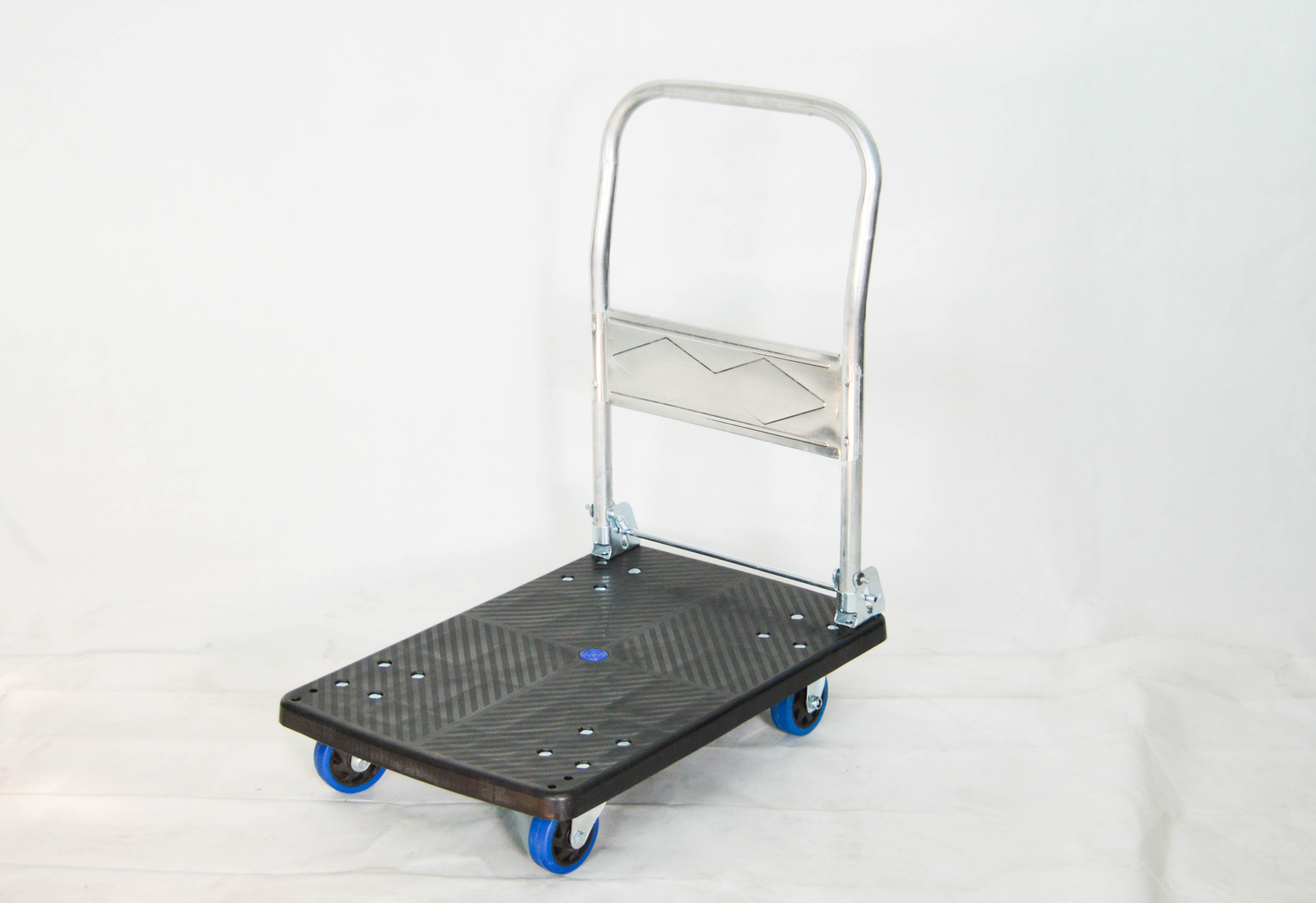
Distribution center managers constantly seek practical solutions to reduce handling time, minimize worker fatigue, and accelerate order fulfillment cycles. The question of whether custom platform trucks can genuinely streamline workflow is not hypothetical—it reflects operational realities faced daily by logistics teams managing high-volume environments. A warehouse platform truck designed with specific distribution center requirements in mind addresses bottlenecks that generic equipment cannot resolve, from congested aisles to repetitive lifting tasks that slow productivity and increase injury risk.

The capacity of customized material handling equipment to transform distribution center efficiency depends on how precisely the design aligns with actual workflow patterns. Standard platform trucks may handle basic transport tasks, but distribution centers operate under unique constraints involving varied product dimensions, rapid turnover demands, and tight spatial configurations. When a warehouse platform truck incorporates tailored features such as adjustable platforms, specialized wheel configurations, or integrated shelving systems, it directly eliminates inefficiencies that accumulate across hundreds of daily material movements, creating measurable improvements in throughput and labor utilization.
Understanding Distribution Center Workflow Challenges That Platform Trucks Address
Repetitive Material Movement Patterns and Ergonomic Strain
Distribution centers process continuous streams of incoming inventory and outbound shipments, creating repetitive material handling cycles that demand efficient equipment. Workers frequently transport mixed-weight loads across variable distances, from receiving docks to storage zones and from picking areas to packing stations. Without appropriately designed equipment, these movements generate cumulative ergonomic strain that reduces productivity over shift durations and increases workplace injury rates. A warehouse platform truck engineered for distribution center environments minimizes lifting frequency by maintaining loads at optimal handling heights and reducing physical exertion through smooth maneuverability.
The physical demands of conventional manual handling create workflow slowdowns as workers require recovery time between tasks or experience fatigue-related errors. Custom platform trucks with ergonomic handle positioning, low-effort steering mechanisms, and shock-absorbing wheels allow operators to maintain consistent pace throughout extended shifts. This capability directly impacts throughput metrics by sustaining worker efficiency during peak operational hours when distribution centers experience maximum volume pressures and time-sensitive fulfillment requirements.
Spatial Constraints and Navigation Efficiency
Modern distribution centers maximize vertical storage and minimize aisle widths to optimize cubic utilization, creating tight navigation environments where equipment dimensions critically affect workflow. Standard platform trucks often lack the turning radius and width specifications needed for efficient movement through narrow passages between pallet racks or around workstation clusters. When material handlers must repeatedly reposition equipment or navigate circuitous routes due to spatial conflicts, cumulative delays compound throughout daily operations, reducing effective throughput capacity despite available labor hours.
Custom-designed warehouse platform truck solutions address these spatial challenges through precise dimensional engineering that balances load capacity with maneuverability requirements. Compact wheelbase configurations enable tighter turning angles, while narrow profile designs permit passage through restricted aisle widths without requiring workflow adjustments or rack reconfiguration. This spatial optimization eliminates navigation delays and allows distribution centers to maintain high-density storage layouts without sacrificing material flow efficiency, directly supporting workflow streamlining objectives through equipment-environment compatibility.
Load Variability and Handling Flexibility Requirements
Distribution centers handle diverse product categories with varying dimensions, weights, and packaging formats within single operational shifts. The inability to efficiently accommodate load variability forces workers to switch between multiple equipment types or manually adjust handling methods, introducing delays and increasing error potential. A warehouse platform truck with customizable features addresses this challenge by providing adaptable load support configurations that accommodate different product types without equipment changes or workflow interruptions.
Adjustable platform heights, removable side panels, and modular accessory mounting systems enable single equipment units to serve multiple distribution center functions across receiving, storage, picking, and shipping zones. This versatility reduces equipment fleet size requirements while maintaining operational flexibility, simplifying workflow design and eliminating time losses associated with equipment retrieval or task-specific tool selection. The resulting operational fluidity directly enhances distribution center productivity by allowing seamless transitions between varied handling tasks using consistent equipment interfaces.
Custom Design Features That Directly Impact Workflow Efficiency
Platform Configuration and Load Accessibility
The physical design of platform surfaces fundamentally determines how quickly workers can load, transport, and unload materials within distribution center workflows. Standard platform trucks often feature fixed-height decks that create inefficient loading angles or require additional lifting to position items securely. Custom warehouse platform truck designs incorporate adjustable platform heights that align with common storage elevations, conveyor systems, and workstation surfaces throughout the facility, minimizing vertical transfer efforts and accelerating material placement tasks.
Platform surface treatments also influence workflow efficiency by affecting load stability during transport. Textured or perforated deck surfaces prevent load shifting on smooth warehouse floors, reducing the need for repositioning or secondary securing during movement. Side rail configurations tailored to typical load dimensions provide containment without obstructing access, enabling rapid placement and retrieval actions that maintain distribution center pace requirements. These design specifications directly translate to reduced handling time per unit transported, creating cumulative efficiency gains across high-volume operations.
Wheel Systems and Maneuverability Characteristics
Wheel configuration represents a critical customization factor that determines how effectively a warehouse platform truck navigates distribution center environments under loaded conditions. Standard caster assemblies may lack the precision bearing systems or diameter specifications needed for smooth operation across varied floor surfaces or through debris-prone zones. Custom wheel designs incorporate industrial-grade bearings, optimal diameter sizing for obstacle clearance, and material compositions suited to specific flooring types, ensuring consistent rolling resistance and directional control throughout facility operations.
Specialized wheel arrangements such as four-wheel swivel configurations or dual-fixed front wheel systems provide maneuverability characteristics matched to operational patterns. Distribution centers with frequent directional changes benefit from full-swivel designs that enable tight turns and lateral positioning adjustments, while facilities with predominantly straight-line transport routes gain stability advantages from partially fixed wheel systems. This customization ensures that equipment handling characteristics align with actual movement patterns, eliminating unnecessary maneuvering efforts and supporting streamlined workflow execution.
Handle Ergonomics and Operator Control Interfaces
The interface between equipment and operator significantly influences sustained productivity levels in distribution center environments where workers interact with material handling tools throughout multi-hour shifts. Poorly designed handle systems create awkward postures, require excessive grip force, or position controls inconveniently, generating operator fatigue that progressively degrades workflow efficiency. Custom warehouse platform truck designs optimize handle height ranges, grip diameters, and control placement based on ergonomic research and operator feedback, reducing physical strain and maintaining consistent handling performance across shift durations.
Advanced custom designs incorporate features such as adjustable handle angles, cushioned grip surfaces, and integrated brake mechanisms positioned for natural thumb operation. These refinements eliminate micro-inefficiencies in equipment operation that accumulate into significant time losses across hundreds of daily material movements. When operators can maintain comfortable postures and execute control actions without conscious adjustment, workflow continuity improves measurably, supporting overall distribution center throughput objectives through enhanced human-equipment interaction quality.
Operational Integration Strategies for Maximum Workflow Impact
Task-Specific Equipment Assignment and Zone Optimization
Maximizing the workflow benefits of custom platform trucks requires strategic deployment aligned with distribution center zone characteristics and task requirements. Generic equipment allocation approaches fail to leverage customization advantages, potentially positioning specialized features in operational areas where they provide minimal value. Effective integration involves analyzing workflow patterns within receiving, storage, picking, and shipping zones to identify specific handling challenges that custom warehouse platform truck features can address, then assigning equipment accordingly to optimize feature utilization.
Distribution centers implementing zone-specific equipment strategies often designate custom platform trucks with high maneuverability characteristics to dense picking areas with frequent directional changes, while assigning high-capacity stable designs to receiving zones handling bulk shipments. This targeted deployment ensures that customization investments deliver proportional efficiency gains by matching equipment capabilities to operational demands. The resulting workflow improvements manifest as reduced task completion times, decreased equipment idle periods, and enhanced labor productivity within specific operational zones where custom features provide greatest advantage.
Workflow Process Redesign Around Equipment Capabilities
Introducing custom platform trucks into established distribution center operations presents opportunities to redesign workflow processes that previously accommodated equipment limitations rather than optimizing material flow. Traditional workflows often incorporate unnecessary steps or inefficient movement patterns dictated by standard equipment constraints, such as intermediate staging points required because equipment could not access final destinations directly. When custom warehouse platform truck designs eliminate these constraints through enhanced maneuverability or load capacity, distribution centers can streamline processes by removing compensatory steps and establishing more direct material flow paths.
Process redesign initiatives examine each workflow segment to identify where custom equipment features enable simplification, such as consolidating multi-step transfers into single movements or eliminating manual rehandling between equipment types. This approach requires cross-functional collaboration between operations teams familiar with current workflow details and management personnel who can authorize procedural changes. Successful implementation produces measurable cycle time reductions and labor hour savings that validate customization investments while establishing more efficient operational standards that scale with volume growth.
Training Programs and Operator Proficiency Development
The workflow streamlining potential of custom platform trucks depends significantly on operator proficiency in utilizing specialized features and understanding optimal handling techniques for customized equipment. Without structured training, workers may default to familiar handling methods that fail to exploit customization advantages, negating efficiency benefits that justified equipment investment. Comprehensive training programs ensure operators understand feature functions, recognize appropriate application scenarios, and develop skill in executing tasks using equipment-specific capabilities that differentiate custom warehouse platform truck designs from standard alternatives.
Effective training extends beyond initial orientation to include ongoing proficiency development that reinforces optimal equipment utilization as operational demands evolve. Distribution centers implementing performance monitoring can identify skill gaps where operators underutilize custom features or execute tasks inefficiently, then provide targeted coaching to address specific deficiencies. This continuous improvement approach maximizes return on customization investments by ensuring that equipment capabilities translate consistently into operational performance gains across entire workforce populations throughout equipment service life.
Measuring Workflow Improvements and Quantifying Efficiency Gains
Key Performance Indicators for Equipment Impact Assessment
Validating whether custom platform trucks genuinely streamline distribution center workflow requires establishing measurable performance indicators that isolate equipment contributions from broader operational variables. Generic productivity metrics such as overall throughput may reflect multiple concurrent influences, making it difficult to attribute improvements specifically to equipment changes. Targeted KPIs focusing on equipment-dependent activities provide clearer assessment frameworks, including metrics such as material movement cycle time, handling actions per labor hour, equipment utilization rates, and task completion consistency across shift periods.
Distribution centers implementing custom warehouse platform truck solutions benefit from baseline measurement collection before equipment deployment, establishing comparative benchmarks for post-implementation assessment. Time-motion studies tracking specific task sequences, such as order picking cycles or receiving dock processing times, reveal granular efficiency changes attributable to equipment characteristics. These detailed measurements support evidence-based evaluation of customization effectiveness and identify specific operational contexts where custom equipment delivers greatest workflow impact, informing future equipment investment decisions and optimization priorities.
Cost-Benefit Analysis Beyond Equipment Acquisition Price
Assessing the workflow streamlining value of custom platform trucks requires comprehensive cost-benefit analysis that extends beyond initial purchase price comparisons with standard equipment alternatives. While customization typically increases upfront costs, the operational value proposition depends on efficiency gains realized throughout equipment service life. Quantifiable benefits include labor hour savings from reduced task completion times, decreased workplace injury costs through improved ergonomics, and enhanced throughput capacity enabling revenue growth without proportional labor expansion.
Advanced analysis incorporates factors such as equipment durability and maintenance requirements, which often favor well-engineered custom warehouse platform truck designs over cheaper standard options prone to premature failure under demanding distribution center conditions. Total cost of ownership calculations accounting for replacement frequency, downtime impacts, and repair expenses frequently demonstrate superior value for customized equipment despite higher initial investment. These comprehensive financial assessments support strategic procurement decisions by revealing long-term operational advantages that justify customization investments as workflow optimization tools rather than discretionary equipment enhancements.
Continuous Improvement Integration and Performance Optimization
Maximizing workflow streamlining outcomes from custom platform trucks involves ongoing performance monitoring and iterative refinement rather than one-time equipment deployment. Distribution center environments evolve continuously as product mixes change, volume patterns shift, and operational processes adapt to market demands. Equipment that optimally supported workflow efficiency at implementation may require adjustment or supplementation as operational contexts change, making continuous improvement integration essential for sustained performance benefits.
Systematic performance review processes evaluate whether current warehouse platform truck configurations continue to address evolving workflow challenges or whether modifications could enhance effectiveness. Operator feedback mechanisms capture frontline insights regarding equipment functionality in actual operational conditions, identifying refinement opportunities that may not appear in formal performance metrics. This iterative approach treats customization as an ongoing optimization process rather than a fixed solution, ensuring that equipment capabilities remain aligned with current distribution center requirements and continue delivering meaningful workflow efficiency contributions over extended operational periods.
Implementation Considerations and Decision Frameworks
Assessing Distribution Center Readiness for Custom Equipment
Not all distribution center environments equally benefit from custom platform truck implementation, making readiness assessment critical for ensuring investment appropriateness. Facilities operating with highly standardized product characteristics and simple linear workflows may achieve adequate efficiency with standard equipment, while operations handling diverse inventory types, managing complex multi-stage processes, or facing significant spatial constraints gain disproportionate value from customization. Readiness evaluation examines factors including operational complexity, current equipment limitations, workflow pain points, and volume projections to determine whether customization investments align with genuine operational needs.
Distribution centers experiencing persistent workflow bottlenecks despite process optimization efforts often represent ideal candidates for custom warehouse platform truck solutions, as equipment limitations may constitute fundamental constraints preventing further efficiency gains. Conversely, facilities with adequate current performance may prioritize customization investments lower than other operational improvements offering greater marginal returns. This strategic assessment ensures that equipment customization initiatives target environments where they can deliver meaningful workflow impact rather than representing solutions seeking problems to address.
Specification Development and Supplier Collaboration
Successful custom platform truck implementation depends on developing precise specifications that translate operational requirements into actionable design parameters. Generic customization requests lacking technical detail often produce equipment that fails to address intended workflow challenges or introduces unforeseen operational complications. Effective specification development involves detailed workflow analysis, dimensional requirement documentation, load characteristic profiling, and environmental condition assessment, creating comprehensive design briefs that enable suppliers to engineer solutions matching actual operational contexts.
Collaborative supplier relationships enhance specification quality by incorporating manufacturing expertise and material handling engineering knowledge into design development. Experienced suppliers can identify potential specification conflicts, recommend proven feature combinations, and suggest alternative approaches that achieve desired workflow outcomes more effectively than initial concepts. This consultative approach produces warehouse platform truck designs optimized for manufacturing feasibility while maintaining operational effectiveness, balancing customization aspirations with practical engineering constraints and cost considerations.
Pilot Testing and Validation Before Full Deployment
Mitigating implementation risk for custom platform truck projects requires pilot testing that validates design effectiveness under actual operational conditions before committing to full-scale deployment. Even well-developed specifications may produce unexpected operational challenges when equipment interacts with complex distribution center environments involving variable conditions, diverse operator populations, and dynamic workflow patterns. Limited initial deployments enable controlled evaluation of equipment performance, identification of refinement needs, and validation of anticipated efficiency benefits before substantial investment in fleet-wide implementation.
Structured pilot programs establish specific evaluation criteria, define testing duration, and assign responsibility for performance monitoring and feedback collection. Distribution centers conducting thorough pilots gather quantitative performance data alongside qualitative operator input, creating comprehensive assessments that inform deployment decisions and specification adjustments. This methodical approach reduces the risk of large-scale equipment investments failing to deliver expected workflow improvements while providing opportunities to optimize designs based on empirical operational experience rather than theoretical projections.
FAQ
How do custom warehouse platform trucks differ from standard material handling carts in distribution center applications?
Custom warehouse platform trucks incorporate design features specifically engineered to address operational challenges unique to particular distribution center environments, while standard carts offer generic configurations suitable for general material handling. Customization addresses factors such as precise dimensional requirements for navigating specific aisle widths, load capacity specifications matching actual product weights and volumes, wheel systems optimized for particular flooring types, and ergonomic features tailored to operator populations and shift patterns. These targeted design elements enable custom equipment to eliminate workflow inefficiencies that generic alternatives cannot address, producing measurable improvements in handling speed, operator comfort, and operational flexibility that justify higher initial investment through sustained efficiency gains.
What return on investment timeline should distribution centers expect when implementing custom platform truck solutions?
Return on investment timelines for custom warehouse platform truck implementations vary based on operational volume, labor costs, efficiency gain magnitude, and equipment pricing, but most distribution centers with moderate to high throughput realize positive returns within twelve to twenty-four months. Facilities processing significant daily volume experience faster payback through cumulative time savings across thousands of material movements, while operations with premium labor markets benefit from reduced staffing requirements and injury cost avoidance. Comprehensive ROI calculations should account for multiple benefit categories including direct labor hour reduction, throughput capacity increases enabling revenue growth, workplace injury cost decreases, and equipment longevity advantages over cheaper alternatives requiring more frequent replacement. Distribution centers conducting thorough cost-benefit analysis typically find that workflow efficiency improvements from well-designed custom equipment justify investment even with conservative benefit assumptions.
Can existing distribution center layouts accommodate custom platform trucks without requiring facility modifications?
Most distribution centers can integrate custom warehouse platform trucks into existing layouts without structural modifications when equipment specifications properly account for current facility constraints during design development. Customization advantages include the ability to engineer precise dimensional parameters that function within established aisle widths, door clearances, and elevation transitions, essentially adapting equipment to facility rather than requiring facility adaptation to equipment. However, maximizing workflow benefits may involve minor operational adjustments such as revised traffic patterns, designated equipment staging zones, or modified material flow sequences that exploit custom equipment capabilities without requiring physical infrastructure changes. Distribution centers should conduct thorough spatial analysis during specification development to ensure custom designs function effectively within current layouts while identifying any optional facility modifications that could further enhance equipment performance and workflow efficiency.
What maintenance considerations apply specifically to custom platform trucks compared to standard equipment?
Custom warehouse platform trucks generally require similar fundamental maintenance as standard equipment, including regular wheel bearing lubrication, structural integrity inspection, and surface condition monitoring, but may involve specialized component servicing depending on custom feature complexity. Advanced customizations incorporating adjustable mechanisms, specialized wheel systems, or integrated accessories may require manufacturer-specific maintenance procedures and replacement parts not available through general industrial suppliers. Distribution centers implementing custom equipment should establish maintenance protocols documented by suppliers, maintain adequate spare parts inventory for custom components, and train maintenance personnel on equipment-specific service requirements. Well-engineered custom designs typically demonstrate superior durability under demanding distribution center conditions compared to standard alternatives, potentially reducing overall maintenance burden despite specialized service needs, as robust construction and application-optimized specifications minimize premature wear and failure common in generic equipment subjected to intensive operational demands.
Table of Contents
- Understanding Distribution Center Workflow Challenges That Platform Trucks Address
- Custom Design Features That Directly Impact Workflow Efficiency
- Operational Integration Strategies for Maximum Workflow Impact
- Measuring Workflow Improvements and Quantifying Efficiency Gains
- Implementation Considerations and Decision Frameworks
-
FAQ
- How do custom warehouse platform trucks differ from standard material handling carts in distribution center applications?
- What return on investment timeline should distribution centers expect when implementing custom platform truck solutions?
- Can existing distribution center layouts accommodate custom platform trucks without requiring facility modifications?
- What maintenance considerations apply specifically to custom platform trucks compared to standard equipment?

