 EN
EN

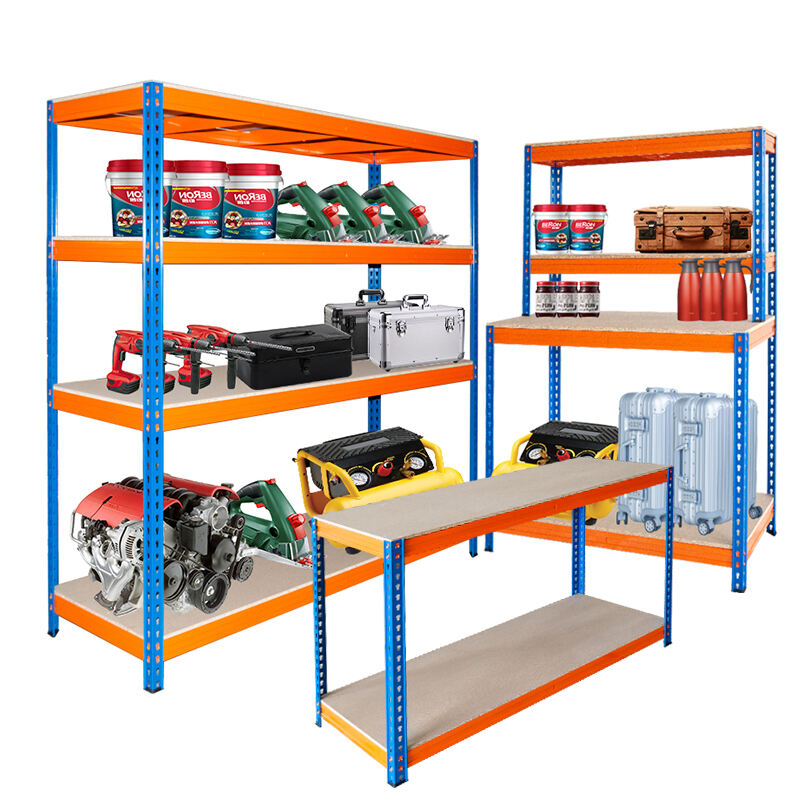
When planning a functional workshop space, the decision between building work bench in garage using a modular system versus purchasing a pre-built imported unit represents a significant financial and practical choice. Homeowners, hobbyists, and professional tradespeople face this dilemma regularly, weighing upfront costs against long-term value, customization needs against convenience, and quality control against time investment. The cost-effectiveness of each approach depends not only on the initial purchase price but also on factors such as durability, adaptability to changing needs, shipping expenses, assembly complexity, and the specific requirements of your workspace. Understanding these variables enables you to make an informed decision that aligns with both your budget constraints and functional expectations for your garage workshop.
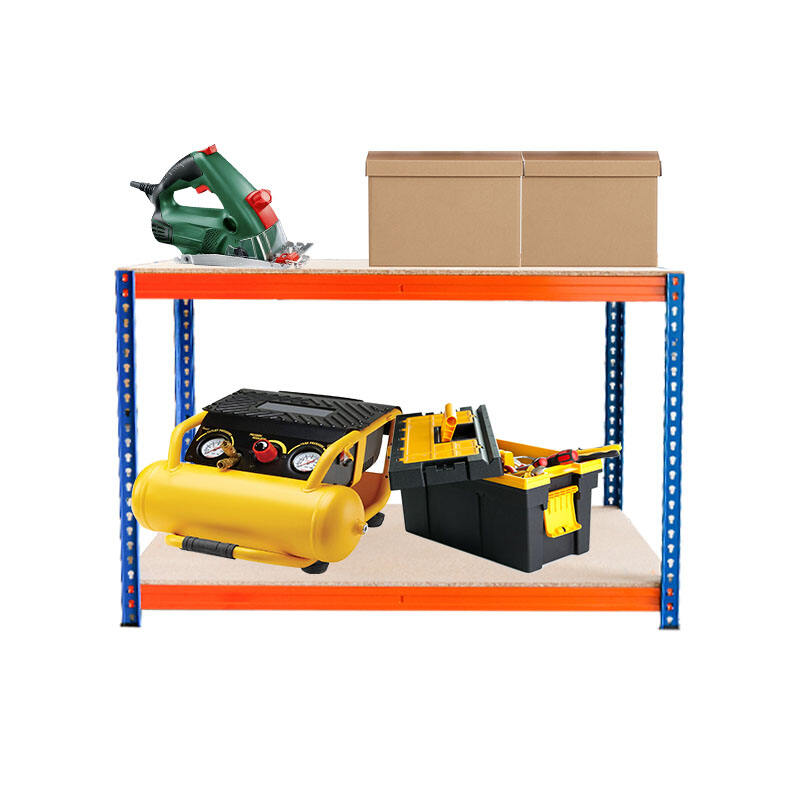
The modular approach to building work bench in garage has gained considerable traction among cost-conscious consumers who value flexibility and customization. This method involves purchasing component parts such as steel frames, work surfaces, tool organizers, and storage modules that can be configured according to specific spatial and functional requirements. In contrast, pre-built workbench imports arrive as complete units manufactured overseas, often marketed as convenient turnkey solutions. Each path presents distinct cost implications that extend beyond the visible price tag, affecting everything from transportation expenses to maintenance costs over the workbench's operational lifespan. Examining these approaches through multiple financial lenses reveals which option delivers superior value under different circumstances and user profiles.
Initial Purchase Price Analysis and Hidden Cost Factors
Component Pricing in Modular Systems
Modular systems for building work bench in garage typically break down costs into transparent individual components. A basic steel frame might range from eighty to two hundred dollars depending on load capacity and construction quality, while work surfaces vary from fifty to three hundred dollars based on material choice such as laminated particle board, hardwood, stainless steel, or bamboo. Additional modules including drawer units, pegboard backing, overhead shelving, and power strip integration each carry separate price points. This itemized pricing structure allows buyers to prioritize essential features initially while deferring optional upgrades to future budget cycles. The transparency of component-level pricing enables precise budget control and prevents overspending on unnecessary features that packaged units often include regardless of actual user needs.
When calculating the total investment for building work bench in garage through modular assembly, purchasers must account for fasteners, leveling feet, protective coatings, and potentially specialized tools required for assembly. These ancillary costs typically add ten to twenty percent to the base component prices. However, this incremental approach permits staged purchasing, spreading the financial burden across multiple months or pay periods rather than requiring full payment upfront. For budget-conscious buyers, this payment flexibility represents a significant advantage over lump-sum purchases of complete imported units.
Pre-Built Import Pricing Structure
Pre-built workbench imports present a single consolidated price point that initially appears straightforward but often conceals multiple cost layers. The advertised price typically reflects the manufacturer's production cost, international shipping to distribution centers, importer markup, and retailer profit margins. This supply chain complexity means that a workbench with manufacturing costs equivalent to a modular system's components may carry a retail price fifty to one hundred percent higher. Additionally, many imported units require significant assembly despite being marketed as pre-built, with instruction quality varying widely and sometimes necessitating additional hardware purchases when provided fasteners prove inadequate or incorrect.
Shipping costs for complete imported workbenches frequently surprise buyers, particularly for heavier steel-framed units. While modular components for building work bench in garage can often qualify for standard ground shipping or even free delivery thresholds, fully assembled or large boxed workbenches may incur dimensional weight charges, residential delivery fees, or require freight shipping that adds one hundred to three hundred dollars to the total cost. Some retailers embed these shipping costs into the product price, obscuring the true expense comparison. Furthermore, return shipping for defective or unsuitable imported units becomes financially prohibitive, effectively eliminating the option to reverse an unsatisfactory purchase decision.
Quality-Adjusted Cost Comparison
Raw price comparisons between modular and imported options must account for quality differentials that affect long-term cost-effectiveness. Many imported workbenches utilize thinner gauge steel, lower-grade fasteners, and cost-optimized joinery methods that compromise structural integrity and longevity. A modular system for building work bench in garage allows selection of industrial-grade components with verified load ratings, corrosion-resistant finishes, and reinforced connection points. While premium modular components carry higher individual costs, they deliver measurably superior durability that translates to lower replacement frequency and reduced lifecycle costs.
Weight capacity specifications illustrate this quality distinction clearly. Budget imported workbenches commonly claim five hundred to eight hundred pound capacities but achieve these ratings only under ideally distributed loads with minimal dynamic stress. Comparable modular systems specify conservative load ratings with safety factors, often supporting twelve hundred to two thousand pounds when properly assembled. For users performing automotive work, metalworking, or other demanding tasks, this capacity difference prevents costly structural failures and potential safety incidents that budget imports cannot reliably avoid.
Long-Term Value and Operational Cost Considerations
Adaptability and Reconfiguration Economics
The modular approach to building work bench in garage delivers substantial long-term financial advantages through reconfiguration capability. As project requirements evolve, workshop layouts change, or users relocate, modular systems disassemble and reassemble in different configurations without structural compromise. This adaptability preserves the initial investment's utility across changing circumstances. A workbench serving electronics repair today can transform into a woodworking station tomorrow by swapping the work surface and repositioning tool storage modules. This flexibility eliminates the need to purchase entirely new furniture when functional needs shift, representing significant cumulative savings over a workshop's operational lifespan.
Pre-built imported workbenches lack this adaptability, functioning as fixed furniture pieces with predetermined dimensions and feature arrangements. When spatial requirements change or users outgrow the original configuration, the entire unit typically requires replacement rather than modification. For building work bench in garage spaces that serve multiple purposes or users with evolving skill sets and project types, this inflexibility imposes recurring replacement costs that modular systems avoid. The economic impact becomes particularly pronounced in growing businesses or serious hobbyist workshops where capability expansion drives continuous equipment evolution.
Maintenance and Repair Cost Profiles
Component-level maintenance distinguishes modular systems from integrated imports in meaningful cost terms. When a drawer mechanism fails, a work surface becomes damaged, or a frame section suffers impact damage in a modular setup for building work bench in garage, only the affected component requires replacement. This targeted repair approach minimizes downtime and expense, with individual parts typically available through manufacturer channels or compatible third-party suppliers. Repair costs rarely exceed twenty to thirty percent of the original system investment, and repairs often require only basic tools and moderate mechanical aptitude.
Imported workbenches present more challenging maintenance economics due to proprietary component integration and limited parts availability. Manufacturers frequently discontinue specific models within two to three years, rendering replacement parts unavailable even for relatively new units. Minor damage to integrated features like attached power strips, built-in lighting, or permanently affixed storage often necessitates complete unit replacement since these elements cannot be serviced independently. Additionally, warranty coverage on imported units typically extends only ninety days to one year, after which any failure becomes an out-of-pocket expense. For building work bench in garage installations intended for heavy use, these maintenance cost differences accumulate substantially over five to ten year operational periods.
Resale Value Retention
Secondary market value represents another dimension of long-term cost-effectiveness where modular systems demonstrate advantages. High-quality modular components for building work bench in garage retain forty to sixty percent of original value in used equipment markets, particularly industrial-grade frames and specialized work surfaces. The standardized, reconfigurable nature of modular systems appeals to used equipment buyers who value customization potential. Individual components can be sold separately, expanding the potential buyer pool and facilitating faster sales at reasonable prices.
Pre-built imported workbenches depreciate more steeply, typically retaining only twenty to thirty percent of purchase price after minimal use. The fixed configuration limits appeal to potential buyers whose spatial or functional requirements may not align with the specific unit offered. Furthermore, the uncertain quality reputation of many imported brands suppresses resale values as buyers discount prices to account for reliability concerns. This depreciation differential means that modular system investments recover significantly more capital when users upgrade or exit the workshop activity, effectively reducing the true cost of ownership.
Practical Assembly and Installation Cost Factors
Time Investment Requirements
Assembly time represents an often-overlooked cost component when comparing approaches to building work bench in garage. Modular systems require methodical assembly following manufacturer instructions, typically demanding four to eight hours for a complete workstation including primary bench, storage modules, and accessory integration. This time investment requires either personal labor or hired assembly assistance. For individuals valuing their time at professional hourly rates, this represents a tangible cost that must factor into total investment calculations. However, the assembly process simultaneously provides intimate familiarity with the system's construction, facilitating future modifications and maintenance while building mechanical competency.
Pre-built imported workbenches promise reduced assembly time but rarely deliver on this expectation completely. Most require partial assembly of legs, work surfaces, and drawer units, consuming two to four hours despite pre-built marketing claims. Instruction quality varies dramatically, with many imports providing poorly translated or ambiguous assembly guidance that extends completion time and increases error probability. When assembly errors occur, correction often proves more time-consuming than careful initial assembly of modular components. For building work bench in garage projects where time-to-operation matters, the actual assembly duration difference between approaches often proves smaller than marketing materials suggest.
Tool and Skill Requirements
Modular system assembly for building work bench in garage typically requires standard hand tools including adjustable wrenches, socket sets, screwdrivers, and levels. Most quality manufacturers design connection systems for tool accessibility and provide clear torque specifications. No specialized equipment or advanced mechanical skills are necessary, though basic mechanical aptitude and patience improve results. The component-level approach allows error correction without systemic consequences, as individual connections can be adjusted or rebuilt without affecting the entire structure. This forgiving assembly process suits DIY enthusiasts and reduces the need for professional installation services.
Imported workbenches ostensibly simplify tool requirements but often present unexpected complications. Fastener types may not match standard tool sizes, particularly with metric hardware common in Asian manufacturing. Instruction ambiguity sometimes necessitates trial-and-error approaches that risk incorrect assembly with structural implications. Some imported units require specialized Allen keys or proprietary tools that may not be included or readily available, forcing assembly interruptions for tool acquisition. These complications can offset the perceived convenience advantage of pre-built units, particularly when assemblers lack extensive tool collections or mechanical troubleshooting experience.
Professional Installation Considerations
For users preferring professional installation when building work bench in garage, modular systems offer cost advantages through straightforward assembly procedures that reduce labor hours. Handyman services or general contractors can complete modular installations efficiently using manufacturer instructions, with labor costs typically ranging from one hundred fifty to three hundred dollars for standard configurations. The logical component organization and standardized connection methods minimize installation time and reduce the risk of costly errors requiring correction.
Professional installation of imported workbenches may encounter complications that increase labor costs. Ambiguous instructions require installers to interpret assembly sequences, potentially extending project duration. When provided hardware proves inadequate, installers must source replacements, adding both material costs and additional labor charges. Furthermore, many professional installers express reluctance to warranty work performed on lower-quality imported units due to recurring structural issues, sometimes declining such projects entirely or charging premium rates to offset liability concerns. These factors can unexpectedly elevate total project costs beyond initial estimates.
Spatial Efficiency and Functional Cost-Benefit Analysis
Customization Value Proposition
The ability to optimize every dimension when building work bench in garage through modular configuration delivers functional value that translates to economic benefits. Precise height adjustment ensures ergonomic working positions that reduce fatigue and increase productivity during extended work sessions. Custom width and depth dimensions maximize spatial efficiency in garages with challenging layouts, utilizing areas that standard-sized imported units cannot accommodate effectively. This spatial optimization often enables workshop consolidation that eliminates the need for supplementary storage furniture or additional workstations, representing substantial cost avoidance.
Work surface customization in modular systems addresses specific task requirements without compromising or requiring adaptation. Metalworkers select steel or hardwood surfaces resistant to spark damage and chemical exposure, while electronics technicians choose static-dissipative laminate surfaces. This task-specific optimization improves work quality, reduces material waste from surface damage, and extends equipment lifespan by preventing inappropriate surface use. Imported workbenches offer limited surface options, forcing users either to accept suboptimal materials or undertake costly aftermarket modifications that void warranties and add unplanned expenses.
Storage Integration Economics
Integrated storage represents a critical functional element where modular approaches to building work bench in garage demonstrate clear cost advantages. Component-based storage modules scale precisely to tool collection size and organization preferences, eliminating wasted capacity that increases both initial costs and floor space consumption. Drawer units, cabinet modules, pegboard systems, and overhead shelving integrate seamlessly with work surface structures, creating cohesive storage ecosystems without requiring separate furniture purchases. This integrated approach typically costs thirty to fifty percent less than acquiring standalone storage cabinets with equivalent capacity.
Pre-built imported workbenches incorporate fixed storage configurations that rarely align perfectly with individual tool collections and organization preferences. Drawer sizes may prove too small for specific tools or too large, wasting vertical space. Cabinet configurations may not accommodate particularly tall or wide equipment. These mismatches force users to purchase supplementary storage solutions, effectively paying twice for storage capacity. Additionally, fixed storage locations in imported units cannot adapt to changing tool collections, limiting long-term utility as workshop capabilities expand.
Workflow Optimization Benefits
Modular flexibility when building work bench in garage enables workflow-specific layout optimization that improves operational efficiency and reduces project completion times. Tool positioning, material staging areas, and equipment placement can be refined based on actual usage patterns rather than predetermined manufacturer assumptions. This customization reduces wasted motion, minimizes tool searching time, and creates more intuitive work sequences. For professional users or serious hobbyists, these efficiency gains translate directly to increased output capacity or reduced project hours, generating measurable economic returns that offset any initial cost premium of modular systems.
Standard configurations in imported workbenches reflect generalized design assumptions that may not suit specific workflow requirements. Tool storage locations, work surface arrangements, and accessory positioning follow manufacturing convenience rather than user-centered optimization. Users must adapt their workflows to the furniture rather than vice versa, introducing inefficiencies that accumulate across numerous projects. While difficult to quantify precisely, these productivity losses represent real economic costs through extended project timelines, increased frustration, and reduced workshop enjoyment that may ultimately decrease facility utilization.
Decision Framework and Scenario-Specific Recommendations
Budget-Constrained Scenario Analysis
For users facing strict budget limitations when building work bench in garage, the optimal approach depends on immediate versus long-term financial perspectives. Imported workbenches offer lower absolute entry costs for basic functionality, sometimes available for two hundred to four hundred dollars including minimal storage. This low threshold enables immediate workshop capability establishment without substantial capital accumulation. However, the lack of upgradeability means that capability growth requires complete replacement, potentially necessitating multiple purchases over a workshop's lifespan as needs evolve.
Modular systems accommodate budget constraints through phased acquisition strategies. Users can begin with essential frame and work surface components for three hundred to five hundred dollars, establishing core functionality while deferring storage modules, specialized surfaces, and accessories to future budget cycles. This staged investment approach distributes costs over time while building toward a more capable final configuration than comparably priced imported alternatives. The key economic advantage lies in investment preservation, as each component purchase contributes to an expanding system rather than becoming obsolete when capability requirements increase.
Professional Workshop Requirements
Professional tradespeople and small business workshops face distinct cost-effectiveness calculations when building work bench in garage or commercial spaces. Durability requirements, liability considerations, and productivity impacts elevate quality importance over initial price minimization. Modular systems from reputable industrial suppliers deliver documented load capacities, material certifications, and warranty terms suitable for commercial applications. The higher initial investment, typically ranging from eight hundred to two thousand dollars for professional-grade configurations, generates returns through extended service life, minimal downtime from failures, and insurance acceptability.
Pre-built imported workbenches rarely meet professional workshop standards for sustained heavy use. Load capacity uncertainties, questionable material quality, and limited warranty coverage create operational and liability risks that professional operators cannot accept. While some premium imported brands offer commercial-grade units, these typically cost comparable to or exceed modular system pricing while sacrificing customization flexibility. For revenue-generating workshops, the productivity benefits and reliability assurance of modular systems justify any incremental cost difference through reduced operational disruptions and enhanced capability.
Hobbyist and Occasional Use Considerations
Hobbyists and occasional users building work bench in garage for periodic projects face different optimization criteria than professional users. Usage intensity remains moderate, reducing the importance of maximum durability while elevating convenience and initial cost containment. For users confident their workshop needs will remain stable without significant expansion, mid-range imported workbenches priced between four hundred and seven hundred dollars offer reasonable functionality without requiring assembly expertise or staged purchasing decisions.
However, hobby evolution patterns suggest caution with fixed imported solutions. Many casual users develop deeper engagement with workshop activities over time, discovering needs for specialized capabilities not anticipated initially. Modular systems accommodate this growth trajectory gracefully through incremental expansion, whereas imported units become limiting factors that either constrain activity development or require premature replacement. For hobbyists uncertain about long-term engagement levels or likely project type evolution, modular systems provide valuable option value despite potentially higher initial costs, functioning as growth-ready platforms rather than fixed-capacity solutions.
FAQ
What is the typical cost difference between building a modular workbench and buying a pre-built import?
Entry-level imported workbenches start around two hundred to three hundred dollars for basic models with minimal features and storage. Comparable modular systems for building work bench in garage begin at approximately three hundred to four hundred dollars for core components including frame and work surface. However, when accounting for shipping costs, assembly requirements, and quality differentials, the actual cost gap narrows significantly. Mid-range imported units priced at five hundred to seven hundred dollars typically offer functionality and durability equivalent to four hundred to six hundred dollar modular configurations. Premium modular systems ranging from eight hundred to fifteen hundred dollars deliver commercial-grade performance that imported units rarely match regardless of price. The cost-effectiveness determination depends primarily on intended usage intensity, longevity expectations, and the value placed on customization flexibility rather than absolute price differences.
How long does a modular workbench system typically last compared to imported alternatives?
Service life expectations differ substantially between these approaches when building work bench in garage. Quality modular systems constructed from industrial-grade components typically deliver fifteen to twenty-five years of reliable service under normal hobbyist use, with commercial environments seeing ten to fifteen years before requiring component replacement. The ability to replace individual worn components extends effective lifespan indefinitely, as frames and structural elements often outlast multiple work surface generations. Pre-built imported workbenches demonstrate more variable longevity, with budget models lasting three to seven years under moderate use before structural degradation or component failures necessitate replacement. Mid-range imports may achieve eight to twelve years of service, though functionality often diminishes earlier as drawers bind, surfaces deteriorate, or connections loosen. The serviceability advantage of modular systems means that even when individual components require replacement, the core investment remains protected, whereas imported unit failures typically require complete replacement.
Can modular workbench systems be relocated or reconfigured easily?
Modular systems offer significant advantages for relocation and reconfiguration when building work bench in garage in temporary spaces or evolving workshops. Most quality modular designs disassemble completely using basic hand tools, with individual components sized for transport in standard vehicles. This portability proves valuable for renters, homeowners anticipating relocation, or users whose garage serves multiple purposes requiring periodic furniture removal. Reassembly in new locations typically requires two to four hours and maintains original structural integrity without connection degradation. Configuration changes to accommodate new tools, altered workflows, or different spatial constraints occur similarly, with component repositioning, addition, or removal accomplished without specialized skills. Pre-built imported workbenches resist reconfiguration by design, functioning as fixed furniture pieces. While some models feature casters enabling repositioning within a space, actual disassembly and transport often proves impractical due to integrated construction methods. Reassembly after transport frequently reveals structural weakening, particularly in connection points not designed for repeated assembly cycles.
Do modular workbench systems require special tools or skills to assemble?
Assembly requirements for building work bench in garage through modular systems remain accessible to individuals with basic mechanical aptitude and standard tool collections. Most manufacturers design connection systems using common fastener types compatible with adjustable wrenches, socket sets, and screwdrivers found in typical household tool collections. Assembly instructions from reputable suppliers provide clear step-by-step guidance with illustrated diagrams showing proper component orientation and connection sequences. No welding, cutting, or permanent modifications are required, making assembly reversible and error-tolerant. The process typically resembles furniture assembly but with more robust components and clearer instructions. Average assembly time ranges from four to eight hours for complete workstations including storage modules and accessories, though experienced assemblers often complete projects faster. Users uncomfortable with mechanical assembly can hire handyman services or general contractors for professional installation at reasonable rates, typically one hundred fifty to three hundred dollars depending on configuration complexity and regional labor costs.
Table of Contents
- Initial Purchase Price Analysis and Hidden Cost Factors
- Long-Term Value and Operational Cost Considerations
- Practical Assembly and Installation Cost Factors
- Spatial Efficiency and Functional Cost-Benefit Analysis
- Decision Framework and Scenario-Specific Recommendations
-
FAQ
- What is the typical cost difference between building a modular workbench and buying a pre-built import?
- How long does a modular workbench system typically last compared to imported alternatives?
- Can modular workbench systems be relocated or reconfigured easily?
- Do modular workbench systems require special tools or skills to assemble?

