 EN
EN

Quality assurance for a rolling garden work seat with storage tray involves a comprehensive evaluation framework that protects both gardeners and manufacturers from functionality failures, safety hazards, and premature wear. These portable garden tools combine mobility, ergonomic seating, and organizational capacity, making them subject to unique testing protocols that assess structural integrity, material durability, and user safety under realistic working conditions. Understanding the quality checks applied to these products helps buyers identify well-engineered designs and enables suppliers to maintain compliance with industry standards while delivering reliable performance across diverse gardening environments.
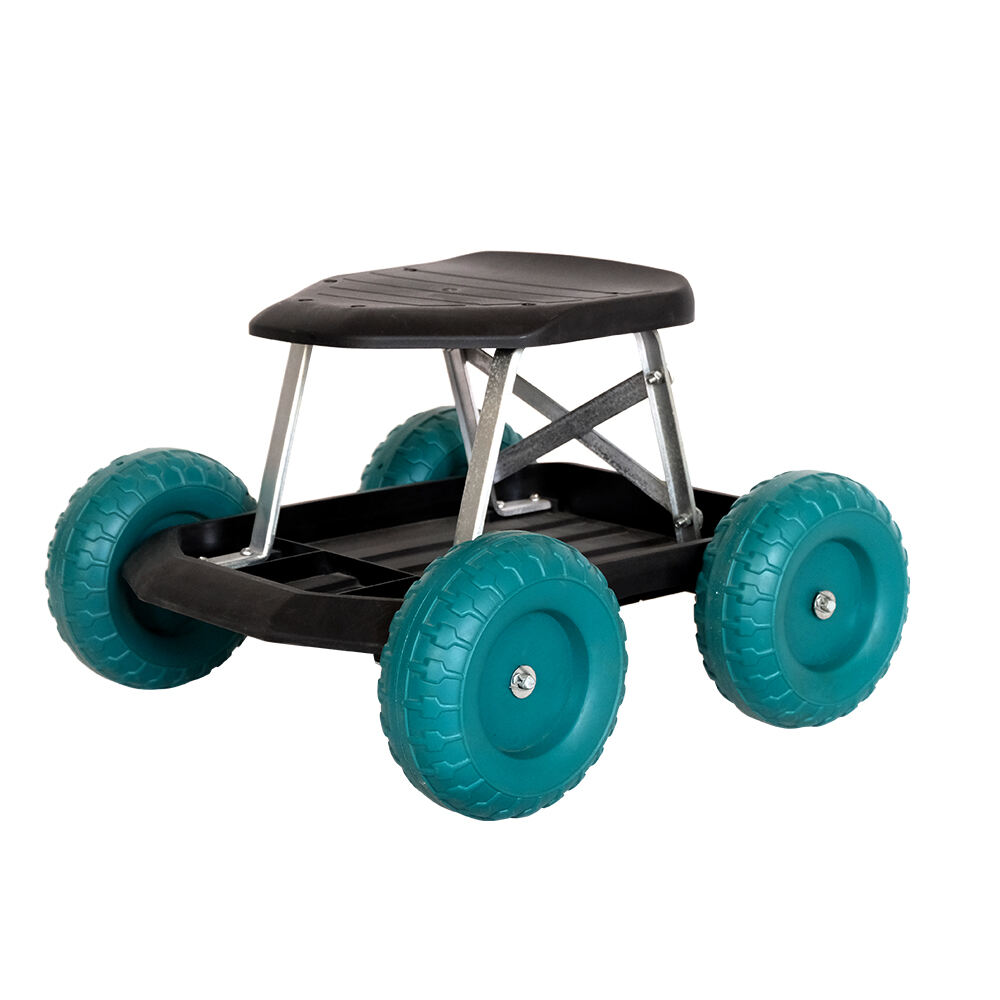
The quality control process for these multifunctional gardening aids extends beyond visual inspection to include load-bearing verification, wheel performance testing, storage compartment durability assessment, and environmental resistance validation. Each component requires specific evaluation criteria because failure in any single element compromises the overall utility of the product. Manufacturers and importers typically implement multi-stage testing protocols that simulate extended use patterns, exposure to outdoor conditions, and the mechanical stresses associated with rolling across uneven terrain while supporting both user weight and gardening supplies simultaneously.
Structural Integrity and Load-Bearing Capacity Verification
Frame Strength Testing Under Static Load Conditions
The foundational quality check for any rolling garden work seat with storage tray begins with frame integrity assessment under static load conditions that exceed typical use specifications. Test protocols require placing calibrated weights on the seat platform while the unit remains stationary, incrementally increasing load until reaching 150-200% of the stated weight capacity. Quality assurance teams monitor for frame deformation, joint separation, weld failures, and structural cracking during this process. Professional-grade units typically undergo testing at loads ranging from 300 to 400 pounds to verify safety margins, even when manufacturer specifications list lower working capacities.
Frame materials undergo specific inspection protocols based on construction type, with metal frames requiring weld integrity examination using visual inspection supplemented by dye penetrant testing for critical joints. Inspectors evaluate weld bead consistency, penetration depth, and the absence of porosity or slag inclusions that could compromise long-term strength. For tubular steel frames, wall thickness measurements verify conformance to design specifications, as material substitution with thinner gauge steel represents a common cost-cutting measure that significantly reduces load capacity and service life.
Dynamic Load Testing During Rolling Operation
Beyond static testing, quality checks must evaluate how a rolling garden work seat with storage tray performs under dynamic conditions that replicate actual garden use patterns. Dynamic load testing involves placing specified weights on both the seat and storage tray, then propelling the unit across test surfaces that include smooth concrete, textured pavement, grass, gravel, and soil to simulate typical garden terrain. Inspectors monitor for frame flexing, wheel bearing stability, axle alignment maintenance, and structural integrity degradation over extended rolling cycles that may exceed 5,000 repetitions in accelerated testing protocols.
This testing phase specifically examines how distributed loads affect frame geometry when the unit transitions from level surfaces to inclines or encounters obstacles like garden hose sections or edging materials. Quality failures often manifest as progressive frame distortion that causes wheel misalignment, uneven rolling resistance, or storage tray tilting that allows tool spillage. Premium manufacturers document baseline measurements for frame dimensions and re-measure after dynamic testing to quantify any permanent deformation, with acceptance criteria typically limiting dimensional changes to less than 2-3mm across critical frame elements.
Joint and Connection Point Durability Assessment
Connection points where seat platforms attach to frames, storage trays mount to structural members, and wheel assemblies integrate with axles represent critical failure zones requiring focused quality verification. Each joint undergoes cyclic loading tests that apply and release forces repeatedly to identify fatigue-related weaknesses before products reach end users. For bolted connections, inspectors verify proper torque application, thread engagement depth, and the presence of appropriate locking mechanisms like nylock nuts or thread-locking compounds that prevent loosening during use.
Riveted and welded joints receive particular scrutiny in quality checks for a rolling garden work seat with storage tray, as these permanent fastening methods cannot be field-adjusted if problems emerge. Ultrasonic testing or X-ray examination may supplement visual inspection for high-value products, revealing internal voids or incomplete fusion in welds that appear acceptable superficially. For storage tray attachment points specifically, testing validates that mounting hardware withstands both vertical loads from stored tools and lateral forces generated when users reach into compartments while seated, creating moments that stress connection points differently than pure vertical loading.
Wheel and Mobility System Quality Evaluation
Wheel Material Durability and Tread Integrity Testing
The mobility functionality of a rolling garden work seat with storage tray depends entirely on wheel system quality, making this component group subject to rigorous material and performance testing. Quality checks begin with wheel material verification, ensuring that manufacturers use appropriate compounds for outdoor exposure. Rubber wheels undergo hardness testing using durometers to confirm proper shore ratings, typically ranging from 60A to 85A depending on intended terrain types. Softer compounds provide better traction and cushioning on irregular surfaces but wear faster, while harder materials offer extended service life at the cost of reduced shock absorption.
Tread pattern integrity receives evaluation through abrasion resistance testing that simulates extended rolling across abrasive surfaces like concrete pathways or gravel. Test protocols may specify rolling distances exceeding 10 kilometers under load conditions to accelerate wear patterns and identify premature tread separation, compound crumbling, or uneven wear characteristics. For pneumatic wheels, air retention testing over 72-hour periods confirms that tire and valve systems maintain pressure without excessive leakage, while puncture resistance testing evaluates sidewall and tread thickness adequacy for typical garden environments containing thorns, sharp stone fragments, and other penetrating hazards.
Bearing and Axle System Performance Verification
Wheel bearings represent another critical quality checkpoint, as bearing failure converts a mobile rolling garden work seat with storage tray into an immobile burden requiring manual lifting and carrying. Quality assurance protocols test bearing systems for smooth rotation resistance, radial play limits, and sealing effectiveness against moisture and particulate contamination. Inspectors measure rolling resistance by quantifying the force required to initiate and maintain motion under specified load conditions, with acceptable thresholds varying based on wheel diameter and bearing type but typically requiring less than 5-8% of the loaded weight as rolling force.
Bearing durability testing subjects wheel assemblies to extended rotation cycles while monitoring for increased friction, noise development, or excessive heat generation that signals bearing degradation. For sealed bearing systems, water immersion testing followed by rotation evaluation confirms that sealing mechanisms effectively exclude moisture that would cause premature bearing corrosion and failure. Axle straightness verification ensures that manufacturing processes haven't introduced bends or warps that cause wobbling during rolling operation, with straightness tolerances typically specified within 0.5mm deviation across the axle length.
Swivel Caster Functionality and Directional Stability Assessment
Many rolling garden work seat with storage tray designs incorporate swivel casters for enhanced maneuverability, requiring additional quality checks specific to rotating wheel mounting systems. Swivel mechanism testing evaluates rotation smoothness across the full 360-degree range, checking for binding points, excessive play, or uneven resistance that impairs directional control. Quality protocols specify rotation cycle testing where casters complete thousands of full rotations under load to identify premature wear in swivel bearings, races, or mounting hardware.
Directional locking mechanisms, when present, undergo engagement and disengagement cycle testing to verify reliable operation after extended exposure to soil, moisture, and mechanical stress. Inspectors confirm that locking pins or brake mechanisms fully engage to prevent unwanted rotation and fully release to restore mobility without requiring excessive force. Load testing with locked casters verifies that locking systems withstand lateral forces without slipping, ensuring that users can safely work from the seated position without unexpected movement. For four-wheel configurations, quality checks assess tracking performance by verifying that the unit rolls in straight lines without veering when pushed across level surfaces, as misaligned wheel positions or uneven rolling resistance between sides creates steering problems.
Storage Tray Capacity and Material Quality Standards
Tray Load Capacity and Deflection Measurement
The storage tray component of a rolling garden work seat with storage tray requires dedicated quality assessment focused on its ability to securely contain gardening tools, supplies, and harvested materials without failure or excessive deformation. Load testing protocols place calibrated weights in storage compartments, incrementally increasing load while measuring tray deflection using dial indicators or laser displacement sensors. Acceptance criteria typically limit deflection to 10-15mm at rated capacity, ensuring that trays maintain sufficient rigidity to prevent tool spillage while avoiding the brittleness associated with overly rigid designs that crack under impact.
Distribution testing evaluates how trays perform when loads concentrate in specific zones rather than spreading evenly across the storage area. Quality checks position weights at tray corners, along edges, and in the center to identify weak points in the structural design or material distribution. For multi-compartment storage systems, individual compartment testing verifies that dividers and partition walls provide adequate support and that loads in one section don't compromise adjacent compartment integrity through stress transfer.
Material Quality and Environmental Resistance Evaluation
Storage tray materials undergo comprehensive quality checks addressing both mechanical properties and environmental resistance characteristics essential for outdoor garden use. Plastic trays receive impact resistance testing at various temperatures, as many polymers become brittle in cold conditions. Drop testing from specified heights onto concrete surfaces at temperatures ranging from -10°C to 40°C identifies formulations prone to cracking or shattering under realistic use conditions where tools might be dropped into trays or the entire unit might tip over.
UV resistance testing exposes tray materials to accelerated weathering conditions using specialized xenon arc or UV fluorescent chambers that simulate months or years of sun exposure in compressed timeframes. Quality assurance teams evaluate color stability, surface chalking, and mechanical property retention after UV exposure equivalent to 6-24 months of outdoor use. For a rolling garden work seat with storage tray intended for extended service life, material specifications should demonstrate less than 20% reduction in impact strength and minimal color fading after accelerated aging equivalent to two years of outdoor exposure.
Drainage and Cleaning Design Validation
Practical quality standards for garden work seats with storage trays must address moisture management, as outdoor use inevitably exposes these products to rain, irrigation overspray, and wet soil transfer from tools. Quality checks verify that storage compartments incorporate drainage holes or channels that prevent water accumulation, testing drainage effectiveness by filling trays with water and measuring evacuation time. Pooled water accelerates corrosion of metal tools stored in compartments and creates rust staining or material degradation in the tray itself.
Cleaning accessibility receives evaluation through simulated maintenance procedures where inspectors attempt to remove dried soil, plant debris, and fertilizer residues using typical cleaning methods. Storage tray designs that incorporate complex geometries with numerous recesses or tight corners where debris accumulates may pass structural testing but fail practical usability standards. Quality assessment considers whether tray surfaces accept cleaning without staining and whether compartment configurations allow effective debris removal without disassembly. Material selection plays a crucial role, as textured surfaces that improve grip may trap soil more readily than smooth finishes that facilitate hosing clean.
Ergonomic Design and User Safety Compliance Testing
Seat Height and Positioning Comfort Verification
Ergonomic quality standards for a rolling garden work seat with storage tray address the relationship between seat height, user anthropometry, and working postures during garden tasks. Quality assessment protocols evaluate whether seat height dimensions accommodate the range of user heights likely to purchase these products, typically requiring seat heights between 30-45cm to balance accessibility for rising and sitting with working height requirements for ground-level tasks. Adjustable height mechanisms, when present, undergo cycle testing to verify reliable operation after repeated adjustments and confirm that locking systems prevent unintended height changes during use.
Seat surface evaluation examines padding thickness, compression resistance, and recovery characteristics that affect user comfort during extended work sessions. Quality checks measure foam density and firmness using industry-standard compression testing equipment, with target specifications typically requiring densities of 30-50 kg/m³ for adequate support without excessive hardness. Moisture resistance testing for seat padding materials ensures that cushions don't absorb water during outdoor use, becoming heavy, cold, and slow to dry. Seat covering materials undergo abrasion testing to predict service life under friction from clothing movement and exposure to soil transfer.
Stability and Tip-Over Resistance Assessment
Safety-focused quality checks must evaluate the stability characteristics of a rolling garden work seat with storage tray under conditions that might cause tipping, particularly when users shift weight while seated or reach for tools in storage compartments. Stability testing protocols measure the tilt angle required to cause tip-over in multiple directions: forward, rearward, and laterally. Industry best practices typically specify minimum tip angles of 20-25 degrees before instability occurs, providing adequate safety margins for normal use patterns including leaning to reach distant plants or turning to access stored items.
Wheel spacing and wheelbase dimensions significantly influence stability, with quality standards favoring designs that position wheels near the outer perimeter of the base structure to maximize the stability polygon. Quality assessment includes center of gravity measurement with and without typical tool loads in storage compartments, as elevated storage positions raise the center of gravity and reduce tip resistance. For designs intended to support users on sloped terrain, inclined plane testing at various angles verifies that the unit remains stable and that braking or locking mechanisms, if present, effectively prevent unwanted rolling.
Sharp Edge and Pinch Point Hazard Elimination
Comprehensive quality checks for rolling garden work seat with storage tray products include detailed inspection for sharp edges, burrs, protruding fasteners, and pinch points that could cause user injury during normal operation. Inspection protocols employ tactile testing where quality personnel run fingers along all accessible surfaces and edges, supplemented by specific gauge tools that identify edge radii below safety thresholds. Metal edges typically require minimum radius specifications of 2-3mm or appropriate edge rolling and deburring to eliminate cutting hazards.
Pinch point assessment examines all moving components including folding mechanisms, adjustable elements, and storage compartment lids to identify locations where fingers or clothing might become trapped during operation. Gap measurements using calibrated probes verify that moving parts maintain either sufficient clearance to prevent pinching or restrict gaps to dimensions that prevent finger insertion altogether. For products incorporating folding or collapsing features for storage, quality checks include deployment and collapse cycle testing with pinch force measurement at potential trap points, ensuring that any pinching action generates insufficient force to cause injury or that mechanical stops prevent complete closure when obstructions are present.
Material Quality and Finish Durability Standards
Corrosion Resistance and Protective Coating Evaluation
Metal components in a rolling garden work seat with storage tray face continuous exposure to moisture, fertilizers, and soil contact that accelerate corrosion processes, making protective coating quality a critical checkpoint. Coating thickness measurement using magnetic or eddy current gauges verifies that powder coating, galvanizing, or paint systems meet specified minimum thickness standards, typically requiring 60-100 microns for adequate protection. Insufficient coating thickness allows premature breakthrough and rust formation that compromises both appearance and structural integrity.
Accelerated corrosion testing using salt spray chambers simulates months or years of outdoor exposure in compressed timeframes, with quality standards typically requiring 96-500 hours of salt fog exposure without significant rust formation depending on product grade and warranty commitments. Quality assurance personnel evaluate tested samples for coating adhesion failure, blistering, rust bloom, and base metal corrosion after environmental exposure. For welded joints and fabricated edges where coating application proves more difficult, inspection focuses particularly on these vulnerable areas where corrosion typically initiates.
Plastic Component Weathering and Color Stability Testing
Plastic components including storage trays, seat platforms, and decorative elements require quality assessment for long-term weathering resistance and color stability under outdoor exposure conditions. UV stabilizer content verification ensures that manufacturers incorporate appropriate additive packages into plastic formulations, typically requiring 2-4% UV stabilizer concentration for outdoor-rated products. Laboratory testing can quantify stabilizer content, but practical quality assessment relies primarily on accelerated weathering testing that exposes samples to intense UV radiation combined with moisture cycling.
Color stability assessment compares pre-exposure and post-exposure samples using spectrophotometric measurement that quantifies color change in standardized delta-E units. Quality standards for a rolling garden work seat with storage tray typically accept delta-E values below 3-5 units after accelerated aging equivalent to 1-2 years of outdoor exposure, representing color changes barely perceptible to typical observers. Beyond color retention, weathering testing evaluates surface gloss retention, chalking development, and mechanical property changes, as UV degradation progressively weakens plastic materials through polymer chain scission.
Hardware and Fastener Quality Verification
The quality and appropriateness of fastening hardware significantly influences product longevity and maintenance requirements, necessitating specific quality checks for bolts, nuts, washers, rivets, and specialty fasteners used throughout the assembly. Hardware material verification confirms that manufacturers specify corrosion-resistant materials appropriate for outdoor exposure, typically requiring stainless steel, zinc-plated steel, or specialized coated fasteners rather than plain steel that rapidly corrodes. Material testing using magnets and hardness testers helps identify specification violations where suppliers substitute lower-grade materials.
Thread quality inspection examines bolt and nut threading for proper pitch, depth, and form, as poorly formed threads strip easily during assembly or service and fail to maintain clamping force. Quality protocols include gauge testing with go/no-go thread gauges that verify dimensional conformance. For critical structural fasteners, torque testing validates that hardware achieves specified clamping forces without stripping or failing, with acceptance criteria requiring successful torque achievement at 120-150% of assembly specifications to provide safety margins. Inspection also verifies the presence of appropriate locking features like nylon inserts, deformed threads, or separate lock washers that prevent vibration-induced loosening during rolling operation.
Assembly Quality and Packaging Standards
Assembly Instruction Clarity and Component Identification
For rolling garden work seat with storage tray products requiring customer assembly, quality standards extend beyond physical components to include instruction clarity, completeness, and accuracy. Quality assessment reviews assembly documentation for logical step sequencing, clear illustration quality, and appropriate detail level for target users with varying mechanical aptitude. Test assembly by personnel unfamiliar with the product identifies instruction ambiguities, missing steps, or unclear component references that cause assembly errors or frustration.
Component identification systems receive evaluation for effectiveness in matching physical parts to instruction callouts. Quality checks verify that parts labeling, whether through tags, stickers, or bag markings, remains legible and securely attached through shipping and handling. Hardware organization into separate bags with clear labeling prevents mixing of similar-appearing fasteners with different specifications. For products incorporating numerous similar components like multiple bracket types, quality standards may require color coding or distinctive marking systems that eliminate identification confusion during assembly.
Pre-Assembly Quality Control and Function Testing
Manufacturer quality control systems typically incorporate pre-shipment inspection and function testing protocols that verify component completeness, assembly accuracy for pre-assembled elements, and basic functionality before packaging. Inspection checklists guide quality personnel through systematic verification of all components against parts lists, dimensional checking of critical features, and visual inspection for cosmetic defects. For a rolling garden work seat with storage tray, function testing includes wheel rotation verification, seat attachment security checking, and storage tray fit confirmation.
Some quality programs incorporate full assembly and disassembly of sample units from each production batch, allowing quality personnel to verify that components fit together as designed, that tolerances accommodate manufacturing variation, and that assembly instructions accurately reflect the actual assembly process. This testing identifies issues like hole misalignment, interfering edges, or insufficient hardware quantities before products reach customers. Documentation of inspection results and any corrective actions taken provides traceability and supports continuous improvement initiatives.
Packaging Adequacy and Product Protection Verification
Quality standards for packaging address the protective function that prevents damage during shipping and handling while also considering unboxing experience and environmental impact. Package testing subjects boxed units to drop testing from heights representing typical handling scenarios, vibration testing simulating transportation, and compression testing replicating stacking loads during warehousing. Post-testing inspection identifies any product damage, cosmetic defects, or component displacement resulting from inadequate cushioning or restraint.
Packaging material evaluation considers both protective performance and sustainability factors, with quality standards increasingly favoring recyclable materials and minimized packaging volumes. Edge protection, corner reinforcement, and component separation systems receive assessment for effectiveness in preventing contact damage between parts during shipping. For rolling garden work seat with storage tray products with wheels pre-installed, packaging must prevent wheel rotation that could cause abrasion damage to adjacent components. Quality checks verify that protective materials like foam inserts, corrugated separators, or plastic film maintain position during simulated shipping and provide adequate protection to vulnerable surfaces, edges, and mechanical components.
FAQ
What certifications indicate proper quality testing for rolling garden work seats with storage trays?
Quality certifications relevant to rolling garden work seat with storage tray products typically include ASTM standards for outdoor furniture and consumer products, EN stability standards for seating, and material-specific certifications for UV resistance and environmental durability. REACH compliance for European markets confirms that materials don't contain restricted substances, while third-party testing certifications from laboratories accredited to ISO/IEC 17025 provide independent verification of manufacturer quality claims. Products carrying these certifications demonstrate commitment to systematic quality evaluation beyond basic visual inspection.
How can buyers verify quality standards when purchasing these garden seats?
Buyers can verify quality by requesting detailed specifications including weight capacity with supporting test data, material grades with specific callouts for steel thickness or plastic types, and coating or finish specifications. Reputable manufacturers provide documentation of testing protocols and results, warranty terms that reflect confidence in durability, and clear assembly instructions indicating attention to user experience. Physical inspection should evaluate weld quality, coating uniformity, wheel bearing smoothness, and overall fit and finish, with premium products displaying consistent manufacturing quality across all components rather than cost-reduction compromises in hidden areas.
What quality differences distinguish budget and premium rolling garden work seats?
Premium rolling garden work seat with storage tray products typically feature thicker frame materials, higher-grade powder coating or galvanizing, sealed bearing systems in wheels, UV-stabilized plastics with higher impact resistance, and more robust fastening hardware. Quality differences appear in details like consistent weld appearance, smooth paint without runs or thin spots, precisely fitted components without gaps or misalignment, and thoughtful design features addressing drainage, cleaning, and user comfort. Budget products often meet minimum functional requirements but may use thinner materials, simpler finishes, and basic bearing systems that deliver shorter service life and require more frequent maintenance or replacement.
How long should a quality rolling garden work seat with storage tray last under normal use?
A properly manufactured rolling garden work seat with storage tray meeting comprehensive quality standards should provide 5-10 years of reliable service under normal residential garden use, with frame and wheel systems remaining structurally sound throughout this period. Coating systems may show weathering after 3-5 years depending on sun exposure intensity and maintenance practices, while plastic components typically retain functionality longer than appearance as UV exposure causes gradual fading. Products failing within 2-3 years of moderate use likely indicate quality deficiencies in materials, protective coatings, or structural design that accelerated wear beyond reasonable expectations for outdoor garden equipment.
Table of Contents
- Structural Integrity and Load-Bearing Capacity Verification
- Wheel and Mobility System Quality Evaluation
- Storage Tray Capacity and Material Quality Standards
- Ergonomic Design and User Safety Compliance Testing
- Material Quality and Finish Durability Standards
- Assembly Quality and Packaging Standards
-
FAQ
- What certifications indicate proper quality testing for rolling garden work seats with storage trays?
- How can buyers verify quality standards when purchasing these garden seats?
- What quality differences distinguish budget and premium rolling garden work seats?
- How long should a quality rolling garden work seat with storage tray last under normal use?

