 EN
EN

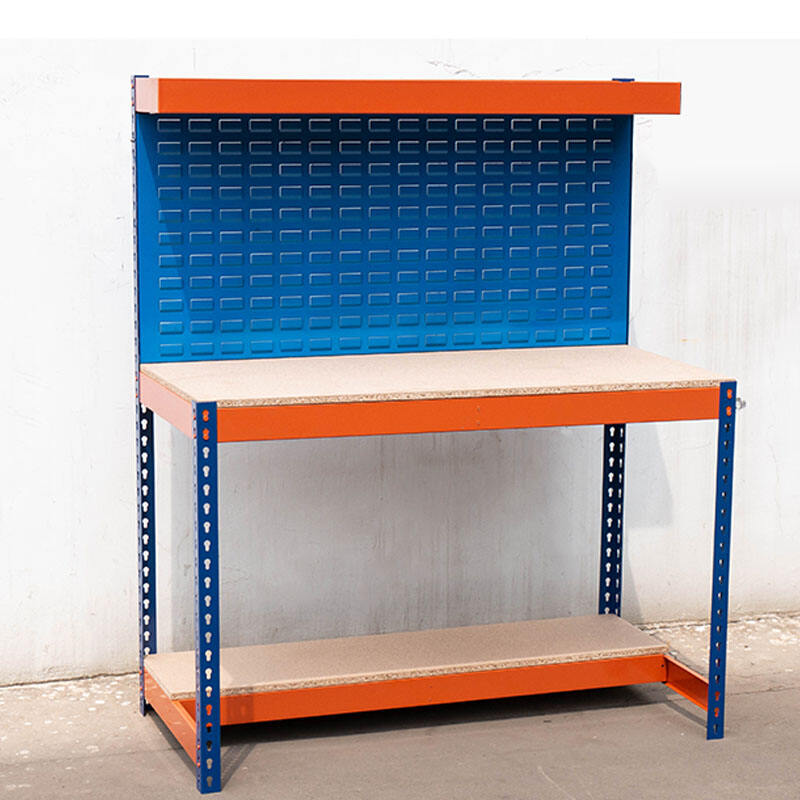
Selecting the right storage solution for your warehouse or facility directly impacts operational efficiency, safety, and long-term cost management. While standard shelving serves many general storage needs, certain operational demands—particularly involving weight, space optimization, and product characteristics—call for more robust solutions. Understanding when to transition from conventional shelving to a heavy duty longspan storage system requires careful evaluation of your inventory profile, facility constraints, and workflow requirements.
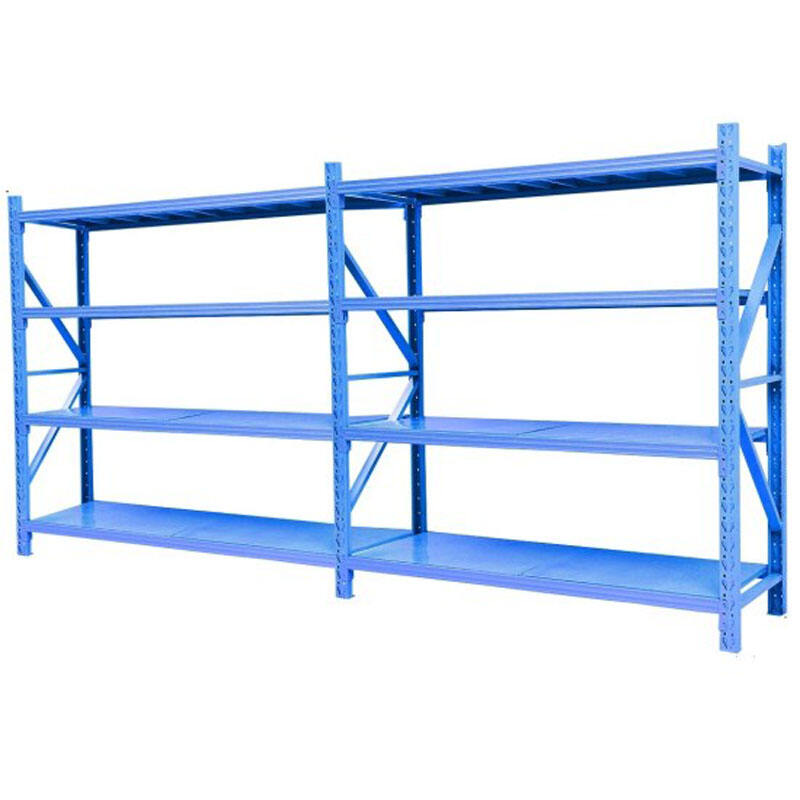
The decision point between standard shelving and longspan storage systems centers on three critical factors: load capacity requirements, product dimensions, and operational throughput. Standard shelving typically accommodates lighter loads and smaller items, making it ideal for office supplies, small parts, and retail environments. However, when your inventory includes bulky cartons, automotive parts, industrial components, or products requiring significant weight support per shelf level, a heavy duty longspan storage system becomes not just advantageous but essential for safe and efficient operations.
Understanding Load Capacity Thresholds
Weight Limitations of Standard Shelving
Standard shelving units typically support between 100 to 200 kilograms per shelf level, depending on construction quality and beam span. These systems utilize lighter gauge steel and narrower uprights designed for cost efficiency rather than maximum load bearing. When your inventory items approach or exceed these thresholds—common in manufacturing, distribution, and industrial supply environments—the structural integrity of standard shelving becomes compromised, creating safety hazards and reducing storage lifespan.
The weight distribution pattern also matters significantly. Standard shelving performs adequately when loads distribute evenly across the shelf surface, but many industrial applications involve concentrated weight points or non-uniform load patterns. A heavy duty longspan storage system addresses these challenges through reinforced beam construction, thicker gauge steel, and engineered load distribution capabilities that maintain structural integrity under demanding conditions.
Heavy Duty Capacity Advantages
A properly engineered heavy duty longspan storage system typically supports 300 to 600 kilograms per shelf level, with some configurations handling even greater loads. This capacity difference fundamentally changes what you can store and how efficiently you can utilize vertical space. Rather than spreading heavy inventory across multiple standard shelving units—consuming valuable floor space—longspan systems allow vertical stacking of substantial loads within a smaller footprint.
The structural advantages extend beyond simple weight capacity. Heavy duty longspan storage system designs incorporate cross-bracing, reinforced uprights, and robust beam-to-upright connections that prevent racking sway, maintain alignment under dynamic loads, and withstand the mechanical stresses of frequent loading and unloading operations. These engineering features become critical when forklift access, pallet jack movement, or overhead crane operations introduce lateral forces and vibration to the storage structure.
Product Characteristics That Demand Longspan Solutions
Bulky and Oversized Item Storage
Product dimensions often dictate storage system selection as much as weight considerations. Standard shelving typically features shelf depths of 300 to 600 millimeters and lengths of 900 to 1200 millimeters, optimized for boxed goods and smaller inventory. When your operation handles bulk materials, long products, or oversized cartons, these dimensional constraints create inefficiencies, wasted space, and potential safety issues from items overhanging shelf edges.
Heavy duty longspan storage system configurations accommodate beam spans extending 1800 to 3000 millimeters or more, with shelf depths reaching 800 to 1200 millimeters. This dimensional flexibility proves essential for automotive parts storage, building materials, rolled goods, and any inventory where product length or bulk prevents efficient placement on standard shelving. The ability to customize bay widths and depths ensures optimal space utilization without forcing products into undersized storage locations.
Non-Uniform and Irregular Shapes
Many industrial and manufacturing environments handle products that resist standardization—irregular shapes, varying dimensions within the same SKU category, or items requiring custom storage configurations. Standard shelving systems with fixed shelf positions and limited adjustability struggle to accommodate this variability efficiently. A heavy duty longspan storage system typically features adjustable beam heights in 50-millimeter or 75-millimeter increments, allowing precise customization to product dimensions.
This adjustability extends the system's useful life as product lines evolve. Rather than replacing entire shelving installations when inventory characteristics change, operators can reconfigure a heavy duty longspan storage system to accommodate new products, seasonal variations, or business expansion. The flexibility reduces long-term capital expenditure while maintaining operational efficiency across changing storage requirements.
Operational Environment and Access Requirements
Forklift and Mechanical Handling Integration
The method by which products enter and exit storage directly influences system selection. Standard shelving assumes manual handling—employees retrieving items by hand or with basic material handling equipment. When operations involve forklift access, pallet jacks, or overhead lifting equipment, the structural demands escalate significantly. A heavy duty longspan storage system incorporates design features specifically engineered for mechanical handling environments.
These features include reinforced uprights that withstand occasional impact, beam connections rated for dynamic loading, and structural stability that prevents sway during forklift operations. The system's robust construction also accommodates the higher loads associated with palletized storage, where individual shelves support entire pallet loads rather than hand-placed items. This capability transforms the storage system from static shelving into an integrated material handling solution.
High-Density Storage and Vertical Space Optimization
Warehouse space represents a significant operational expense, making vertical space utilization a key efficiency metric. Standard shelving typically extends to heights of 2000 to 2400 millimeters, limited by stability concerns when supporting lighter construction under taller configurations. A heavy duty longspan storage system can safely reach 4000 to 6000 millimeters or higher when properly engineered and anchored, dramatically increasing storage density within the same floor footprint.
This vertical capacity advantage compounds in facilities with clear heights exceeding standard warehouse dimensions. Distribution centers, manufacturing plants, and logistics facilities increasingly feature ceiling heights of 8 to 12 meters, creating opportunities for multi-level storage that standard shelving cannot safely exploit. Heavy duty longspan storage system installations can incorporate mezzanine platforms, catwalk access, and multi-tier configurations that transform cubic space into productive storage capacity.
Cost Analysis and Return on Investment Timing
Initial Investment Versus Long-Term Value
Standard shelving presents lower upfront costs, making it attractive for initial facility setup or budget-constrained operations. However, the total cost of ownership calculation must account for replacement frequency, capacity limitations, and operational inefficiencies. When heavy inventory damages standard shelving, requires replacement every few years, or necessitates excessive floor space consumption, the apparent cost advantage disappears rapidly.
A heavy duty longspan storage system requires higher initial capital expenditure but delivers superior durability, typically lasting 15 to 25 years in demanding industrial environments. The robust construction resists damage from daily operations, maintains structural integrity under maximum loads, and requires minimal maintenance beyond periodic inspection. For operations storing heavier inventory or requiring reliable long-term infrastructure, this durability translates into lower annualized costs and better return on investment.
Operational Efficiency Gains
Beyond direct equipment costs, system selection impacts labor productivity, inventory accessibility, and order fulfillment speed. Standard shelving in inappropriate applications forces inefficient workflows—spreading inventory across excessive floor space, requiring redundant handling, or limiting storage density. These operational inefficiencies generate hidden costs through extended travel distances, increased labor hours, and reduced throughput capacity.
Implementing a heavy duty longspan storage system in suitable applications optimizes these operational parameters. Concentrated storage reduces picker travel time, vertical space utilization increases inventory capacity without facility expansion, and robust construction eliminates productivity losses from damaged or unstable shelving. The cumulative efficiency gains often justify the system investment within 18 to 36 months in high-throughput environments, particularly when factoring avoided facility expansion costs.
Industry-Specific Application Scenarios
Manufacturing and Industrial Component Storage
Manufacturing environments present unique storage challenges that frequently exceed standard shelving capabilities. Raw materials, work-in-process inventory, and finished components often involve substantial weight, irregular dimensions, or specialized handling requirements. A heavy duty longspan storage system addresses these demands through configurable bay widths, substantial load capacity, and integration with manufacturing workflow patterns.
Automotive parts operations exemplify these requirements perfectly. Components range from small fasteners to engine blocks, transmission assemblies, and body panels—each requiring different storage configurations but benefiting from a unified system approach. Heavy duty longspan storage system installations can accommodate this variety through adjustable shelf heights, varying beam lengths, and load capacities matching product weights, creating organized storage that supports lean manufacturing principles and just-in-time inventory management.
Distribution Centers and Wholesale Operations
Distribution facilities handling bulk goods, wholesale quantities, or mixed-SKU fulfillment benefit significantly from longspan storage capabilities. These operations typically receive inventory in pallet quantities, store products for relatively short duration, and fulfill orders requiring rapid access to diverse product ranges. Standard shelving proves inadequate for palletized storage and struggles with the weight concentrations common in distribution environments.
A heavy duty longspan storage system configured for distribution applications might incorporate selective racking features, allowing direct access to every pallet position while maintaining high storage density. The system accommodates varying product heights through adjustable beam positions, supports heavy pallet loads safely, and integrates with forklift operations for efficient receiving and order picking. This configuration optimizes the critical balance between storage density, accessibility, and operational throughput that defines distribution center efficiency.
FAQ
What weight threshold indicates the need for longspan storage over standard shelving?
When individual shelf loads consistently exceed 200 kilograms, or when you frequently approach the maximum capacity of standard shelving, transitioning to a heavy duty longspan storage system becomes advisable. This threshold accounts for both static load capacity and safety margins necessary for dynamic loading conditions. Operations storing automotive parts, industrial materials, bulk goods, or dense packaged products typically require longspan solutions to maintain safe working conditions and extend equipment lifespan.
Can longspan storage systems accommodate non-palletized inventory effectively?
Yes, heavy duty longspan storage system designs excel with both palletized and non-palletized inventory. While the robust construction supports pallet loads efficiently, the same system accommodates carton storage, boxed goods, and individual items through appropriate shelf decking or support options. The key advantage lies in flexibility—the system adapts to varying product types without requiring separate storage infrastructure, making it ideal for operations handling mixed inventory profiles or evolving product lines.
How does facility ceiling height influence the decision between standard and longspan storage?
Facilities with ceiling heights exceeding 4 meters gain substantial benefits from heavy duty longspan storage system installations that exploit vertical space efficiently. Standard shelving becomes structurally unstable at heights beyond 2.5 meters without extensive bracing, limiting vertical storage capacity. Longspan systems engineered for tall configurations safely reach 6 meters or higher, transforming underutilized overhead space into productive storage capacity and significantly increasing storage density without facility expansion.
What maintenance differences exist between standard shelving and longspan storage systems?
A heavy duty longspan storage system typically requires less frequent maintenance than standard shelving in equivalent applications due to superior construction quality and damage resistance. However, given the higher loads and safety criticality, longspan installations benefit from systematic inspection protocols—checking beam-to-upright connections, monitoring for impact damage, and verifying load distribution compliance. Standard shelving requires similar inspections but faces more frequent replacement cycles when used beyond design capacity, whereas properly maintained longspan systems deliver decades of reliable service in demanding industrial environments.
Table of Contents
- Understanding Load Capacity Thresholds
- Product Characteristics That Demand Longspan Solutions
- Operational Environment and Access Requirements
- Cost Analysis and Return on Investment Timing
- Industry-Specific Application Scenarios
-
FAQ
- What weight threshold indicates the need for longspan storage over standard shelving?
- Can longspan storage systems accommodate non-palletized inventory effectively?
- How does facility ceiling height influence the decision between standard and longspan storage?
- What maintenance differences exist between standard shelving and longspan storage systems?

