 EN
EN

Choosing a shelving supplier is not only about buying steel frames and deck panels. In industrial and B2B environments, the real value of a shelving supplier comes from the services wrapped around the product lifecycle, from early layout planning to post-installation optimization. If your team is asking what services matter most, the short answer is this: a professional shelving supplier should reduce operational risk, improve storage performance, and support long-term scalability with clear technical and delivery accountability.
That means evaluating a shelving supplier by service capability, not by unit price alone. A qualified shelving supplier should understand load behavior, workflow constraints, safety compliance needs, and future expansion pressure across warehousing, distribution, manufacturing, and back-of-house storage operations. The sections below break down the exact services a professional shelving supplier should provide so procurement, operations, and engineering teams can make a confident decision.
Core pre-sales services that define supplier professionalism
Requirement discovery and operational diagnosis
A professional shelving supplier begins with discovery, not quoting. The first service should be a structured assessment of SKU profiles, turnover rate, picking method, aisle width constraints, floor load conditions, and handling equipment compatibility. Without this diagnostic step, even high-quality racks can create bottlenecks, unsafe access zones, or wasted cubic capacity.
A dependable shelving supplier also translates business goals into technical requirements. For example, a facility focused on faster order fulfillment may need a different beam spacing, bay depth, and replenishment flow than a facility focused on dense reserve storage. This is where an experienced shelving supplier separates standard catalog thinking from solution thinking.
Layout concepting and capacity modeling
Before any purchase commitment, a capable shelving supplier should provide preliminary layout concepts with clear storage logic. These concepts should show aisle strategy, access direction, slotting assumptions, and expected space utilization impact. A professional shelving supplier does not leave clients to guess how product dimensions affect practical storage density.
The best service level includes simple scenario modeling, such as growth-phase capacity projections or seasonal volume tolerance. This helps teams see whether the proposed system can absorb demand spikes without immediate redesign. In this phase, a shelving supplier should identify trade-offs openly, including throughput versus density and flexibility versus maximum load concentration.
Engineering and customization services that protect performance
Load validation and structural specification support
One essential service from any professional shelving supplier is load-related engineering support. Buyers need clarity on per-shelf load, per-bay load, deflection behavior, anchoring recommendations, and compatibility between frames, beams, and decking. A responsible shelving supplier documents these limits clearly so warehouse teams can operate safely and consistently.
In many projects, pallet dimensions, carton overhang, or irregular inventory shapes introduce real stress points. A qualified shelving supplier should proactively address these through suitable component selection and reinforcement choices. This service prevents under-specification that leads to early failure or over-specification that inflates cost without operational benefit.
Customization for workflow and product mix
A true shelving supplier should offer more than fixed-size options. Industrial operations often require adjustable tier spacing, selective access design, mixed-load zones, and staged expansion capability. Customization services should cover dimensional adaptation, accessory integration, and modular planning so the system reflects real usage, not just standard inventory availability.
When customization is discussed, documentation quality matters. A professional shelving supplier should provide clear drawings, component references, and installation logic that reduce interpretation errors on site. This level of service helps procurement teams avoid mismatched deliveries and helps operations teams implement layouts with minimal downtime.
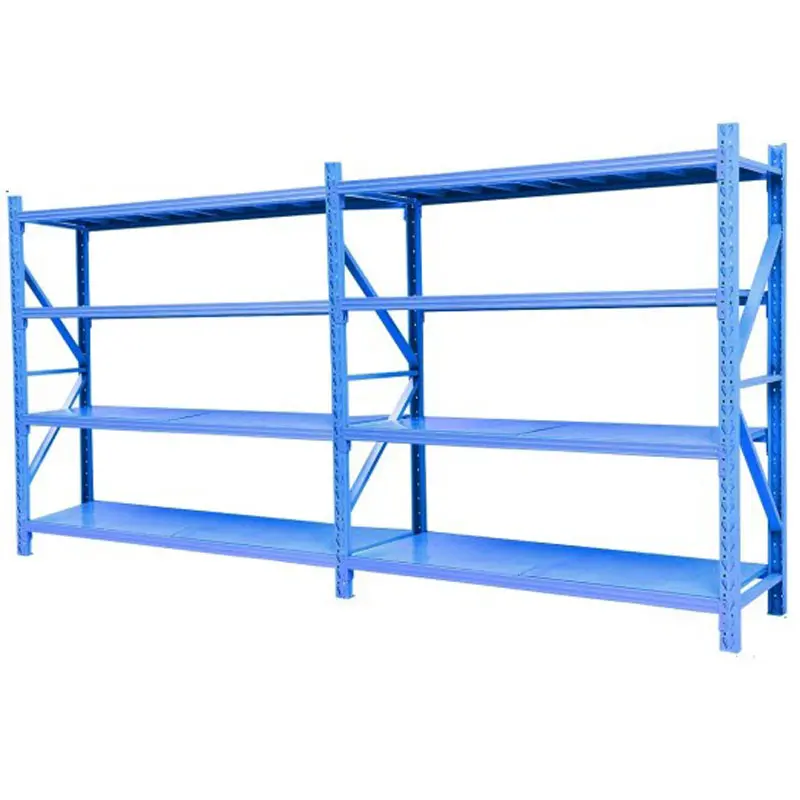
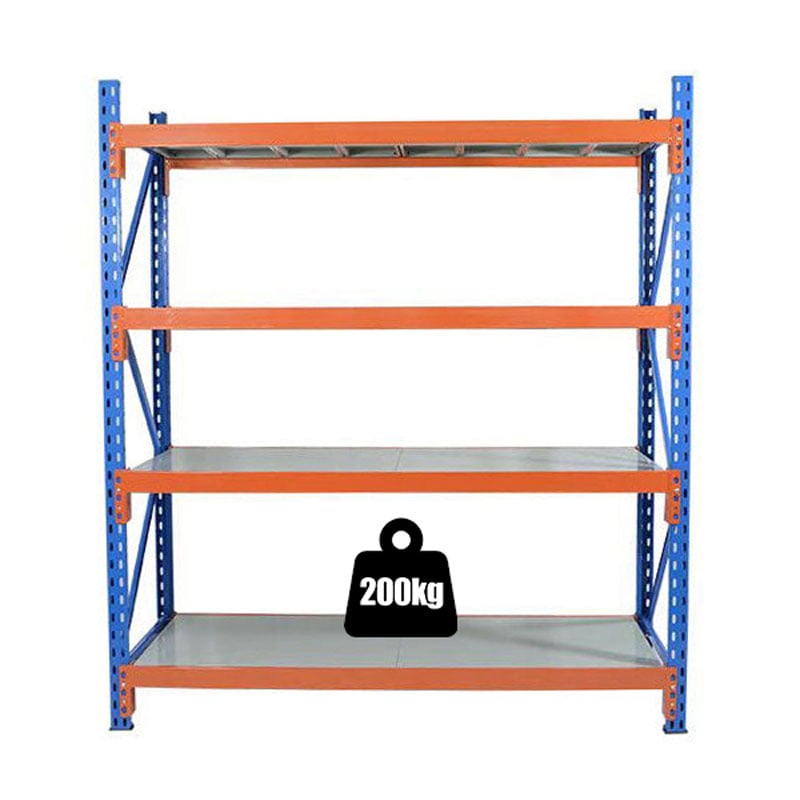
For teams evaluating configurable systems, this shelving supplier category illustrates how adjustable, multi-layer configurations can support evolving warehouse requirements.
Execution services that determine project success on site
Project coordination, lead-time control, and delivery planning
A professional shelving supplier should provide practical project management from order confirmation to on-site handover. This includes timeline checkpoints, packaging logic, shipment sequencing, and receiving instructions aligned with installation phases. In live facilities, uncontrolled delivery timing can disrupt operations, so this service is not optional.
A strong shelving supplier communicates lead-time risk early, especially when custom elements or phased deployment are involved. Instead of generic delivery promises, the supplier should give transparent milestones and escalation paths. This protects internal stakeholders who must coordinate labor, inbound flow, and system cutover windows.
Installation guidance and commissioning support
Whether installation is self-managed or contractor-led, a professional shelving supplier should provide clear assembly documentation and supervision support. Service quality is reflected in connection details, leveling instructions, anchoring checks, and load-label placement practices. Poor installation support from a shelving supplier can negate otherwise sound engineering.
Commissioning support should include final verification that layout intent, accessibility, and load zoning match the approved plan. A reliable shelving supplier helps teams confirm operational readiness before full utilization starts. This step reduces early-stage incidents and supports smoother handoff to warehouse supervisors.
Post-sales services that sustain long-term storage value
Maintenance guidance, inspection routines, and training
The relationship with a professional shelving supplier should continue after installation. Post-sales service should include maintenance guidelines, routine inspection criteria, and practical user training for supervisors and floor staff. These services help teams detect early signs of misuse, impact damage, or overload conditions before they escalate.
An experienced shelving supplier explains not only what to inspect, but why each checkpoint matters for safety and uptime. Typical support includes fastener integrity checks, upright alignment review, deck condition monitoring, and safe loading behavior. In high-traffic facilities, this service can materially extend asset life and reduce emergency repairs.
Expansion planning and lifecycle support
Storage systems rarely stay static. A capable shelving supplier should support expansion planning when SKU counts rise, order profiles shift, or process automation is introduced. The service should evaluate whether existing bays can be extended, reconfigured, or re-zoned without compromising safety and accessibility.
Lifecycle support also includes spare component availability and update recommendations when regulations or operating conditions change. A dependable shelving supplier gives decision-ready guidance on retrofit versus replacement, helping organizations avoid fragmented infrastructure and repeated procurement inefficiency.
Commercial and communication services that reduce procurement risk
Transparent quotations and scope clarity
Commercial clarity is a core service expectation from any professional shelving supplier. Quotations should define inclusions, exclusions, technical assumptions, and revision conditions with precision. When scope is vague, internal teams face budget drift and avoidable disputes during execution.
A reliable shelving supplier structures proposals so technical and financial stakeholders can review them quickly. This means separating product cost, customization cost, logistics scope, and service scope in plain terms. Procurement teams gain faster approval cycles when a shelving supplier removes ambiguity at the quotation stage.
Responsive communication and accountability framework
Service quality is visible in communication behavior. A professional shelving supplier should define points of contact, response windows, issue escalation routes, and document control practices from day one. Fast, accurate communication reduces delays when layout revisions or site constraints appear mid-project.
Accountability also means owning outcomes, not just shipments. The best shelving supplier treats client performance metrics, safety expectations, and deployment timelines as shared priorities. This service mindset is often the difference between a one-time transaction and a stable long-term storage partnership.
FAQ
How can I verify whether a shelving supplier is truly service-capable before purchase?
Ask for evidence of process depth, not only product photos. A professional shelving supplier should provide requirement assessment logic, layout drafts, load documentation, implementation workflow, and post-sales support details. Review how the shelving supplier communicates assumptions and change control, because that usually predicts project reliability.
Which service is most critical when timelines are tight?
Project coordination is usually the most critical service when deadlines are compressed. A strong shelving supplier aligns manufacturing, packaging sequence, delivery staging, and installation readiness so site teams avoid idle time. Without this coordination service, even quality materials can miss operational launch windows.
Does a shelving supplier need to provide support after installation?
Yes, post-installation support is a core requirement for industrial buyers. A professional shelving supplier should provide inspection routines, maintenance guidance, and expansion recommendations as operating conditions evolve. This ongoing service protects safety, preserves storage efficiency, and improves total lifecycle value.
What is the biggest mistake when selecting a shelving supplier?
The biggest mistake is selecting a shelving supplier based only on initial price and basic dimensions. That approach ignores engineering validation, installation quality, and lifecycle support, which are often where real cost and risk accumulate. Evaluating each shelving supplier by service capability leads to better long-term operational outcomes.
Table of Contents
- Core pre-sales services that define supplier professionalism
- Engineering and customization services that protect performance
- Execution services that determine project success on site
- Post-sales services that sustain long-term storage value
- Commercial and communication services that reduce procurement risk
- FAQ

