 EN
EN

Production environments demand robust infrastructure capable of withstanding the rigorous demands of manufacturing, assembly, and quality control operations. Understanding when a heavy duty steel work table becomes essential rather than optional can significantly impact operational efficiency, worker safety, and long-term cost effectiveness. The decision to invest in industrial-grade work surfaces hinges on specific production characteristics, load requirements, environmental conditions, and operational workflows that distinguish light-duty tasks from heavy industrial processes.
Identifying the precise threshold at which standard work surfaces become inadequate requires careful evaluation of weight loads, impact resistance needs, operational frequency, and the nature of tasks performed. Production managers must recognize the warning signs indicating that conventional furniture poses risks to product quality, equipment integrity, and personnel safety. This assessment becomes particularly critical in environments involving metal fabrication, automotive assembly, machinery maintenance, precision manufacturing, and heavy equipment servicing where structural failure or surface deformation can lead to costly production interruptions and potential workplace injuries.
Critical Weight Load Thresholds and Structural Requirements
Static and Dynamic Load Considerations
The requirement for a heavy duty steel work table emerges most clearly when static load capacities exceed 500 pounds per work surface. Standard commercial work tables typically support between 200 and 400 pounds, making them inadequate for production tasks involving engine blocks, transmission assemblies, heavy tooling, or stacked raw materials. Dynamic loads, which include the impact forces from dropping parts, hammering operations, or equipment vibration, create stress patterns that can quickly compromise lighter-duty structures. Industrial operations requiring repetitive lifting and placement of components weighing 50 pounds or more necessitate work surfaces engineered specifically for cyclic loading patterns.
Point Load Distribution and Surface Integrity
Production tasks involving concentrated weight on small footprints demand a heavy duty steel work table with reinforced construction. When operations include vise mounting, press installation, or concentrated tooling setups, the work surface must resist deflection and maintain flatness under localized stress. Machinery maintenance requiring the disassembly of gearboxes, pump assemblies, or hydraulic components generates point loads that exceed the structural capacity of standard furniture. The steel frame construction characteristic of industrial work tables distributes these concentrated forces through reinforced leg assemblies and cross-bracing systems that prevent wobbling and ensure dimensional stability throughout extended production shifts.
Cumulative Load Factors in Multi-Shift Operations
Continuous production environments operating across multiple shifts accumulate structural fatigue that reveals the limitations of inadequately specified work surfaces. When production schedules maintain consistent utilization rates exceeding 16 hours daily, the cumulative stress cycles demand materials and construction methods capable of withstanding millions of load applications without degradation. Assembly operations involving repetitive component placement, testing equipment requiring stable platforms, and quality inspection stations handling heavy products all benefit from heavy duty steel work table installations that maintain performance characteristics over years of intensive use. The initial investment in properly rated equipment proves economically justified when compared against the replacement costs and productivity losses associated with premature furniture failure.
Environmental Conditions Demanding Industrial-Grade Construction
Chemical Exposure and Corrosion Resistance
Production environments involving cutting fluids, hydraulic oils, solvents, or cleaning chemicals require a heavy duty steel work table with appropriate surface treatments and protective coatings. Standard furniture constructed from particleboard, medium-density fiberboard, or unprotected mild steel deteriorates rapidly when exposed to industrial chemicals, leading to surface swelling, delamination, and structural compromise. Metal fabrication shops, automotive repair facilities, and industrial maintenance departments benefit from powder-coated or galvanized steel construction that maintains integrity despite daily exposure to corrosive substances. The sealed construction of industrial work tables prevents fluid infiltration into structural components, eliminating the hidden deterioration that occurs in composite materials.
Temperature Extremes and Thermal Stability
Manufacturing processes involving welding operations, heat treating, soldering, or hot component handling necessitate work surfaces capable of withstanding thermal shock and sustained elevated temperatures. A heavy duty steel work table provides the thermal mass and material stability required for operations where hot parts are placed directly on work surfaces for cooling or inspection. Foundry operations, forge shops, and heat treatment facilities require work surfaces that neither warp under thermal cycling nor release toxic fumes when exposed to high temperatures. The all-steel construction characteristic of industrial work tables offers inherent fire resistance and dimensional stability across temperature ranges that would destroy wood-composite alternatives.
Impact Resistance and Abuse Tolerance
Production tasks involving striking, hammering, or the use of impact tools create shock loads that quickly damage conventional work surfaces. Assembly operations requiring the driving of pins, rivets, or fasteners, maintenance tasks involving the breaking loose of seized components, and fabrication processes using pneumatic chisels all demand the impact absorption capabilities of a heavy duty steel work table. The welded steel frame construction distributes impact energy throughout the structure rather than concentrating stress at attachment points, preventing the joint failures common in bolted or doweled furniture. Operations involving the occasional dropping of tools, parts, or materials benefit from steel work surfaces that resist denting, chipping, and surface damage that would render lighter materials unusable.
Operational Workflow Requirements and Production Efficiency
Precision and Dimensional Stability Needs
Manufacturing processes requiring consistent dimensional reference planes necessitate a heavy duty steel work table that maintains flatness throughout the production cycle. Quality control operations involving measurement, calibration, or inspection equipment depend on stable work surfaces that neither sag under load nor vibrate during measurement activities. Precision assembly tasks where component alignment affects product performance require work surfaces capable of supporting fixtures, jigs, and alignment tools without deflection. The rigid construction of industrial steel work tables provides the mechanical stability required for processes where dimensional variation measured in thousandths of an inch affects product acceptability and customer satisfaction.
Equipment Integration and Mounting Requirements
Production operations involving permanently or semi-permanently mounted equipment require work surfaces engineered for tool integration. Bench-mounted grinders, drill presses, small milling machines, and specialized assembly equipment generate operational forces that demand robust attachment platforms. When vises, arbor presses, or testing equipment become integral components of the workstation, a heavy duty steel work table provides the threaded mounting points, structural rigidity, and load capacity necessary for safe equipment operation. The steel construction allows for direct bolting of equipment without the reinforcement plates, backing blocks, or supplementary support structures required when mounting to wood or composite surfaces.
Multi-Level and Modular Production Systems
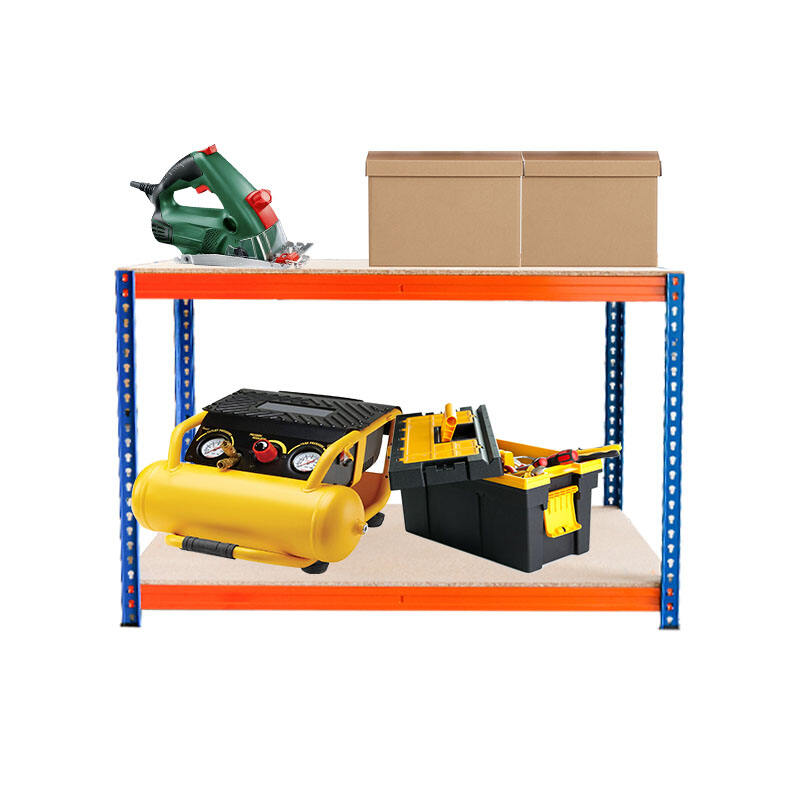
Complex production workflows requiring vertical integration of work surfaces, storage, and material handling equipment benefit from the modular capabilities of industrial work tables. Assembly operations utilizing gravity feed systems, quality control stations incorporating multiple inspection levels, and maintenance areas requiring tool organization at varying heights all demand the structural capacity of a heavy duty steel work table system. The ability to stack work surfaces, integrate shelving units, and support overhead equipment mounting creates three-dimensional workspace solutions impossible with conventional furniture. Production efficiency improvements resulting from optimized material flow and reduced worker motion justify the investment in properly engineered industrial furniture systems.
Safety Considerations and Regulatory Compliance
Stability and Tipping Prevention
Workplace safety regulations and liability concerns require work surfaces that resist tipping when subjected to uneven loading or edge impacts. A heavy duty steel work table designed for industrial applications features base dimensions, weight distribution, and structural geometry that maintain stability even when heavy objects are placed near table edges. Operations involving the extension of long components over table edges, the mounting of cantilevered equipment, or the temporary storage of materials during production processes all create tipping moments that lightweight furniture cannot safely resist. The low center of gravity and wide stance characteristic of industrial work tables provide inherent stability that reduces accident risk and ensures compliance with occupational safety standards.
Ergonomic Load Handling and Injury Prevention
Production tasks requiring workers to lift, position, and manipulate heavy components benefit from work surface heights and configurations that minimize awkward postures and excessive reaching. When a heavy duty steel work table is properly specified for the task, it supports materials at heights that reduce bending, eliminate overhead lifting, and position components within the optimal ergonomic reach envelope. Assembly operations involving the repeated handling of heavy parts, maintenance tasks requiring sustained positioning of components during service, and inspection activities demanding prolonged material examination all benefit from work surfaces that accommodate ergonomic best practices. The ability to specify custom heights, integrate lift-assist equipment mounting points, and configure multi-level surfaces makes industrial work tables essential tools for injury prevention programs.
Electrical Safety and Grounding Requirements
Production environments utilizing electrical equipment, electronic assembly operations, or electrostatic discharge sensitive components require work surfaces with appropriate grounding capabilities. A heavy duty steel work table provides the conductive path necessary for proper equipment grounding and static dissipation when fitted with appropriate surface materials and grounding connections. Electronics manufacturing, explosive atmosphere operations, and precision calibration activities all benefit from the electrical characteristics of properly configured steel work surfaces. The metal construction allows for the integration of grounded mats, wrist strap connections, and ionization equipment mounting without the complications associated with insulating work surface materials.
Economic Analysis and Total Cost of Ownership
Service Life and Replacement Cost Comparison
The decision threshold for requiring a heavy duty steel work table includes economic analysis comparing initial investment against expected service life and replacement frequency. Industrial-grade steel work tables typically provide service lives exceeding 15 years in demanding production environments, while standard commercial furniture may require replacement every 3 to 5 years under similar conditions. When production operations involve continuous utilization, heavy loading, or harsh environmental exposure, the annualized cost of properly specified equipment proves significantly lower than the recurring expense of replacing inadequate furniture. The elimination of mid-life repairs, surface refinishing, and structural reinforcement further enhances the economic advantage of initial investment in appropriate equipment.
Productivity Impact and Downtime Costs
Production interruptions resulting from work surface failure create costs far exceeding furniture replacement expenses. When inadequate work tables collapse under load, deflect during precision operations, or require emergency repair, the associated production downtime, worker idle time, and schedule disruption generate significant economic impact. A heavy duty steel work table that maintains structural integrity and dimensional stability throughout its service life eliminates these hidden costs and supports consistent production flow. Operations requiring high uptime percentages, just-in-time manufacturing processes, or continuous production schedules cannot tolerate the reliability issues associated with underspecified work surfaces.
Facility Flexibility and Reconfiguration Value
Manufacturing facilities facing evolving product mixes, changing production volumes, or process improvements benefit from work surfaces that support reconfiguration without replacement. The durability and modular design characteristics of a heavy duty steel work table allow for repositioning, height adjustment, and accessory integration as production requirements change. Unlike specialized fixtures or custom-built work surfaces that become obsolete when processes evolve, industrial work tables maintain utility across diverse applications and production scenarios. The residual value and redeployment capability of quality industrial furniture contributes to favorable total cost of ownership calculations and supports lean manufacturing principles emphasizing flexibility and waste reduction.
FAQ
What weight capacity indicates the need for a heavy duty steel work table instead of standard furniture?
When production tasks consistently involve static loads exceeding 500 pounds or dynamic loads from impact, vibration, or repetitive component placement, a heavy duty steel work table becomes necessary. Standard commercial work surfaces typically rate between 200 and 400 pounds capacity and lack the structural reinforcement required for industrial operations. Additionally, operations involving concentrated point loads from vises, presses, or mounted equipment require the load distribution capabilities of steel-framed construction regardless of total weight, as localized stress concentrations quickly damage lighter-duty furniture.
How do environmental conditions in production areas affect work table requirements?
Production environments involving chemical exposure, temperature extremes, or high humidity demand the corrosion resistance and dimensional stability of industrial steel construction. Standard furniture constructed from wood composites or unprotected metals deteriorates rapidly when exposed to cutting fluids, solvents, or continuous moisture, leading to structural failure and surface degradation. Operations involving welding, soldering, or hot component handling require the thermal stability and fire resistance that only metal work surfaces provide. When environmental conditions exceed typical office or light commercial parameters, a heavy duty steel work table becomes essential for maintaining long-term functionality and safety.
Can a heavy duty steel work table improve production efficiency beyond just supporting weight?
Industrial work tables contribute to production efficiency through dimensional stability that supports precision operations, structural rigidity that enables equipment mounting, and modular design that optimizes workflow organization. The vibration damping characteristics of heavy steel construction improve measurement accuracy and reduce tool chatter during machining operations. Integrated mounting points and accessory compatibility allow for the creation of complete workstations incorporating storage, lighting, and material handling equipment at ergonomically optimized positions. These factors combine to reduce cycle times, improve quality consistency, and minimize worker fatigue beyond the fundamental capability of supporting heavy loads.
What are the key differences between adjustable height and fixed height heavy duty steel work tables for production use?
Fixed height heavy duty steel work tables provide maximum load capacity and structural rigidity due to their welded or bolted fixed-leg construction, making them ideal for operations involving extreme weight, mounted equipment, or precision requirements. Adjustable height models incorporate mechanisms allowing ergonomic optimization for different workers or tasks but typically feature reduced load ratings due to the adjustment hardware. Production operations involving a consistent process and worker population benefit from fixed height tables specified for optimal ergonomic positioning, while facilities with diverse tasks or multiple operators gain flexibility from adjustable models despite the capacity trade-off. The decision depends on whether operational requirements prioritize maximum capacity and rigidity or ergonomic adaptability across varied applications.
Table of Contents
- Critical Weight Load Thresholds and Structural Requirements
- Environmental Conditions Demanding Industrial-Grade Construction
- Operational Workflow Requirements and Production Efficiency
- Safety Considerations and Regulatory Compliance
- Economic Analysis and Total Cost of Ownership
-
FAQ
- What weight capacity indicates the need for a heavy duty steel work table instead of standard furniture?
- How do environmental conditions in production areas affect work table requirements?
- Can a heavy duty steel work table improve production efficiency beyond just supporting weight?
- What are the key differences between adjustable height and fixed height heavy duty steel work tables for production use?

