 EN
EN


Warehouses, distribution centers, and industrial facilities face a critical decision when selecting storage systems: choosing between heavy duty longspan shelving and conventional steel shelves. While both options serve storage purposes, specific operational conditions and load requirements determine when one system significantly outperforms the other. Understanding these threshold conditions helps facility managers make decisions that directly impact storage density, operational efficiency, and long-term cost-effectiveness.
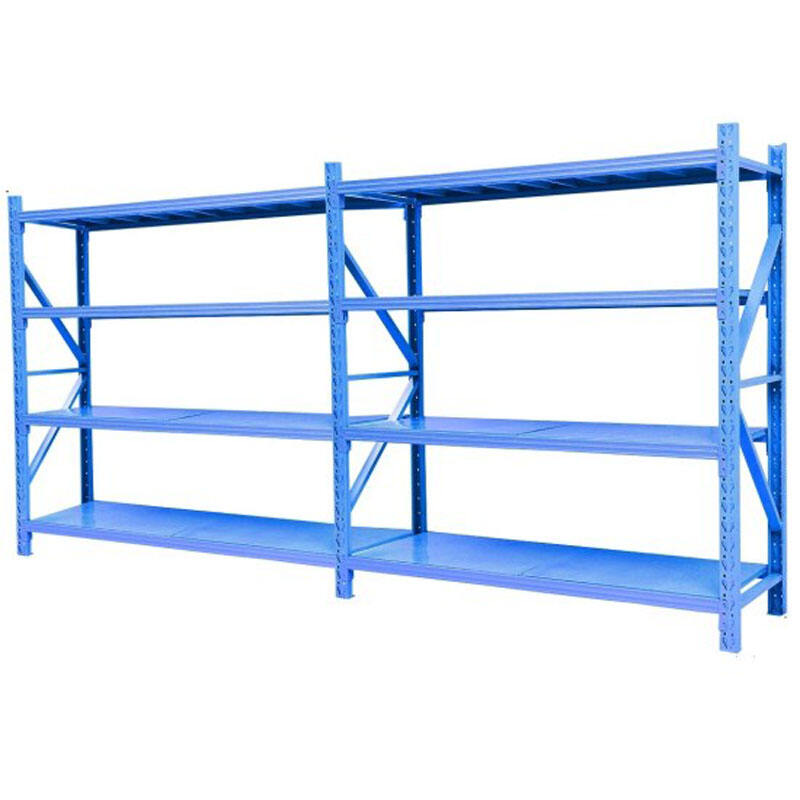
The performance advantage of heavy duty longspan shelving becomes evident when facilities encounter load capacities exceeding 300 kilograms per shelf level, span requirements beyond 1800 millimeters, or inventory profiles dominated by bulky, irregularly shaped items. Conventional steel shelving systems typically excel in light-duty applications with standardized carton sizes, but their structural limitations become apparent when operational demands shift toward heavier loads and flexible storage configurations. This article examines the specific scenarios where longspan systems deliver measurable performance advantages over conventional alternatives.
Critical Load Capacity Thresholds
When Weight Requirements Exceed Conventional Limits
Conventional steel shelves typically accommodate loads between 80 and 250 kilograms per level, depending on shelf depth and span length. These systems perform adequately for carton storage, light manufacturing components, and retail backroom applications. However, when individual shelf loads consistently approach or exceed 300 kilograms, the structural engineering of heavy duty longspan shelving becomes essential for safe operations. The beam construction in longspan systems uses heavier gauge steel with reinforced connection points that distribute weight more effectively across the frame structure.
Facilities handling automotive parts, industrial machinery components, or consolidated pallet loads require the enhanced load-bearing capacity that heavy duty longspan shelving provides. The engineering difference becomes visible in beam deflection under load—conventional shelves may exhibit noticeable sagging at maximum capacity, while properly specified longspan beams maintain structural integrity with minimal deflection. This performance characteristic directly affects inventory safety, reduces product damage from shelf failure, and extends system lifespan under continuous heavy loading cycles.
Load Distribution Patterns and Concentrated Weight
Beyond total shelf capacity, the manner in which weight distributes across shelf surfaces determines system suitability. Conventional steel shelving assumes relatively uniform load distribution, performing well when inventory spreads evenly across the shelf depth. Problems emerge when facilities store concentrated loads in specific shelf areas—heavy motors positioned at shelf centers, dense material rolls placed at beam ends, or point-load applications from machinery bases. Heavy duty longspan shelving incorporates structural design that accommodates these concentrated load patterns without compromising shelf integrity.
The beam profile in longspan systems provides superior resistance to torsional stress and localized loading compared to conventional shelf beams. This engineering advantage matters significantly in manufacturing environments where component weights vary substantially, in maintenance facilities storing equipment of different sizes, or in distribution centers handling mixed inventory profiles. Facilities can optimize storage density by placing heavier items on lower levels while maintaining flexibility to store lighter products on upper shelves without requiring separate shelving systems for different weight classes.
Span Length and Storage Flexibility Requirements
When Shelf Width Demands Exceed Standard Configurations
Conventional steel shelving systems perform efficiently within span ranges of 900 to 1500 millimeters, matching standard carton dimensions and picking requirements. Performance limitations surface when facilities need shelf widths exceeding 1800 millimeters to accommodate oversized items, reduce aisle count, or maximize storage capacity in constrained floor space. Heavy duty longspan shelving maintains structural performance across spans reaching 2400 millimeters or more, enabling facilities to store wider items without requiring additional support columns that interrupt shelf space and reduce storage flexibility.
The extended span capability of heavy duty longspan shelving directly impacts storage density calculations and space utilization efficiency. Facilities storing carpet rolls, pipe sections, lumber, or sheet materials benefit from uninterrupted shelf surfaces that match product dimensions. This configuration eliminates the need for custom-width conventional shelving or multiple smaller units positioned side-by-side, reducing installation complexity and improving inventory accessibility. The structural engineering in longspan beams prevents the sagging and deformation that conventional shelves experience when extended beyond recommended span limits.
Adaptability to Changing Inventory Profiles
Business growth and evolving product lines frequently require storage system modifications to accommodate different inventory characteristics. Conventional steel shelving offers limited adjustability once installed—changing shelf heights requires complete disassembly, and modifying bay widths often necessitates purchasing new components. Heavy duty longspan shelving provides superior configuration flexibility through standardized beam connections that allow facilities to adjust shelf levels in 50-millimeter increments without tools, reconfigure bay widths by repositioning frames, and add shelving capacity by inserting additional beams into existing uprights.
This adaptability advantage becomes critical when facilities transition from storing small cartons to handling larger containers, when product dimensions change due to supplier modifications, or when seasonal inventory fluctuations require temporary storage reconfigurations. The modular nature of heavy duty longspan shelving systems enables facilities to reconfigure storage layouts during off-hours without disrupting operations, reallocate shelving components between different warehouse zones, and scale storage capacity incrementally as business needs evolve. Conventional shelving systems lack this operational flexibility, often requiring complete replacement when storage requirements change substantially.
Item Characteristics and Handling Efficiency
Storage of Irregular and Oversized Items
Conventional steel shelves excel when storing uniform cartons, standard bins, and regularly shaped packages that stack efficiently and utilize shelf depth consistently. Performance degrades significantly when facilities must store items with irregular geometries, protruding components, or dimensional variability. Heavy duty longspan shelving accommodates these challenging inventory profiles through open beam design that eliminates interference from shelf supports, provides unrestricted access from multiple angles, and allows positioning of items according to their unique dimensional requirements rather than forcing them into standardized shelf configurations.
Industrial facilities storing fabricated metal components, assembled machinery, custom packaging, or irregularly shaped materials gain operational efficiency from longspan systems that adapt to product characteristics. The absence of restrictive shelf decking in many longspan configurations permits items to overhang beam edges when necessary, rest partially on adjacent shelves for stability, or occupy customized positions that conventional shelving cannot accommodate. This storage flexibility reduces handling time, minimizes product damage from forced fitting, and improves space utilization by allowing three-dimensional positioning based on actual item dimensions.
Access Frequency and Picking Operations
The structural design of heavy duty longspan shelving influences picking efficiency and material handling workflows in ways that become apparent under high-frequency access conditions. Conventional shelving with enclosed sides and back panels creates visual barriers that slow inventory location, restricts access angles for material handling equipment, and complicates stock rotation procedures. Longspan systems with open framework provide sight lines through multiple bays, enable forklift access from either side of shelving runs, and facilitate ergonomic picking positions that reduce worker fatigue during repetitive access cycles.
Facilities operating order fulfillment centers, manufacturing supply rooms, or maintenance parts departments experience measurable productivity gains when heavy duty longspan shelving replaces conventional systems in high-activity storage zones. The improved visibility reduces search time for inventory items, the enhanced accessibility decreases travel distances for material handlers, and the structural strength permits safe storage at picking-optimal heights without capacity concerns. These operational advantages compound over thousands of daily picking transactions, generating labor savings and throughput improvements that justify the system investment through reduced operational costs.
Environmental Conditions and Durability Factors
Performance Under Demanding Physical Environments
Conventional steel shelving maintains adequate performance in climate-controlled warehouses with minimal exposure to moisture, temperature extremes, or corrosive substances. System performance deteriorates rapidly in harsh industrial environments where heavy duty longspan shelving demonstrates superior durability. The heavier gauge steel construction in longspan systems resists corrosion penetration more effectively, maintains structural integrity under thermal expansion cycles, and withstands impact damage from material handling equipment that would permanently deform lighter conventional shelving components.
Facilities operating in coastal locations with salt air exposure, manufacturing plants with chemical vapors, cold storage environments with condensation, or outdoor covered storage areas require the enhanced durability that heavy duty longspan shelving provides. The protective coating systems applied to longspan components typically offer superior coverage thickness and corrosion resistance compared to conventional shelving finishes. This durability advantage translates directly to longer service life, reduced maintenance requirements, and lower total cost of ownership when facilities calculate lifecycle expenses rather than focusing solely on initial acquisition costs.
Long-Term Structural Integrity Under Continuous Loading
The performance gap between heavy duty longspan shelving and conventional steel shelves widens significantly over extended service periods under continuous loading conditions. Conventional shelving may perform adequately when first installed, but repetitive loading cycles, sustained maximum capacity storage, and accumulated minor impacts gradually degrade structural performance. Beam connections loosen, shelf surfaces deform, and frame stability diminishes as conventional systems age under demanding use patterns.
Heavy duty longspan shelving maintains design performance characteristics throughout decades of continuous service due to robust engineering that incorporates safety margins exceeding immediate capacity requirements. The reinforced beam-to-frame connections resist loosening under vibration and repeated loading, the heavier structural members maintain dimensional stability despite sustained weight exposure, and the overall system retains its original capacity ratings long after conventional shelving would require reinforcement or replacement. Facilities planning long-term operations gain significant value from this durability advantage, avoiding the disruption and expense of premature system replacement while maintaining consistent inventory storage capabilities.
Economic Considerations and Total Cost Analysis
When Initial Investment Differences Become Irrelevant
The acquisition cost of heavy duty longspan shelving typically exceeds conventional steel shelving by 30 to 60 percent for comparable storage volume, creating initial price resistance among procurement teams focused on capital expenditure minimization. This cost differential becomes economically insignificant when facilities analyze total ownership costs across realistic service lifespans. Heavy duty longspan shelving eliminates the replacement cycles that conventional shelving requires when operational demands increase, avoids the supplemental support structures needed when conventional systems approach capacity limits, and reduces maintenance expenses through superior structural durability.
Facilities calculating storage costs per kilogram over ten-year periods consistently find that heavy duty longspan shelving delivers lower unit costs than conventional alternatives in applications requiring substantial load capacity. The economic advantage intensifies when including indirect costs—reduced product damage from shelf failure, decreased labor expenses due to improved accessibility, and avoided inventory carrying costs from enhanced storage density. Financial analysis should incorporate these operational benefits rather than comparing systems based solely on initial purchase price, revealing scenarios where apparently expensive longspan systems actually represent the economically superior choice.
Operational Disruption and Scalability Costs
Conventional steel shelving often requires complete removal and replacement when facilities outgrow system capacity, modify inventory profiles, or reorganize warehouse layouts. The disruption costs associated with these transitions—temporary storage arrangements, inventory handling labor, operational downtime, and disposal of obsolete shelving—frequently exceed the original shelving investment. Heavy duty longspan shelving provides economic advantages through reconfiguration capabilities that accommodate changing requirements without system replacement, modular expansion that scales incrementally with business growth, and component reusability that preserves investment value across multiple operational configurations.
The scalability economics become particularly favorable for growing businesses, seasonal operations with fluctuating storage needs, and multi-site organizations that periodically reallocate resources between facilities. Heavy duty longspan shelving components maintain residual value and functional utility across operational changes that render conventional shelving obsolete. This flexibility converts shelving from a consumed capital asset into a reusable operational resource, improving return on investment calculations and reducing the total capital required to support business growth through infrastructure investments that adapt rather than require replacement.
FAQ
What load capacity difference justifies choosing heavy duty longspan shelving over conventional steel shelves?
Heavy duty longspan shelving becomes the appropriate choice when individual shelf level loads consistently exceed 300 kilograms or when concentrated point loads require enhanced structural support. While conventional steel shelving adequately serves applications with shelf loads between 80 and 250 kilograms, the engineering advantages of longspan systems—including reinforced beam construction, superior load distribution, and minimal deflection under maximum capacity—justify the investment when operational requirements approach or exceed these thresholds. Facilities should evaluate not just current load requirements but also anticipated inventory changes, ensuring selected systems accommodate future needs without requiring premature replacement.
Can existing conventional shelving be upgraded to match longspan performance characteristics?
Conventional steel shelving cannot be effectively upgraded to achieve the structural performance of properly engineered heavy duty longspan shelving systems. The fundamental differences in beam profiles, frame construction, connection engineering, and material specifications mean that reinforcing conventional shelving produces compromised results that still fall short of purpose-built longspan capabilities. Facilities discovering that conventional shelving no longer meets operational requirements should plan systematic replacement rather than attempting modifications that introduce safety concerns without delivering reliable performance improvements. The transition can occur incrementally, replacing conventional units in high-demand zones first while maintaining existing systems in areas where they remain adequate.
How do maintenance requirements compare between longspan and conventional shelving systems?
Heavy duty longspan shelving typically requires less frequent maintenance than conventional steel shelving in demanding applications due to more robust construction that resists damage and degradation. Regular inspections should verify beam-to-frame connections remain secure, check for impact damage to uprights, and ensure load capacities are not exceeded, but these requirements apply to both system types. The heavier gauge materials in longspan systems better withstand minor forklift impacts and loading stresses that would deform conventional components, reducing repair frequency. Facilities should establish inspection schedules based on usage intensity rather than system type, but can generally expect longer intervals between required interventions with properly specified longspan installations.
Does heavy duty longspan shelving require specialized installation compared to conventional systems?
While both heavy duty longspan shelving and conventional steel shelves follow similar assembly principles, longspan systems require more attention to foundation requirements due to higher load capacities and taller configurations. The increased weight and structural loads mean that concrete floor specifications, anchor bolt installations, and frame leveling procedures become more critical for longspan systems. Many facilities can install conventional shelving using standard warehouse floors and basic anchoring, but longspan installations may require floor load capacity verification, specialized anchoring systems, or seismic bracing depending on local building codes and operational requirements. Professional installation services provide value for longspan systems to ensure proper structural performance and safety compliance from initial deployment.
Table of Contents
- Critical Load Capacity Thresholds
- Span Length and Storage Flexibility Requirements
- Item Characteristics and Handling Efficiency
- Environmental Conditions and Durability Factors
- Economic Considerations and Total Cost Analysis
-
FAQ
- What load capacity difference justifies choosing heavy duty longspan shelving over conventional steel shelves?
- Can existing conventional shelving be upgraded to match longspan performance characteristics?
- How do maintenance requirements compare between longspan and conventional shelving systems?
- Does heavy duty longspan shelving require specialized installation compared to conventional systems?

