 EN
EN

Warehouse managers and logistics planners frequently face critical decisions about which racking system delivers optimal performance for their specific operational requirements. The choice between long span pallet racking and selective rack systems directly impacts storage density, accessibility, operational efficiency, and long-term cost effectiveness. Understanding the precise scenarios where long span pallet racking outperforms selective systems requires examining load characteristics, inventory turnover patterns, and facility constraints that define each storage environment.
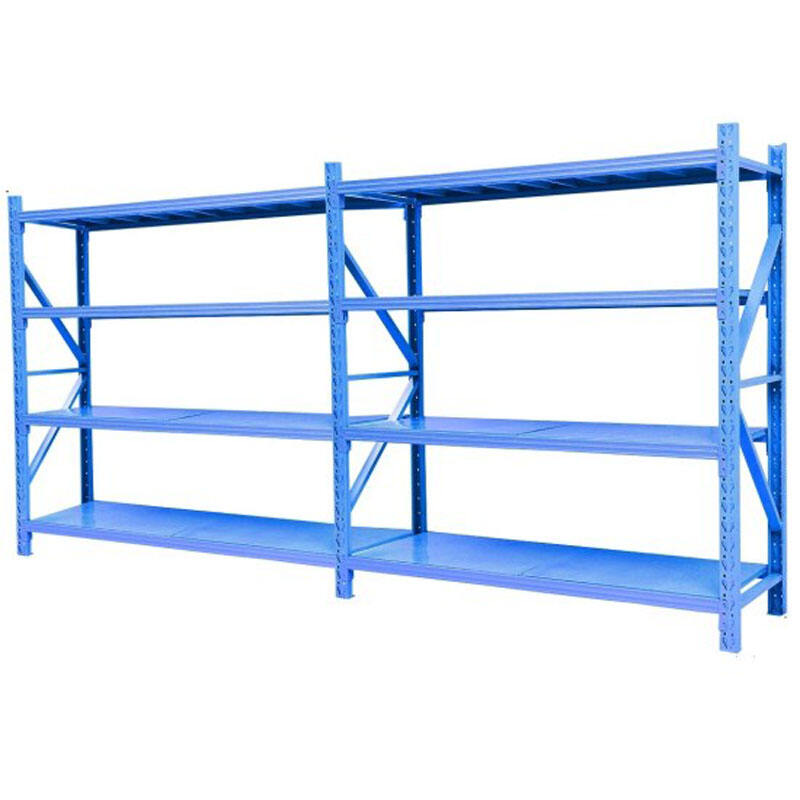
The decision point between these two racking configurations emerges most clearly when analyzing item dimensions, weight distribution, and picking frequency patterns within distribution centers and manufacturing facilities. While selective pallet racking excels in high-turnover environments requiring immediate access to every pallet position, long span pallet racking demonstrates superior value in operations handling smaller cartons, medium-weight items, or mixed inventory requiring flexible shelf configurations. This comparison reveals specific operational thresholds where the structural advantages and economic benefits of long span systems justify their selection over conventional selective approaches.
Storage Density and Space Utilization Advantages
Vertical Space Optimization for Medium-Weight Inventory
Long span pallet racking achieves superior vertical space utilization when storing items weighing between 100 and 800 kilograms per level, a weight range where selective pallet systems often create inefficient empty space. The adjustable shelf design inherent to long span configurations allows warehouse operators to modify vertical spacing in precise increments, accommodating inventory with varied heights without wasting cubic storage capacity. This granular adjustment capability becomes particularly valuable in facilities managing diverse product portfolios where item dimensions change seasonally or as product lines evolve.
Facilities storing automotive parts, electronics components, or packaged industrial supplies typically experience 20 to 35 percent greater storage density with long span pallet racking compared to selective systems configured for similar inventory types. The structural design eliminates the vertical dead space that occurs in selective systems when pallet loads occupy only partial beam heights. Manufacturing operations maintaining work-in-process inventory benefit significantly from this density advantage, as component storage requires frequent reconfiguration that selective rack beam positions cannot easily accommodate.
The beam-and-deck construction characteristic of long span pallet racking provides continuous shelf surfaces that prevent smaller items from falling through, eliminating the need for additional decking materials required when adapting selective systems for non-palletized goods. This structural advantage reduces both initial installation costs and ongoing maintenance expenses associated with damaged or displaced decking panels. Distribution centers handling retail merchandise, pharmaceutical supplies, or food service products realize immediate operational benefits from this integrated shelf design.
Aisle Width Efficiency in Constrained Facilities
Operations conducted in buildings with restrictive floor plans or irregular column spacing find that long span pallet racking accommodates narrower aisle widths while maintaining acceptable accessibility for manual picking operations. The typical depth range of 600 to 900 millimeters for long span systems allows workers to reach inventory without requiring the wider turning radius necessary for forklift operation in selective pallet rack aisles. Facilities transitioning from forklift-intensive operations to manual or cart-based picking strategies achieve substantial floor space recovery by implementing long span configurations in appropriate zones.
Warehouse expansions constrained by existing structural elements such as mezzanines, conveyor systems, or production equipment benefit from the modular footprint flexibility that long span pallet racking provides. The system's ability to function effectively in aisle widths as narrow as 1.2 meters enables planners to maximize storage capacity in irregular spaces where selective rack installations would require wider access lanes. This spatial efficiency translates directly to increased inventory positions without facility expansion costs, a critical advantage in high-rent urban distribution locations.
Inventory Characteristics That Favor Long Span Configurations
Non-Palletized and Mixed Load Handling
Warehouses managing inventory that arrives in cartons, totes, or irregular packaging configurations encounter significant handling inefficiencies when forcing these items onto standard pallets for storage in selective systems. Long span pallet racking eliminates this forced palletization step, allowing direct placement of shipping cartons and containers onto continuous shelf surfaces. The time savings from eliminating pallet handling, combined with reduced pallet inventory costs, creates measurable productivity gains in operations processing between 500 and 5000 SKUs with moderate turnover rates.
Pharmaceutical distribution facilities, electronics component warehouses, and industrial MRO supply operations consistently demonstrate 15 to 25 percent faster put-away times using long span pallet racking for inventory that selective systems would require palletizing. The shelf surface accessibility enables workers to organize products by size, part number, or picking frequency without conforming to pallet footprint constraints. This organizational flexibility reduces picking errors and accelerates order fulfillment cycles, particularly in operations where order profiles include multiple small-quantity line items.
Manufacturing facilities maintaining production supplies, tooling inventory, or packaging materials achieve better inventory visibility with long span pallet racking because shelf-based storage presents items at eye level across multiple tiers. Selective pallet systems storing similar materials typically stack items on pallets, obscuring visibility and requiring additional handling to access lower or rear positions. The improved visibility inherent to long span configurations reduces inventory discrepancies and supports more accurate cycle counting processes.
Variable Item Heights and Seasonal SKU Fluctuations
Retail distribution centers and e-commerce fulfillment operations experiencing significant seasonal inventory variations benefit from the rapid reconfiguration capability of long span pallet racking systems. The bolt-together beam connections allow warehouse teams to adjust shelf heights within hours rather than days, adapting storage layouts to accommodate holiday merchandise, promotional items, or new product introductions without system downtime. Selective rack systems require beam changes that involve more complex disassembly and often necessitate forklift assistance for heavy beam repositioning.
Operations storing products with heights ranging from 200 millimeters to 600 millimeters across their inventory mix find that long span pallet racking provides four to six usable shelf levels within standard uprights, compared to two or three beam levels achievable in selective systems for similar vertical space. This additional shelving capacity directly translates to more storage positions per square meter of floor space, reducing the facility footprint required for equivalent inventory volumes. Apparel distribution, consumer goods warehousing, and publishing logistics operations consistently realize 30 to 40 percent more storage positions with properly configured long span installations.
Operational Cost Analysis and Labor Efficiency
Manual Picking Productivity and Ergonomics
Warehouse operations emphasizing manual order picking achieve measurably higher productivity rates with long span pallet racking when order profiles consist primarily of piece-picking or case-picking rather than full-pallet movements. The shelf-based presentation eliminates the reaching, bending, and pallet excavation activities that slow picking rates in selective systems storing similar inventory types. Time-motion studies in distribution environments demonstrate 18 to 28 percent faster pick rates for orders averaging 5 to 20 line items when inventory resides in properly organized long span configurations.
Ergonomic advantages become particularly significant in operations employing aging workforces or facilities seeking to reduce workers' compensation claims related to repetitive motion injuries. The continuous shelf surfaces characteristic of long span pallet racking allow optimal product placement at heights between 600 millimeters and 1800 millimeters, the zone delivering best ergonomic access for most workers. Selective systems storing non-palletized items force workers to handle materials from pallet surfaces that may sit 100 to 150 millimeters above floor level, increasing back strain during repetitive picking activities.
Distribution facilities implementing zone-based picking strategies find that long span pallet racking enables more effective worker assignment because the system's accessibility supports higher pick density per linear meter of aisle. The resulting labor efficiency allows operations to process greater order volumes with existing staff levels, or to reduce labor costs while maintaining throughput. This operational flexibility proves especially valuable during peak demand periods when temporary labor availability may constrain fulfillment capacity.
Equipment Investment and Maintenance Requirements
Facilities utilizing long span pallet racking for appropriate inventory types typically require fewer powered material handling equipment units because workers can access most storage positions manually or with simple rolling ladders and order picker carts. The reduced forklift fleet translates to lower capital equipment expenditures, decreased maintenance costs, and reduced energy consumption compared to operations dependent on lift trucks for accessing selective rack systems. These savings become substantial in multi-shift operations where forklift utilization rates directly impact overall operational costs.
The structural simplicity of long span pallet racking designs results in lower maintenance requirements and longer service life compared to selective systems experiencing regular impact damage from forklift operations. Upright frames and beams in long span installations sustain less collision damage because manual handling operations generate lower impact forces than powered equipment. Facilities tracking total cost of ownership over ten-year periods consistently document 25 to 40 percent lower racking system maintenance expenses with long span configurations serving appropriate applications.
Facility Constraints and Installation Considerations
Floor Load Capacity and Foundation Requirements
Existing buildings with limited floor load capacity ratings often cannot accommodate the concentrated point loads generated by fully loaded selective pallet rack systems, particularly when storing dense products or maximizing vertical storage heights. Long span pallet racking distributes loads more evenly across shelf surfaces and typically imposes lower point loads on floor slabs because inventory weight spreads across continuous decking rather than concentrating at pallet positions. This load distribution characteristic enables warehouse operators to maximize storage capacity in older buildings or facilities with ground-level concrete slabs of marginal thickness.
Warehouse planners evaluating retrofit installations in manufacturing plants, converted retail spaces, or older distribution buildings should conduct floor load analysis to determine whether selective pallet systems would require costly foundation reinforcement. Long span pallet racking frequently provides viable storage solutions in structures where selective systems would exceed allowable floor loading limits, avoiding renovation expenses that can reach 150 to 300 dollars per square meter for structural reinforcement. This economic advantage makes long span configurations particularly attractive for temporary facilities or leased spaces where building modifications are impractical.
Ceiling Height Optimization in Standard Facilities
Distribution facilities with standard ceiling heights between 6 and 8 meters find that long span pallet racking delivers better storage capacity utilization than selective systems when storing inventory suited to shelf-based configurations. The ability to create five or six shelf levels within these ceiling heights provides substantially more storage positions than the three or four pallet beam levels typically achievable in selective installations. This vertical density advantage becomes particularly valuable in markets where real estate costs make facility expansion economically prohibitive.
Operations in facilities with ceiling-mounted sprinkler systems, HVAC ductwork, or electrical conduit that limits usable height benefit from the modular vertical adjustability of long span pallet racking. The system allows warehouse managers to configure top shelf heights that maximize storage capacity while maintaining required clearances for building systems and fire code compliance. Selective rack installations in similar environments often sacrifice top beam positions to accommodate ceiling obstructions, reducing overall storage capacity.
Application Scenarios Where Long Span Systems Excel
E-Commerce and Multi-Channel Fulfillment Operations
E-commerce fulfillment centers processing high order volumes with small average order sizes achieve superior performance with long span pallet racking configured for split-case and piece-picking operations. The system's shelf-based design supports pick-to-tote workflows, pick-to-light implementations, and goods-to-person automation integration more effectively than selective rack configurations. Operations shipping 1000 to 10000 orders daily with average order sizes under 5 units per order consistently demonstrate faster processing times and lower labor costs using long span systems for fast-moving SKUs.
The inventory organization flexibility inherent to long span pallet racking enables fulfillment operations to implement velocity-based slotting strategies that position fastest-moving products in optimal picking zones. This slotting precision reduces travel time and increases picks per labor hour, critical metrics in highly competitive e-commerce markets where fulfillment speed drives customer satisfaction. Selective systems storing similar inventory require more extensive handling to maintain equivalent slotting efficiency, particularly during peak seasons when inventory turnover rates fluctuate significantly.
Spare Parts Distribution and Service Logistics
Automotive aftermarket warehouses, industrial equipment distributors, and service parts operations managing thousands of slow- to medium-velocity SKUs find that long span pallet racking provides ideal storage configurations for their inventory profiles. The ability to store individual parts in bins, cartons, or totes on adjustable shelves enables efficient space utilization while maintaining part number visibility and accessibility. These operations typically experience 20 to 35 percent better cube utilization with long span systems compared to selective racks attempting to serve similar applications.
Service logistics operations supporting field technician networks benefit from the organizational capabilities of long span pallet racking because the shelf-based layout facilitates kitting activities, return processing, and core exchange programs. The system accommodates the mixed inventory handling characteristic of service parts operations where items range from small fasteners to larger assemblies, all requiring different storage approaches within a unified racking structure. This operational flexibility reduces the need for multiple specialized storage systems within single facilities.
FAQ
What load capacity differences exist between long span pallet racking and selective rack systems?
Long span pallet racking typically supports shelf loads ranging from 300 to 800 kilograms per level, making it ideal for carton storage, small parts, and medium-weight inventory. Selective pallet rack systems accommodate pallet loads from 1000 to 2500 kilograms per beam level, designed specifically for palletized unit loads. The structural engineering differs fundamentally, with long span systems using continuous shelf surfaces and lighter-gauge steel components, while selective racks employ heavy-duty beams engineered for concentrated pallet loads. Operations should select systems based on actual inventory weight characteristics rather than attempting to adapt one system type to inappropriate load profiles.
Can long span pallet racking integrate with automated material handling systems?
Modern long span pallet racking configurations integrate effectively with conveyor systems, automated guided vehicles, and goods-to-person robotics designed for carton and tote handling. The shelf-based design supports pick-to-light systems, voice-directed picking, and warehouse management system integration that drives labor productivity in automated environments. However, long span systems are not compatible with automated storage and retrieval systems designed for pallet handling, which require the structural characteristics of selective or deep-lane racking. Facilities planning automation investments should specify racking systems during initial design phases to ensure compatibility with chosen automation technologies.
How does installation time compare between these two racking system types?
Long span pallet racking generally requires 30 to 40 percent less installation time than selective pallet rack systems of equivalent storage capacity because the lighter components are easier to handle and the bolt-together assembly process proceeds more quickly with smaller hardware. A typical long span installation team can complete 50 to 75 shelf positions per day, while selective rack installation rates average 30 to 45 pallet positions daily depending on configuration complexity. The faster installation reduces project timelines and minimizes business disruption during warehouse reconfigurations or new facility startups, providing operational advantages beyond the direct labor cost savings.
What ongoing maintenance requirements do long span systems demand?
Long span pallet racking requires minimal ongoing maintenance when properly installed and operated within design load limits. Quarterly inspections should verify that shelf decking remains securely fastened, upright frames maintain plumb alignment, and no components show signs of overloading or impact damage. The absence of forklift traffic in most long span applications substantially reduces collision damage compared to selective systems, resulting in lower repair costs and longer service life. Facilities should implement load limit signage and worker training to prevent overloading conditions that could compromise structural integrity. Annual professional inspections by qualified racking system engineers ensure continued safe operation and compliance with applicable safety standards.
Table of Contents
- Storage Density and Space Utilization Advantages
- Inventory Characteristics That Favor Long Span Configurations
- Operational Cost Analysis and Labor Efficiency
- Facility Constraints and Installation Considerations
- Application Scenarios Where Long Span Systems Excel
-
FAQ
- What load capacity differences exist between long span pallet racking and selective rack systems?
- Can long span pallet racking integrate with automated material handling systems?
- How does installation time compare between these two racking system types?
- What ongoing maintenance requirements do long span systems demand?

