 EN
EN

Mixed-load warehouse environments present unique storage challenges that demand flexible, adaptable shelving systems capable of accommodating diverse product types, weights, and dimensions simultaneously. Heavy duty longspan shelving has emerged as a preferred solution for facilities managing varied inventory profiles, from automotive parts and retail goods to industrial components and seasonal merchandise. The question of whether longspan shelving truly supports mixed-load operations requires examining load distribution mechanics, structural versatility, configuration options, and real-world performance across diverse storage scenarios. Understanding these factors enables warehouse managers to make informed decisions about shelving investments that align with operational complexity and growth trajectories.
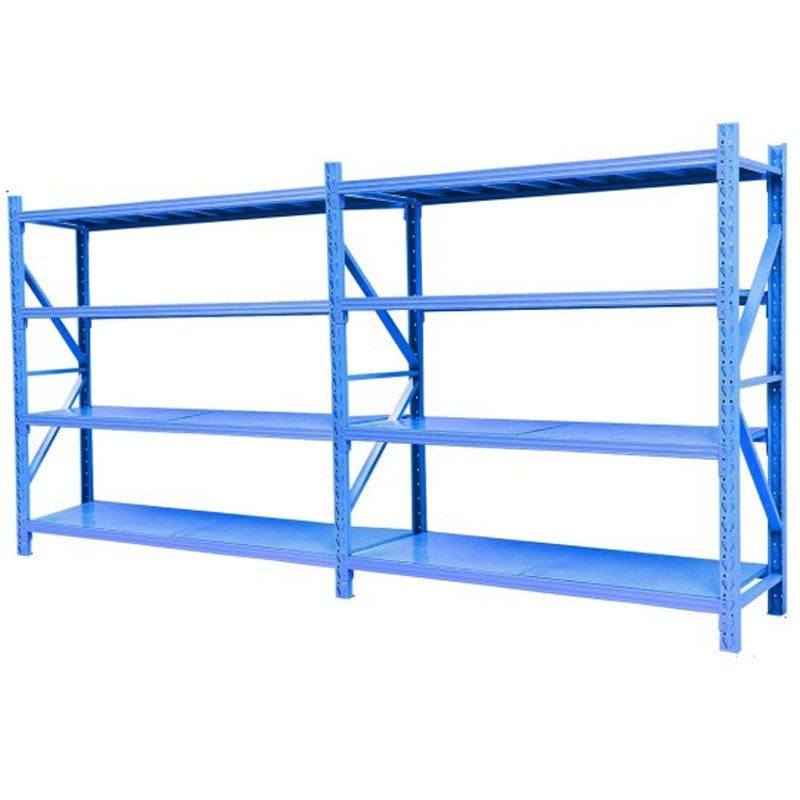
The capacity of longspan shelving to handle mixed loads stems from its fundamental design philosophy, which prioritizes adjustable beam positioning, reinforced steel construction, and distributed weight support across multiple contact points. Unlike single-purpose racking systems optimized for uniform pallet storage or light-duty shelving limited to small items, heavy duty longspan shelving bridges the gap between these extremes through modular architecture and load-bearing flexibility. This structural adaptability allows the same shelving framework to simultaneously store bulky automotive assemblies on lower levels, medium-weight boxed goods at mid-heights, and lighter picking inventory at ergonomic reach zones, all while maintaining structural integrity and safety compliance throughout the storage matrix.
Structural Design Features Enabling Mixed-Load Applications
Adjustable Beam Configuration and Height Versatility
The cornerstone of mixed-load compatibility in heavy duty longspan shelving lies in its adjustable beam system, which allows vertical repositioning at standardized intervals typically ranging from 50mm to 75mm pitch increments along the upright frames. This granular adjustability enables warehouse operators to customize shelf spacing according to specific product dimensions rather than forcing inventory into predetermined configurations. When managing mixed loads, this flexibility becomes critical as facilities can dedicate lower levels with expanded vertical clearance to bulky items such as machinery parts or large cartons, while configuring upper levels with tighter spacing for smaller boxed goods or individual product units. The ability to reconfigure shelf heights without requiring specialized tools or structural modifications means that storage layouts can evolve alongside changing inventory profiles without necessitating complete system replacement.
The beam attachment mechanism in quality longspan systems typically employs safety locking clips or bolt-through connections that secure each beam to the upright frame at the desired height while preventing accidental dislodgement during loading operations. This connection methodology distributes vertical loads directly through the frame structure rather than relying solely on friction or compression, ensuring that weight forces transfer efficiently to the floor foundation. For mixed-load applications, this design principle proves essential because it allows adjacent shelves within the same bay to support dramatically different weight concentrations without compromising neighboring shelf stability. A bottom shelf carrying 400kg of dense metal components can coexist with a top shelf holding 100kg of lightweight packaging materials, with each level performing independently within its rated capacity parameters.
Reinforced Steel Frame Construction and Load Distribution
Heavy duty longspan shelving utilizes high-grade cold-rolled steel in both upright frames and beam components, with material thickness and profile geometry engineered to handle substantial concentrated loads while maintaining structural rigidity. The upright profiles typically feature box-section or specialized roll-formed geometries that maximize resistance to both compressive and lateral forces, which becomes particularly important in mixed-load scenarios where uneven weight distribution across shelf levels might create asymmetric stress patterns. The steel gauge selection in quality systems ranges from 1.5mm to 3.0mm depending on the intended load capacity, with heavier gauge materials reserved for applications where individual shelf levels may approach or exceed 400kg capacity ratings. This robust material specification ensures that frame deflection remains within acceptable engineering tolerances even when multiple shelves bear near-maximum loads simultaneously.
Load distribution across heavy duty longspan shelving beams occurs through continuous contact between the beam surface and stored items, differing fundamentally from pallet racking where loads concentrate at specific beam contact points. This continuous support surface makes longspan shelving particularly well-suited for mixed-load applications because it accommodates irregularly shaped items, multiple smaller boxes, or combinations of product types without requiring additional load-spreading accessories. The beam profile itself typically incorporates reinforcement ribs or corrugations that increase bending resistance while maintaining a flat or lightly contoured top surface for stable item placement. When supporting mixed loads, this design allows warehouse staff to place heavy items directly on beams without concern for precise positioning or supplementary support structures, streamlining picking operations and reducing the time required for load placement adjustments.
Modularity and Bay Configuration Options
The modular architecture of heavy duty longspan shelving systems enables mixed-load warehouses to create customized storage zones that match the physical characteristics and handling requirements of different product categories within a unified structural framework. Standard bay widths typically range from 1200mm to 2700mm, with depth options from 400mm to 1200mm, allowing facilities to dedicate specific bays to product families with similar dimensional profiles while maintaining visual consistency and structural continuity across the storage environment. This zoning capability proves particularly valuable in mixed-load operations where automotive parts require deep shelving for long components, electronics inventory needs shallower bays for better picking access, and seasonal goods demand wider bays to accommodate bulk storage during peak periods. The ability to combine different bay configurations while sharing common upright frames maximizes space utilization and reduces overall system cost compared to deploying entirely separate shelving types for each product category.
Expansion capabilities inherent in modular longspan systems support the dynamic inventory profiles characteristic of mixed-load warehouses by allowing incremental capacity additions without disrupting existing storage operations. Shared upright frames between adjacent bays eliminate the need for duplicate vertical supports, reducing material costs and floor space consumption while maintaining full structural integrity across the expanded system. This design approach enables facilities to start with a core shelving footprint aligned with current inventory levels and systematically add bays as product lines expand or seasonal demand increases. For mixed-load applications, this scalability ensures that storage infrastructure can grow proportionally across diverse product categories rather than creating capacity imbalances where some inventory types face space constraints while others have excess unused shelving.
Load Capacity Management Across Diverse Product Types
Weight Distribution Principles and Safety Factors
Effective mixed-load management on heavy duty longspan shelving requires understanding weight distribution principles that govern how individual shelf capacities aggregate into total bay load ratings. Each shelf level possesses an independent load capacity determined by beam strength, span length, and upright frame support, with typical ratings ranging from 200kg to 600kg per level depending on system specifications and beam spacing. The critical distinction in mixed-load applications involves recognizing that while each shelf may independently support its rated capacity, the cumulative weight across all levels within a single bay must not exceed the upright frame's total load capacity. For instance, a five-level bay with 400kg per shelf capacity might have a total bay rating of 1800kg rather than 2000kg due to structural safety factors that account for potential load concentrations and dynamic forces during picking operations.
The placement sequence of mixed loads within vertical bays significantly impacts stability and safety performance, with best practices recommending heavier, denser items on lower shelves to maintain a low center of gravity and reduce overturn risk. This loading strategy proves particularly important in environments storing combinations of compact, heavy industrial components alongside lighter, bulkier retail packaging, as improper weight distribution can create top-heavy configurations that compromise structural stability. Heavy duty longspan shelving systems incorporate base plates or floor anchoring provisions that resist tipping forces, but optimal load arrangement serves as the primary defense against instability in mixed-load scenarios. Warehouse operations should establish clear loading protocols that assign weight categories to specific vertical zones within bays, ensuring that staff members consistently place 100kg-plus items on the bottom two shelf levels while reserving upper shelves for products in the 50kg-and-under range.
Handling Variable Product Dimensions and Shapes
The continuous beam surface of heavy duty longspan shelving accommodates dimensional variability inherent in mixed-load warehouses far more effectively than selective pallet racking or wire decking systems that require specific product footprints. Small boxed goods, irregularly shaped automotive components, bagged materials, and cylindrical items can all coexist on the same shelf level without requiring specialized dividers or support accessories, provided their combined weight remains within shelf capacity limits. This flexibility eliminates the picking inefficiencies and space waste that occur when storage systems force products into inappropriate configurations, such as placing small items on oversized pallets or leaving large portions of shelf surfaces unused due to dimensional mismatches. In mixed-load operations, the ability to maximize shelf surface utilization directly correlates with storage density improvements and inventory accessibility gains.
Product overhang considerations become relevant when storing particularly long or wide items on heavy duty longspan shelving, as loads extending significantly beyond beam edges can create cantilever forces that reduce effective load capacity and introduce safety hazards. Quality longspan systems typically recommend keeping stored items within the beam footprint boundaries, with maximum safe overhang generally limited to 50mm beyond beam edges when unavoidable. For mixed-load warehouses handling occasional oversized components alongside standard inventory, implementing deeper bay configurations or dedicated wide-span zones for outlier products proves more effective than attempting to accommodate extreme dimensional variations within standard bay widths. This zoning approach maintains optimal load performance across the majority of storage positions while providing appropriate accommodation for dimensional exceptions without compromising safety protocols or forcing inefficient storage practices across the entire facility.
Dynamic Load Considerations and Picking Activity
Mixed-load warehouses typically experience higher picking frequencies and more varied access patterns compared to bulk storage facilities, introducing dynamic load factors that heavy duty longspan shelving must accommodate without structural degradation. Each picking event creates momentary load shifts, impact forces, and vibration transmission through the shelving structure, with cumulative effects potentially significant in high-throughput operations where multiple staff members simultaneously access different bay locations. Quality longspan systems incorporate design margins that account for these dynamic forces, typically applying safety factors of 1.5 to 2.0 times the static load ratings to ensure that normal operational activity remains well within structural limits. This engineering approach means that a shelf rated for 400kg static capacity actually possesses structural strength closer to 600kg-800kg, providing adequate performance reserve for the impacts and load shifts inherent in active warehouse environments.
The beam-to-upright connection mechanism plays a critical role in maintaining structural integrity under mixed-load picking conditions, as repeated loading and unloading cycles can gradually loosen inadequate connection systems. Premium heavy duty longspan shelving employs positive locking mechanisms such as bolt-through connections, safety clips, or specialized locking pins that maintain secure beam positioning throughout thousands of load cycles. These connection systems prevent beam walk-out, where horizontal forces during picking operations gradually shift beams outward from their intended positions, creating dangerous cantilevered conditions. In mixed-load applications where picking activity concentrates in specific zones while other areas remain relatively static, the connection integrity of frequently accessed shelves faces greater stress, making robust attachment systems essential for long-term operational safety and structural reliability.
Configuration Strategies for Optimal Mixed-Load Performance
Vertical Zoning by Product Weight Categories
Implementing vertical zoning strategies within heavy duty longspan shelving bays optimizes both safety and operational efficiency in mixed-load warehouses by aligning product placement with ergonomic access principles and structural load distribution requirements. The most effective zoning approach designates the bottom two shelf levels for heavy, dense products exceeding 50kg per handling unit, positioning these items at waist-to-knee height where staff can safely engage proper lifting mechanics or utilize mechanical assistance equipment. Middle shelf levels, typically positioned between 900mm and 1500mm from floor level, serve as prime territory for medium-weight, high-velocity items in the 10kg-50kg range, offering optimal picking accessibility while maintaining comfortable reach zones that minimize physical strain during repetitive picking tasks. Upper shelf levels above 1500mm height accommodate lighter products under 10kg handling weight, accepting the overhead reach requirements in exchange for maximizing vertical space utilization for lower-density inventory.
This vertical zoning philosophy aligns naturally with the structural characteristics of heavy duty longspan shelving, where lower shelf positions benefit from shorter upright spans and more direct load transfer to floor foundations, while upper positions experience longer effective column lengths that reduce individual shelf capacity ratings. By matching heavier products to structurally stronger lower positions and lighter items to upper zones with reduced capacity ratings, facilities achieve optimal alignment between structural capabilities and operational requirements. The implementation of clear weight zone designations through visual labeling, color coding, or position marking systems helps ensure consistent compliance with zoning protocols across multiple warehouse staff members and shift rotations, preventing gradual degradation of the optimized loading pattern over time as personnel turnover occurs or operational pressures encourage expedient rather than proper placement practices.
Horizontal Product Family Grouping
While vertical zoning addresses weight and ergonomic considerations, horizontal organization of heavy duty longspan shelving bays by product family or operational function creates additional efficiency gains in mixed-load environments by reducing picker travel distances and simplifying inventory location systems. Dedicating specific bay ranges or complete aisles to related product categories allows staff to develop familiarity with inventory locations, reducing search times and picking errors compared to dispersed storage patterns where similar items occupy random positions throughout the facility. For operations handling mixed loads across distinct business lines such as automotive aftermarket parts, industrial maintenance supplies, and retail consumer goods, establishing dedicated zones for each category within the same longspan shelving infrastructure maintains unified storage standards while accommodating the unique dimensional and handling characteristics of each product family.
The modular nature of heavy duty longspan shelving facilitates horizontal zoning by allowing bay configuration variations between product family zones without disrupting overall system continuity or requiring separate shelving investments. Automotive parts zones might utilize deeper 900mm-1200mm bays to accommodate long components such as exhaust systems or drive shafts, while retail goods zones employ shallower 400mm-600mm bays that improve picking visibility and access for smaller boxed products. Industrial component zones might feature wider bay spacing at 2400mm-2700mm to store bulky machinery parts or bulk quantities of maintenance supplies, whereas electronics inventory zones utilize tighter 1200mm-1500mm bay widths optimized for smaller package dimensions. These configuration variations occur within the same basic longspan framework, sharing common upright profiles and beam connection standards while adapting dimensional parameters to specific product family requirements.
Access Equipment Compatibility and Aisle Optimization
The aisle width requirements for mixed-load warehouse operations utilizing heavy duty longspan shelving depend on the access equipment mix employed across different product zones, with manual picking areas requiring minimum 900mm-1200mm aisles while zones serviced by pallet jacks or order pickers need 1800mm-2400mm clearances. The shelving system itself does not dictate these dimensions but must align with facility-wide access strategies that balance storage density against operational throughput requirements. In mixed-load environments, establishing variable aisle widths matched to specific zone characteristics optimizes overall space utilization by providing wide aisles only where equipment access demands them while maximizing bay density in manual picking zones where staff require less maneuvering clearance. This differentiated approach prevents the common inefficiency of applying worst-case aisle dimensions uniformly throughout facilities, which wastes valuable floor space in areas where compact access patterns would suffice.
The structural design of heavy duty longspan shelving accommodates various access equipment types without requiring specialized frame modifications or impact protection beyond standard industrial shelving practices. Upright frame profiles provide adequate impact resistance for normal operational contact from manual handling equipment, though facilities employing powered vehicles should consider supplementary upright guards or end-of-aisle barriers in high-traffic transition zones where vehicle turning maneuvers concentrate contact risk. The beam elevation adjustability inherent in longspan systems allows facilities to create specialized lower-level configurations in equipment access zones, such as eliminating the bottom shelf to create drive-under clearance for pallet jack forks or establishing raised first-shelf positions that accommodate tote bins or roll containers positioned beneath the shelving footprint. These configuration options enhance mixed-load operational flexibility by enabling multiple storage and handling modes within the same shelving infrastructure.
Operational Advantages in Mixed-Load Warehouse Environments
Inventory Flexibility and Seasonal Adaptation
The reconfigurable nature of heavy duty longspan shelving provides mixed-load warehouses with inventory flexibility that proves particularly valuable during seasonal demand fluctuations or product line transitions common in retail distribution, automotive aftermarket, and industrial supply operations. Unlike fixed storage infrastructure such as mezzanines or permanent racking systems that lock facilities into specific capacity allocations, longspan shelving allows relatively simple shelf repositioning or beam relocation to accommodate changing inventory profiles without requiring major capital investments or operational disruptions. A distribution center handling seasonal merchandise can expand shelf spacing in specific bays to accommodate bulkier holiday products during Q4, then restore tighter spacing configurations in Q1 when inventory shifts toward smaller items, all within the same basic shelving footprint and without specialized equipment or contractor services.
This adaptability extends to supporting product line expansions or business acquisitions that introduce new inventory categories with different storage requirements into existing mixed-load operations. Rather than facing the binary choice between forcing new products into inappropriate existing configurations or investing in entirely separate storage systems, facilities utilizing heavy duty longspan shelving can incrementally adjust specific bay zones to accommodate new inventory characteristics while maintaining established storage patterns for existing product lines. The modular expansion capability allows adding new bays within available floor space or converting previously unused areas into additional storage capacity as product portfolios grow, providing a scalable infrastructure path that aligns capital expenditure with actual business growth rather than requiring speculative over-investment in anticipation of possible future needs.
Picking Efficiency and Ergonomic Benefits
The open-access architecture of heavy duty longspan shelving optimizes picking efficiency in mixed-load warehouses by providing direct visual and physical access to stored items without requiring specialized handling equipment or multi-step retrieval processes. Unlike deep-lane storage systems where items positioned behind front-row products require moving forward inventory to reach back positions, or high-bay racking where upper-level access demands lift equipment deployment, longspan shelving offers immediate single-step access to every storage position within the system. This direct access capability reduces average pick times significantly in operations handling diverse product mixes, as staff can quickly identify target items visually and extract them without navigating complex retrieval sequences or waiting for equipment availability during peak activity periods.
The ergonomic advantages of properly configured heavy duty longspan shelving contribute to reduced worker fatigue and injury risk in mixed-load operations characterized by high picking volumes across varied product types. By positioning frequently accessed items within the golden zone between hip and shoulder height, facilities minimize the repetitive overhead reaching and ground-level bending that contribute to musculoskeletal disorders in warehouse environments. The ability to adjust shelf heights at granular increments allows tailoring storage positions to match both product dimensions and ergonomic principles simultaneously, creating configurations where popular items occupy optimal access heights regardless of their physical size. This dual optimization of accessibility and ergonomics translates into sustained picking productivity throughout work shifts and reduced lost-time injury incidents compared to storage systems that force uncomfortable access patterns or require awkward body positioning during retrieval operations.
Space Utilization and Density Improvements
The vertical storage capability of heavy duty longspan shelving enables mixed-load warehouses to achieve significantly higher storage density compared to floor stacking or single-level shelving approaches, effectively multiplying usable storage capacity within existing building footprints. Standard longspan systems readily accommodate four to six shelf levels within typical 3-4 meter warehouse ceiling heights, creating storage volume equivalent to four to six times the building's floor area. This vertical multiplication proves particularly valuable in mixed-load operations where product variety demands maintaining broad SKU assortments that would consume prohibitive floor space if stored at ground level. The ability to store slow-moving or seasonal items on upper levels while keeping high-velocity products at prime picking heights adds a dimensional optimization layer beyond simple density gains, ensuring that space utilization efficiency aligns with operational workflow requirements rather than treating all storage positions as functionally equivalent.
The structural efficiency of heavy duty longspan shelving contributes additional space utilization advantages through its relatively compact frame profiles and efficient aisle utilization compared to alternative storage systems. Upright frames typically consume only 50mm-100mm of horizontal space per bay side, minimizing the structural footprint penalty for gaining vertical storage capability. The shared upright design between adjacent bays further reduces redundant structural elements, with interior bays requiring only a single upright frame column between them rather than duplicate supports. This material efficiency translates into more usable shelf surface area per square meter of allocated floor space, improving the effective storage yield from facility investments. In mixed-load environments where space constraints limit operational expansion options, these incremental efficiency gains aggregate into meaningful capacity improvements that defer or eliminate the need for costly facility expansions or off-site storage arrangements.
FAQ
What maximum weight can individual shelves support in mixed-load applications?
Individual shelf capacity in heavy duty longspan shelving typically ranges from 200kg to 600kg per level depending on beam specifications, span length, and system design, with premium systems supporting up to 800kg on reinforced configurations. In mixed-load applications, the critical factor involves ensuring that each shelf's actual load remains within its rated capacity regardless of what loads occupy adjacent shelves above or below. Quality systems provide clear capacity labeling on each bay, and total bay weight across all levels must not exceed the upright frame's cumulative load rating, typically calculated as individual shelf capacity multiplied by the number of levels minus a safety reduction factor. For operational safety, warehouse managers should implement load monitoring procedures that track cumulative weights during inventory placement and conduct periodic audits to verify compliance with capacity limits across all mixed-load storage positions.
Can longspan shelving accommodate both manual picking and forklift access zones?
Heavy duty longspan shelving effectively supports hybrid operational environments where some zones serve manual picking operations while others accommodate forklift or pallet jack access for bulk storage and replenishment activities. The key implementation requirement involves establishing appropriate aisle widths matched to each zone's access equipment, with manual areas utilizing 900mm-1200mm aisles and equipment zones providing 1800mm-2400mm clearances depending on vehicle turning radius requirements. The shelving structure itself requires no modifications between zones beyond potentially adding upright guards in equipment-access areas where impact risk increases. This dual-mode capability makes longspan shelving particularly well-suited for mixed-load warehouses that combine piece-picking operations with case or pallet-level replenishment activities, allowing unified storage infrastructure across diverse operational functions within the facility.
How quickly can shelf configurations be adjusted when inventory mix changes?
Shelf height adjustments in heavy duty longspan shelving typically require 5-15 minutes per shelf level depending on system design and load conditions, with completely empty shelves repositionable by a single worker using basic hand tools or no tools for systems with clip-lock beam connections. The adjustment process involves removing the existing shelf beam, relocating support clips or connection hardware to the desired height position on the upright frame, and reinstalling the beam at the new elevation. For mixed-load operations experiencing seasonal inventory shifts or product line transitions, facilities can efficiently reconfigure specific bay zones during scheduled maintenance windows or low-activity periods without disrupting overall warehouse operations. The practical limitation involves the need to temporarily relocate stored inventory from shelves requiring adjustment, making gradual zone-by-zone reconfiguration more operationally feasible than simultaneous facility-wide changes. Planning configuration adjustments during natural inventory low points such as post-season clearance periods minimizes the handling effort and temporary storage requirements associated with shelf repositioning activities.
What safety certifications should quality longspan shelving systems maintain?
Quality heavy duty longspan shelving should comply with relevant regional industrial shelving standards such as EN 15512 in Europe, AS 4084 in Australia, or RMI specifications in North America, which establish structural design requirements, load testing protocols, and safety factor minimums for commercial storage systems. Reputable manufacturers provide engineering certifications documenting that their systems meet or exceed these standards, including load capacity validation through independent testing and structural analysis by qualified engineers. Beyond basic structural compliance, facilities should verify that shelving installations include proper floor anchoring where required by local building codes, clear capacity labeling on each bay, and user documentation covering safe loading practices and inspection requirements. For mixed-load warehouses where diverse product types create varied loading scenarios, selecting certified systems from established manufacturers provides assurance that the shelving infrastructure can safely accommodate operational demands across its full range of configuration options and capacity ratings.
Table of Contents
- Structural Design Features Enabling Mixed-Load Applications
- Load Capacity Management Across Diverse Product Types
- Configuration Strategies for Optimal Mixed-Load Performance
- Operational Advantages in Mixed-Load Warehouse Environments
-
FAQ
- What maximum weight can individual shelves support in mixed-load applications?
- Can longspan shelving accommodate both manual picking and forklift access zones?
- How quickly can shelf configurations be adjusted when inventory mix changes?
- What safety certifications should quality longspan shelving systems maintain?

